
National Museum of Korea Children’s Museum: Our Honest Family Review
The best free thing to do in Seoul with kids — and most tourists miss it
Free admission · Advance reservation required · Indoor · 5 min from Ichon Station · Yongsan, Seoul
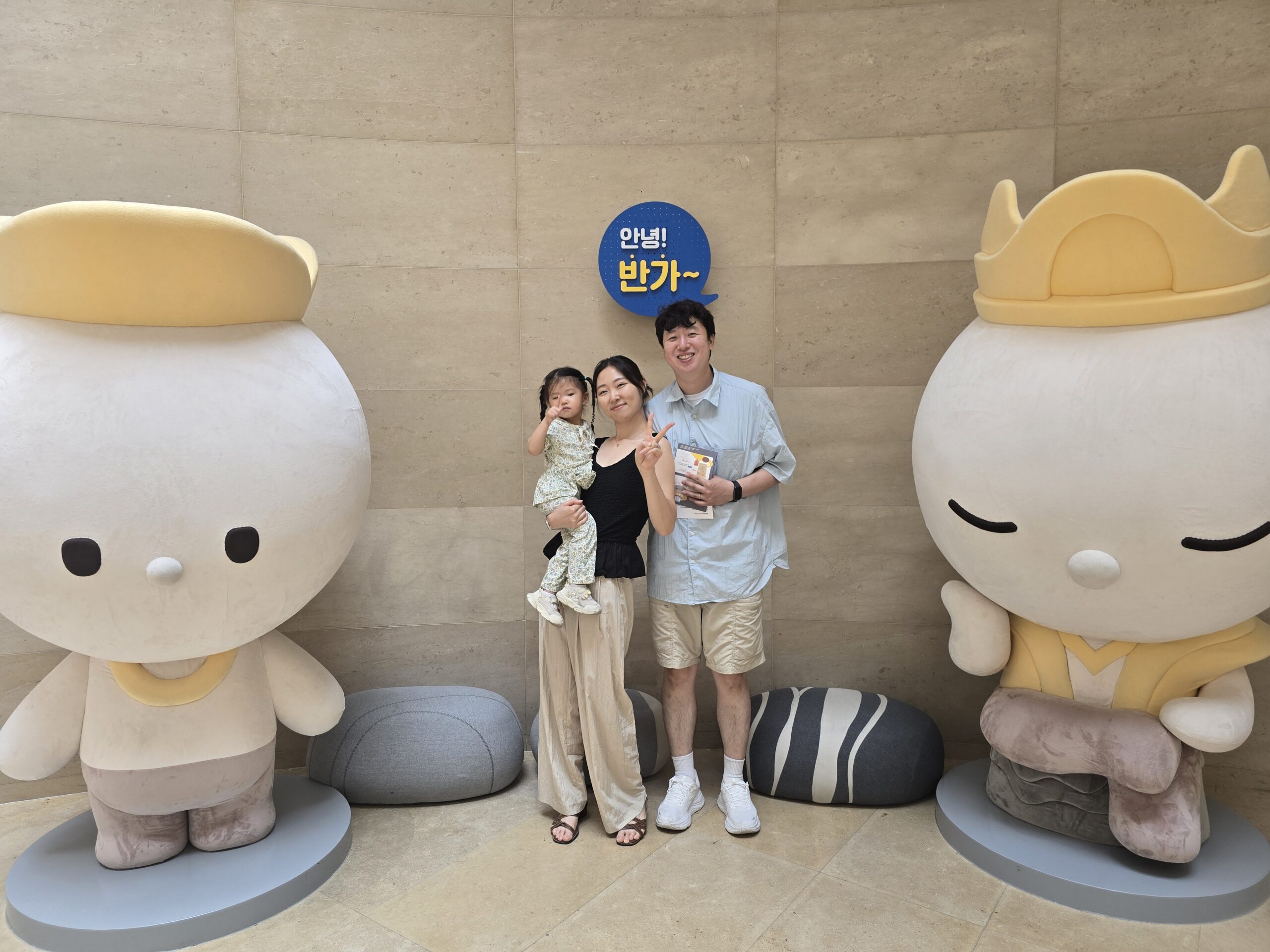
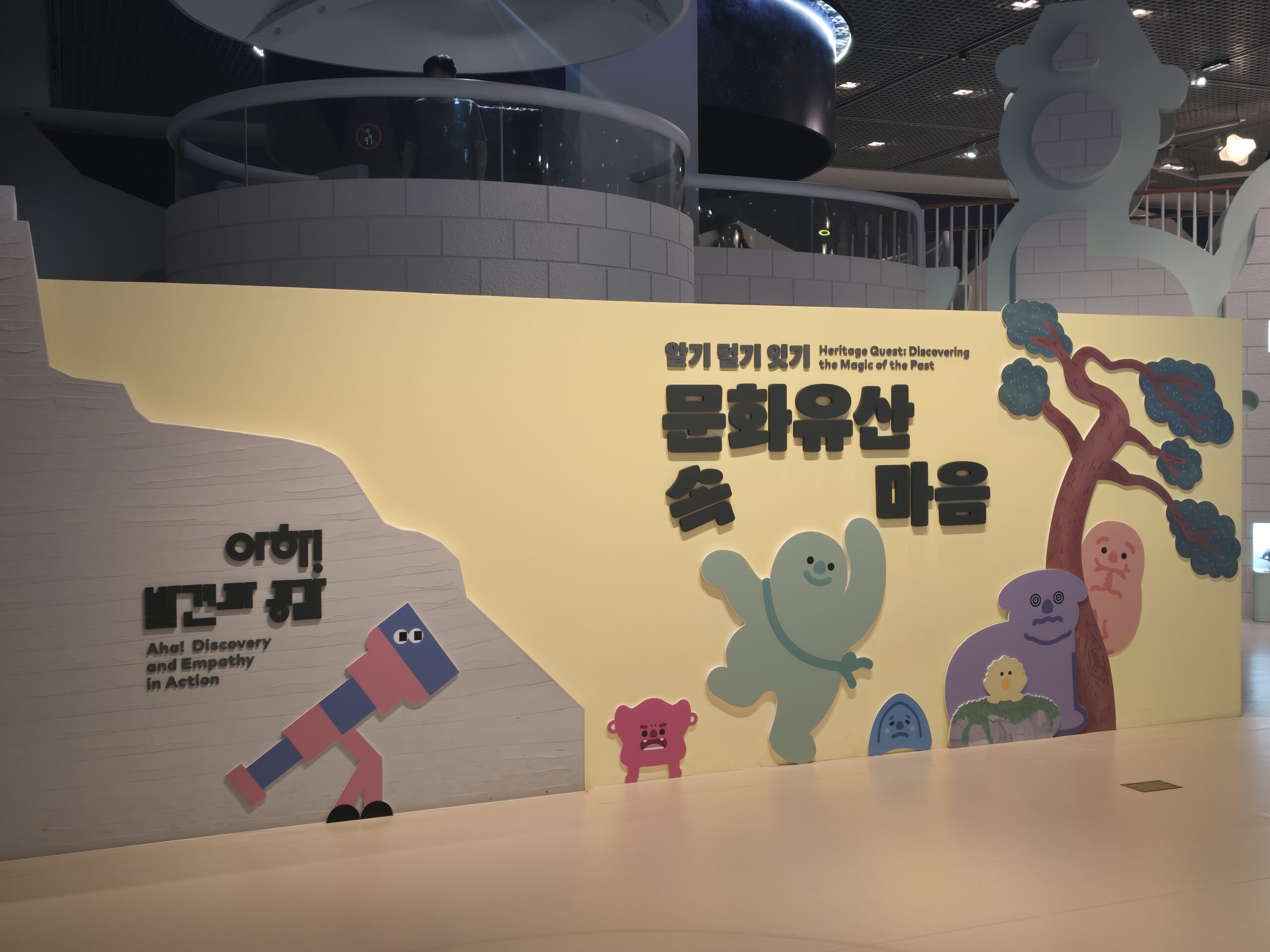
The photo spot right outside the Children’s Museum entrance — our first stop and a great place for a family shot.
When people ask me what to do in Seoul with a toddler, they expect me to say Everland or Lotte World. And yes — we love both. But if I had to pick just one place that gives your child a genuinely Korean experience, somewhere that’s free, beautiful, and impressive for parents too, it would be the National Museum of Korea Children’s Museum.
This isn’t your typical “please don’t touch anything” museum. Kids move through hands-on exhibits based on Korean cultural heritage — touching, building, discovering, and watching things light up. Meanwhile, parents get to walk through one of the most stunning museum buildings in the country, ending with the Room of Contemplation and a view of N Seoul Tower. Not a bad afternoon.
- ✔ Free admission (advance reservation required)
- ✔ Easy subway access — Ichon Station, direct indoor walkway
- ✔ Hands-on Korean cultural heritage exhibits for kids
- ✔ Separate play zone for children 36 months and under
- ✔ Fully indoor — great rainy day or summer option
- ✔ Stroller-friendly throughout
- ✔ Strong English signage and support
- ✔ Parents get access to the main museum too
The One Thing You Must Know Before You Go
Walk-ins are not allowed. The Children’s Museum runs on a timed entry system with a fixed number of spots per session. You must book in advance online — and on weekends, popular morning slots fill up quickly.
| Admission | Free (reservation required) |
| Booking window | Opens 14 days in advance |
| Session length | 1 hour 20 minutes per session |
| Capacity | 320 visitors per session |
| Entry method | Mobile ticket scan at entrance |
| Book here | National Museum of Korea → Reservation |
The 11am and 1pm Saturday slots are usually gone within minutes of the booking window opening. If you’re visiting on a weekend, set a reminder and book exactly 14 days out.
Session Times
| Session | Time |
|---|---|
| Session 1 | 09:30 – 10:50 |
| Session 2 | 11:00 – 12:20 |
| Session 3 | 13:00 – 14:20 |
| Session 4 | 14:30 – 15:50 |
| Session 5 | 16:00 – 17:20 |
Getting There — Why We Always Take the Subway
The National Museum of Korea is connected directly to Ichon Station via a covered indoor walkway — about a 5-minute walk from the exit. On weekends the parking lot gets crowded and slow, so we skip it entirely. Subway is just easier.
| Station | Ichon (이촌역) |
| Lines | Seoul Metro Line 4 / Gyeongui–Jungang Line |
| Exit | Exit 2 → follow National Museum signs |
| Walk time | ~5 minutes (indoor walkway) |
| Address | 137 Seobinggo-ro, Yongsan-gu, Seoul (04383) |
Inside the Children’s Museum
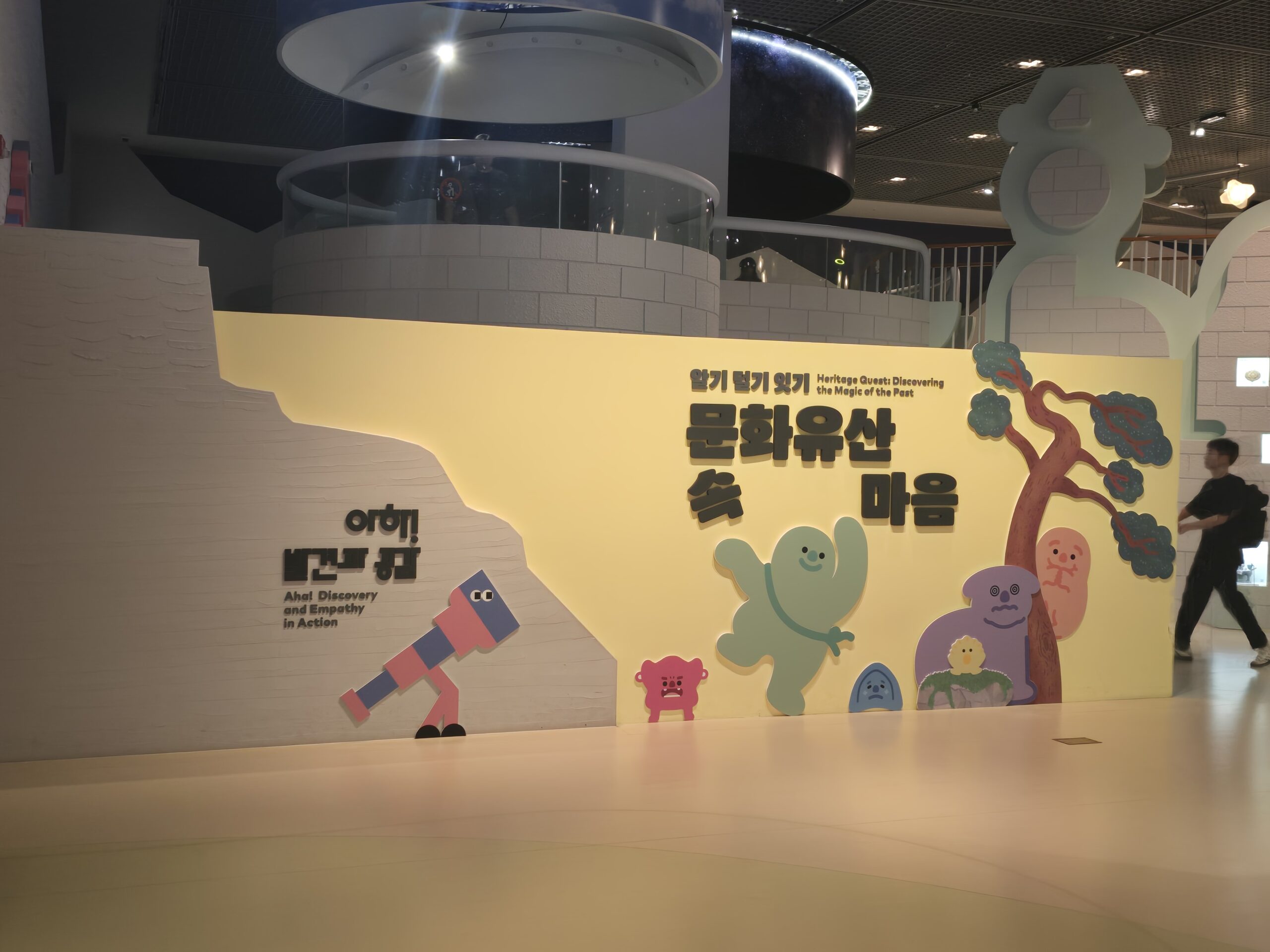
The current exhibition: Heritage Quest: Discovering the Magic of the Past. The title wall sets the tone for the whole experience.
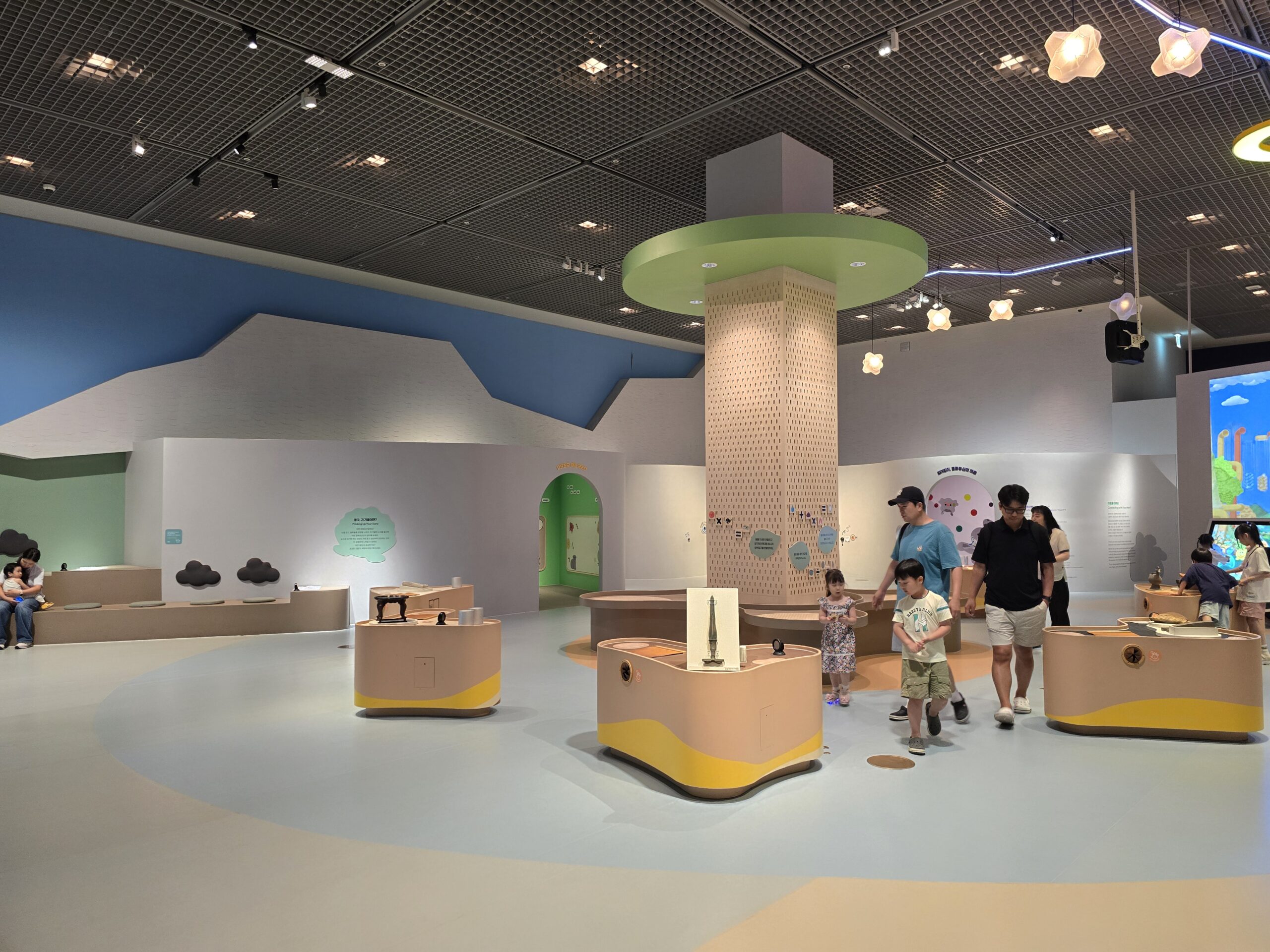
The main hall is bright, open, and designed for kids to move freely between stations.
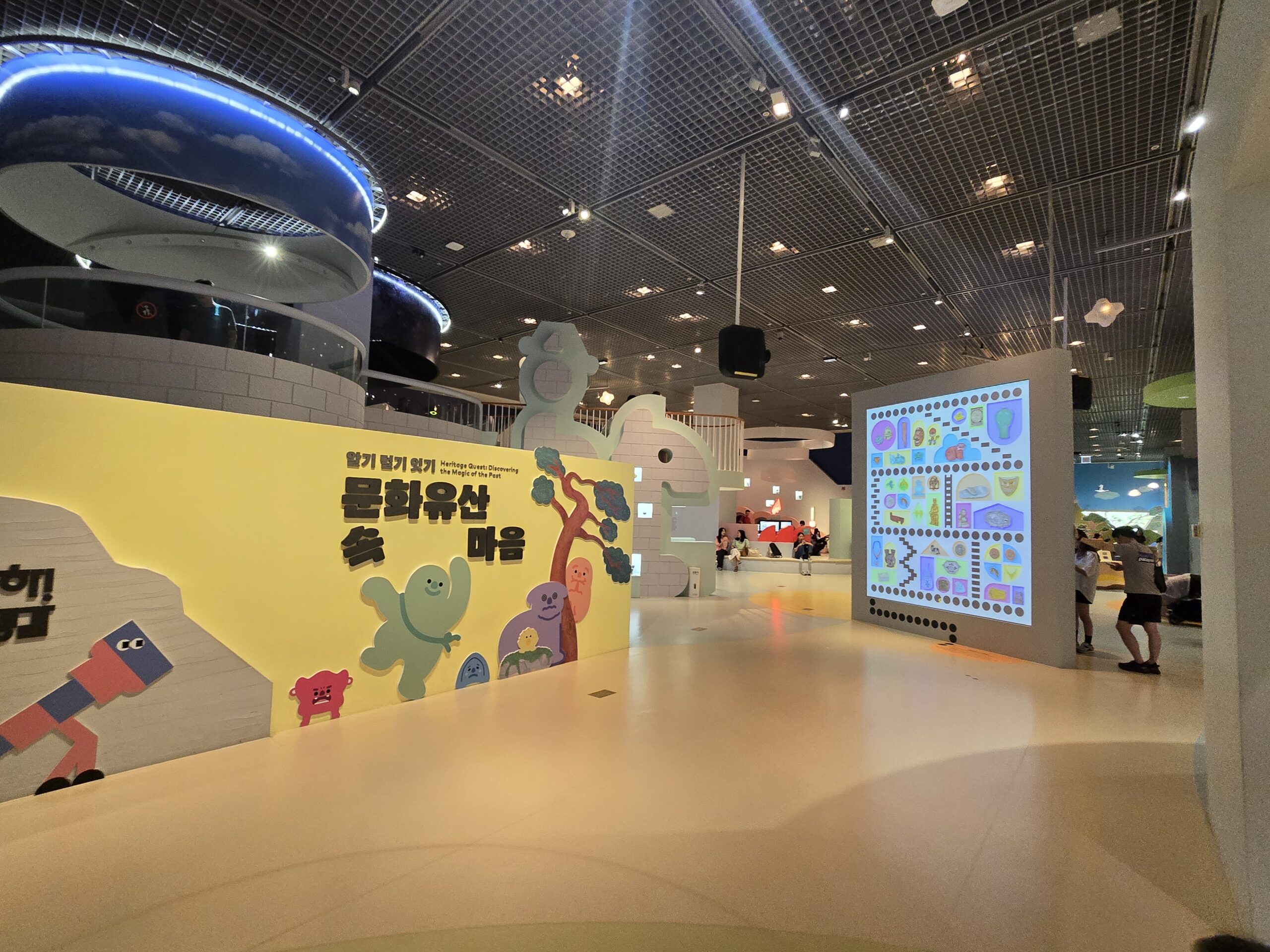
Walking in, you can see two distinct zones branching off the main space — each with its own theme and set of activities.
The exhibition is officially aimed at children aged 5–9, but don’t let that put you off if you have a younger child. There’s a separate play zone for under-3s (more on that below), and plenty of the hands-on elements work just as well for toddlers who are drawn to color, movement, and things they can touch.
The current exhibition — Heritage Quest: Discovering the Magic of the Past — is built around three connected themes:
Observe Anew (새롭게 관찰해요)
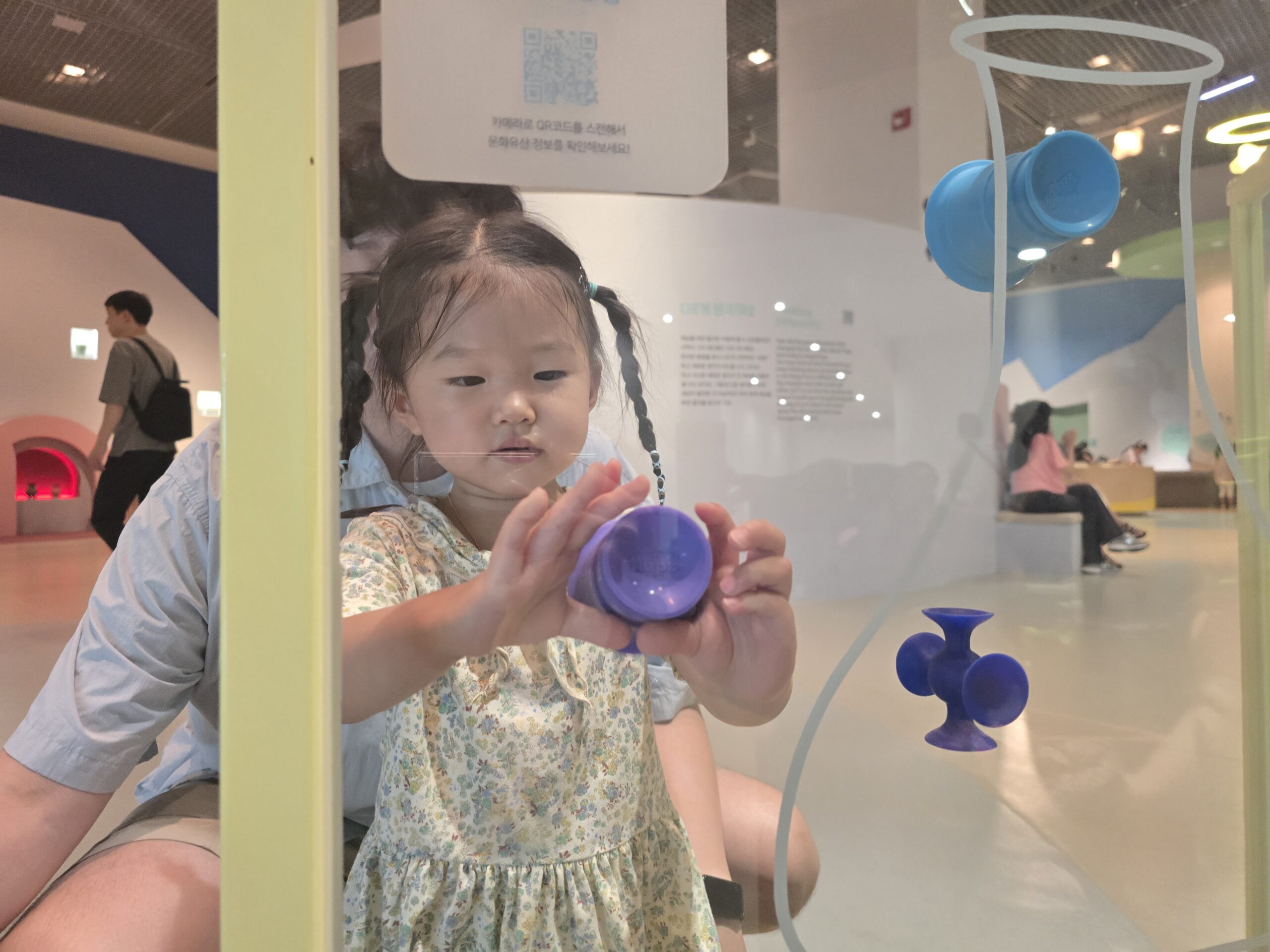
The “Observe Anew” zone. Kids are encouraged to look closely, question what they see, and discover details on their own.
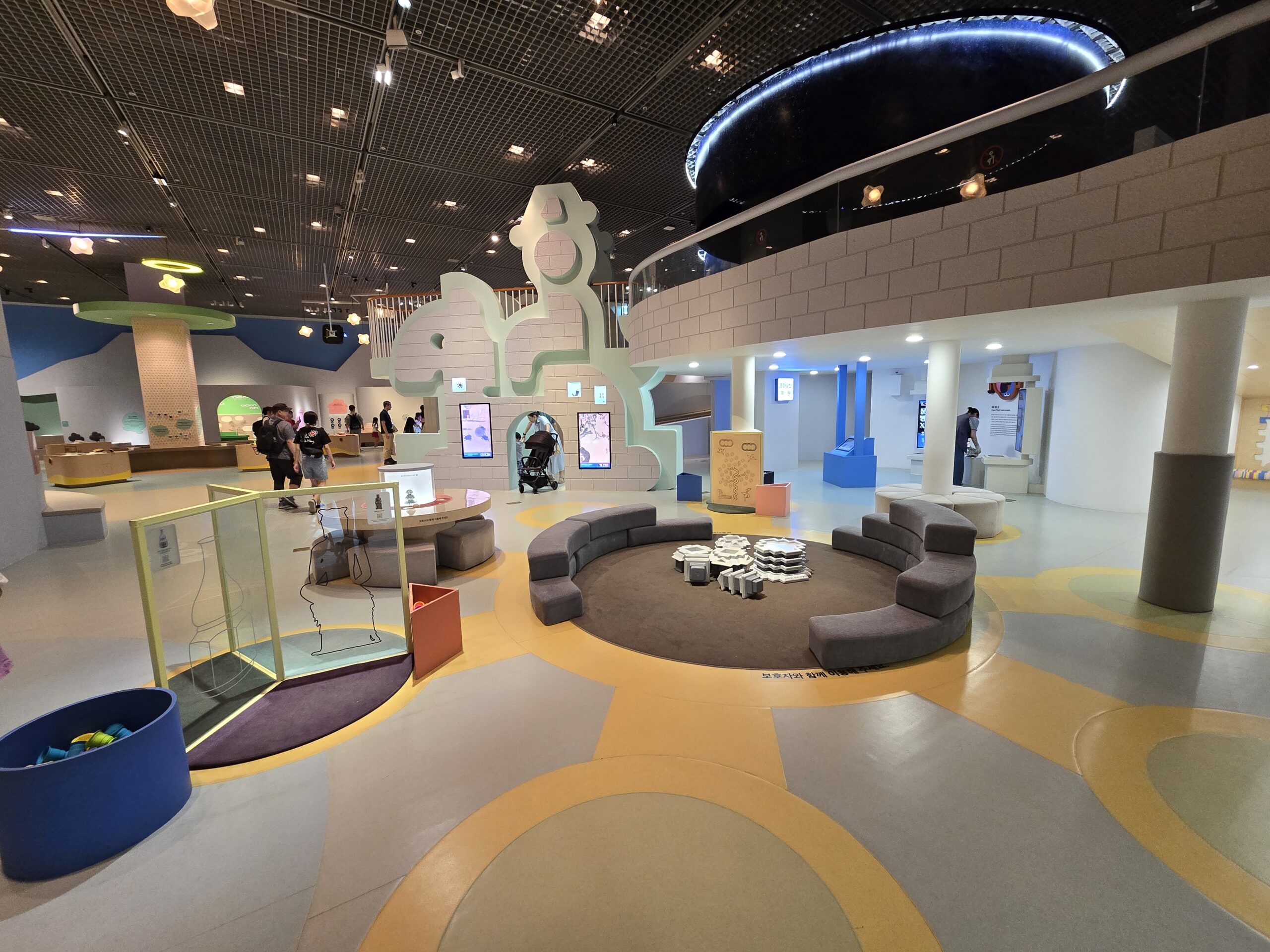
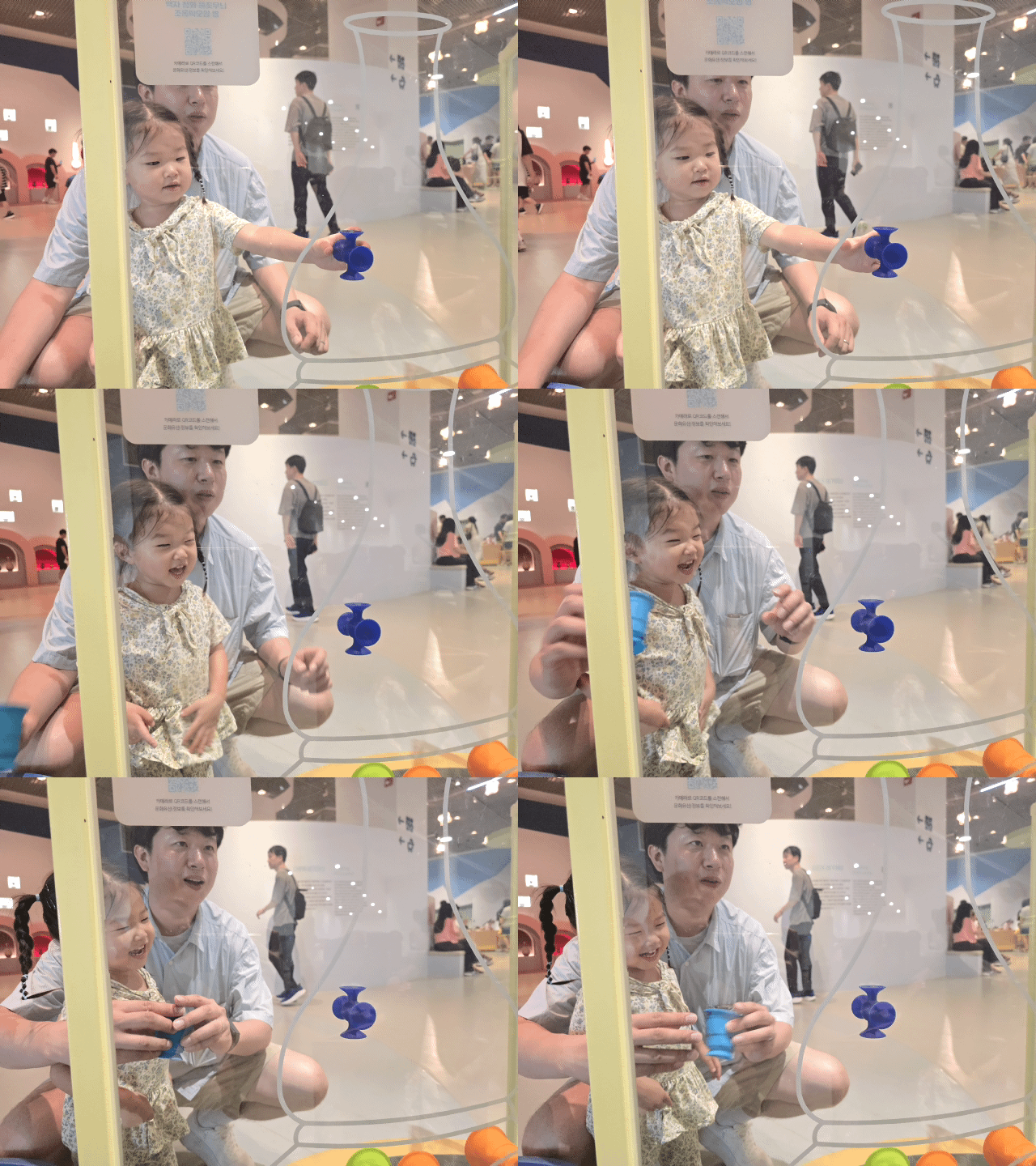
A spacious, open layout with ball pools, activity tables, and discovery stations spread throughout.
Rather than just telling kids what Korean cultural artifacts are, this section asks them to figure it out. “Why does it look like this?” “What do you think this was used for?” Our daughter didn’t know the answers, out she definitely had opinions — which felt like the whole point.
Think Differently (다르게 생각해요)
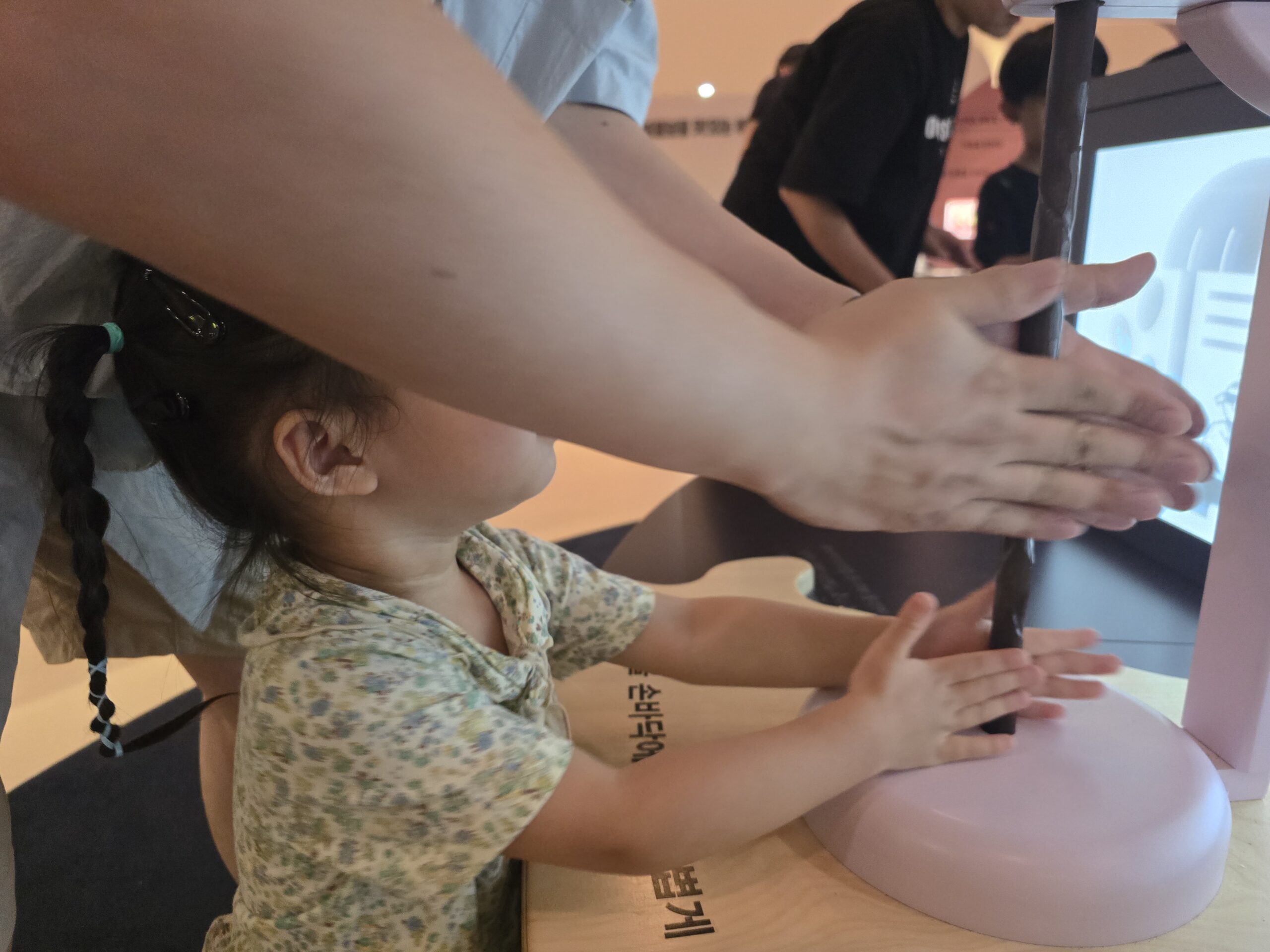
The “Think Differently” zone. Color, shape, and storytelling through a different lens.
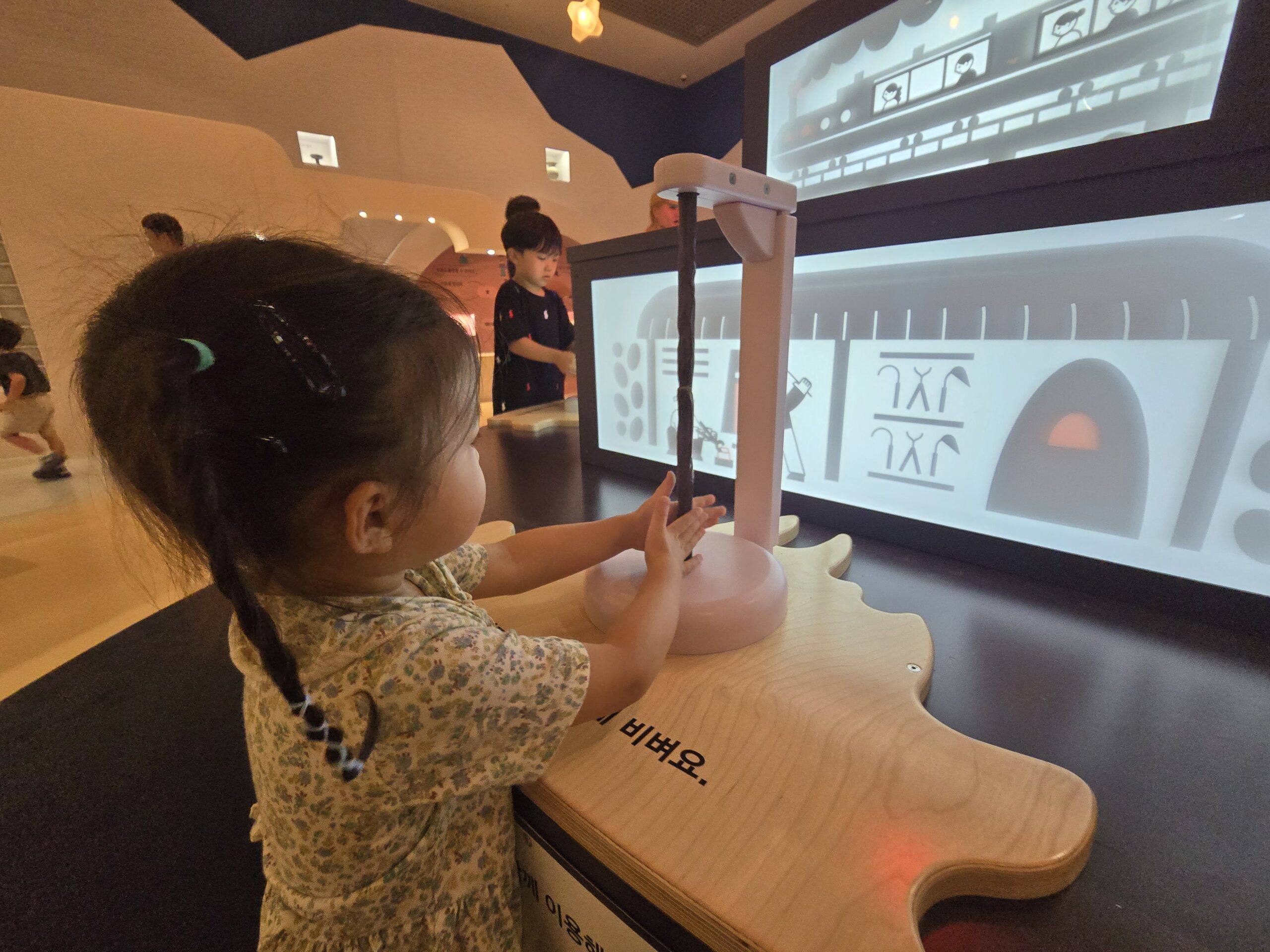
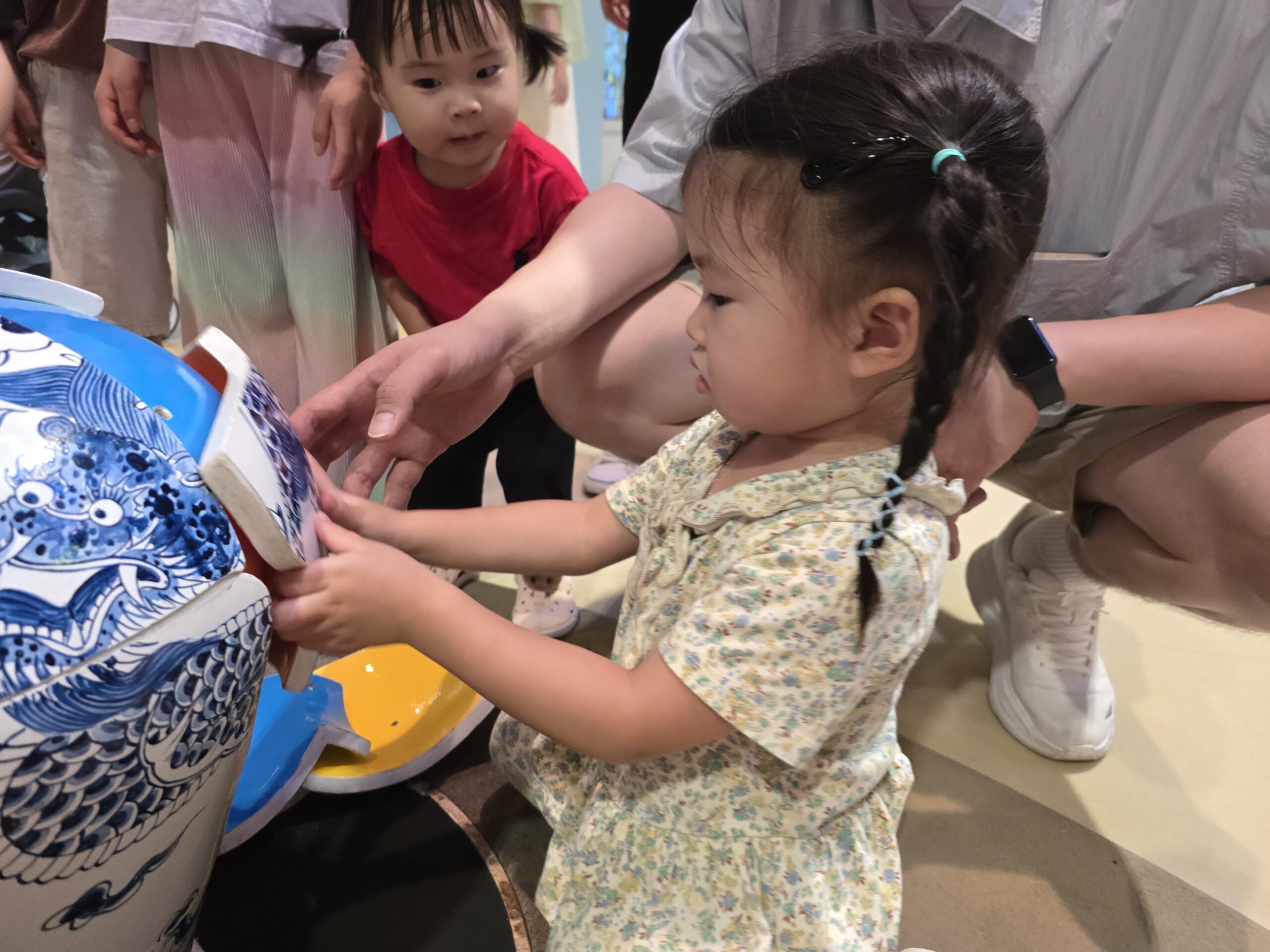
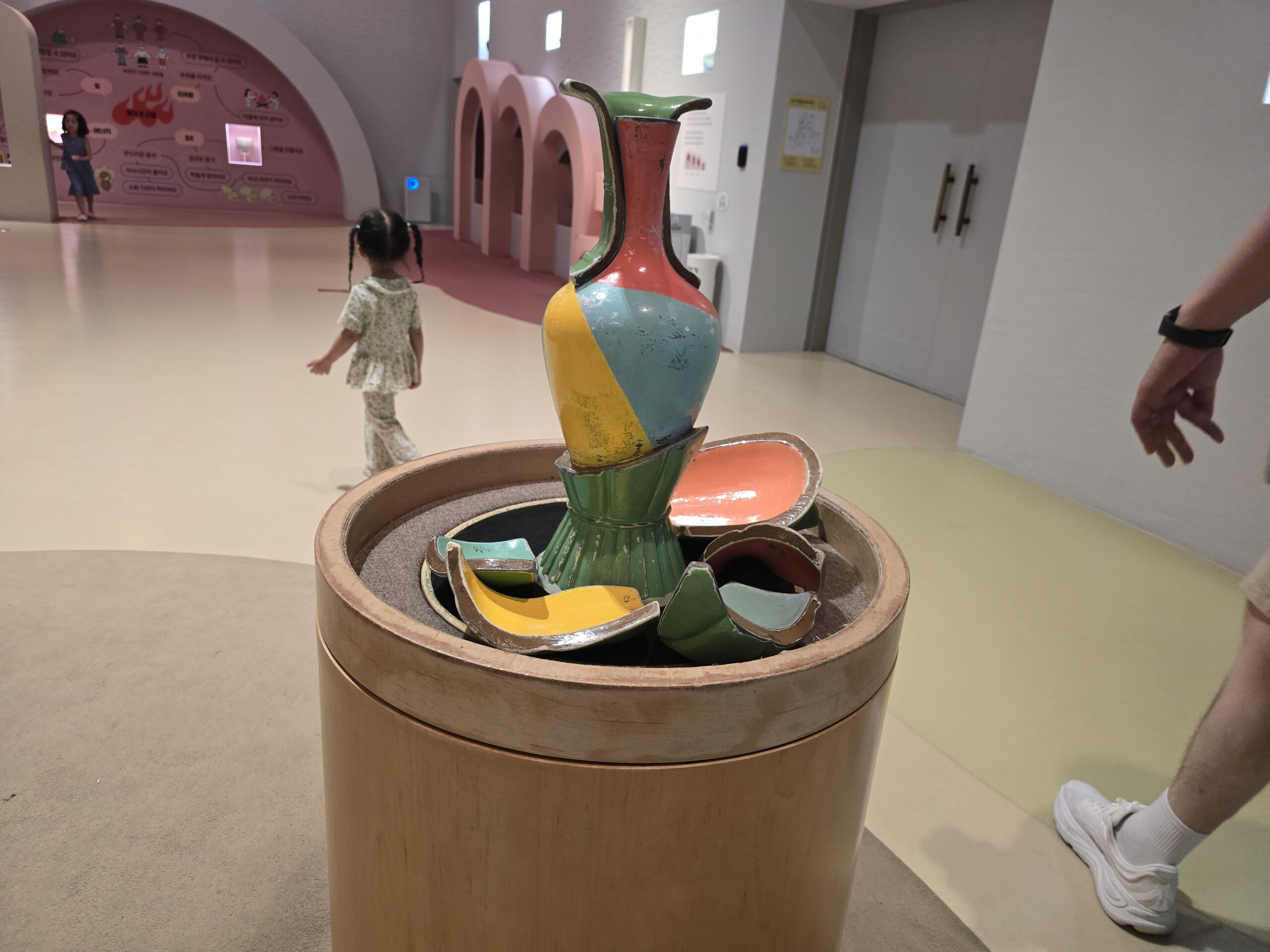
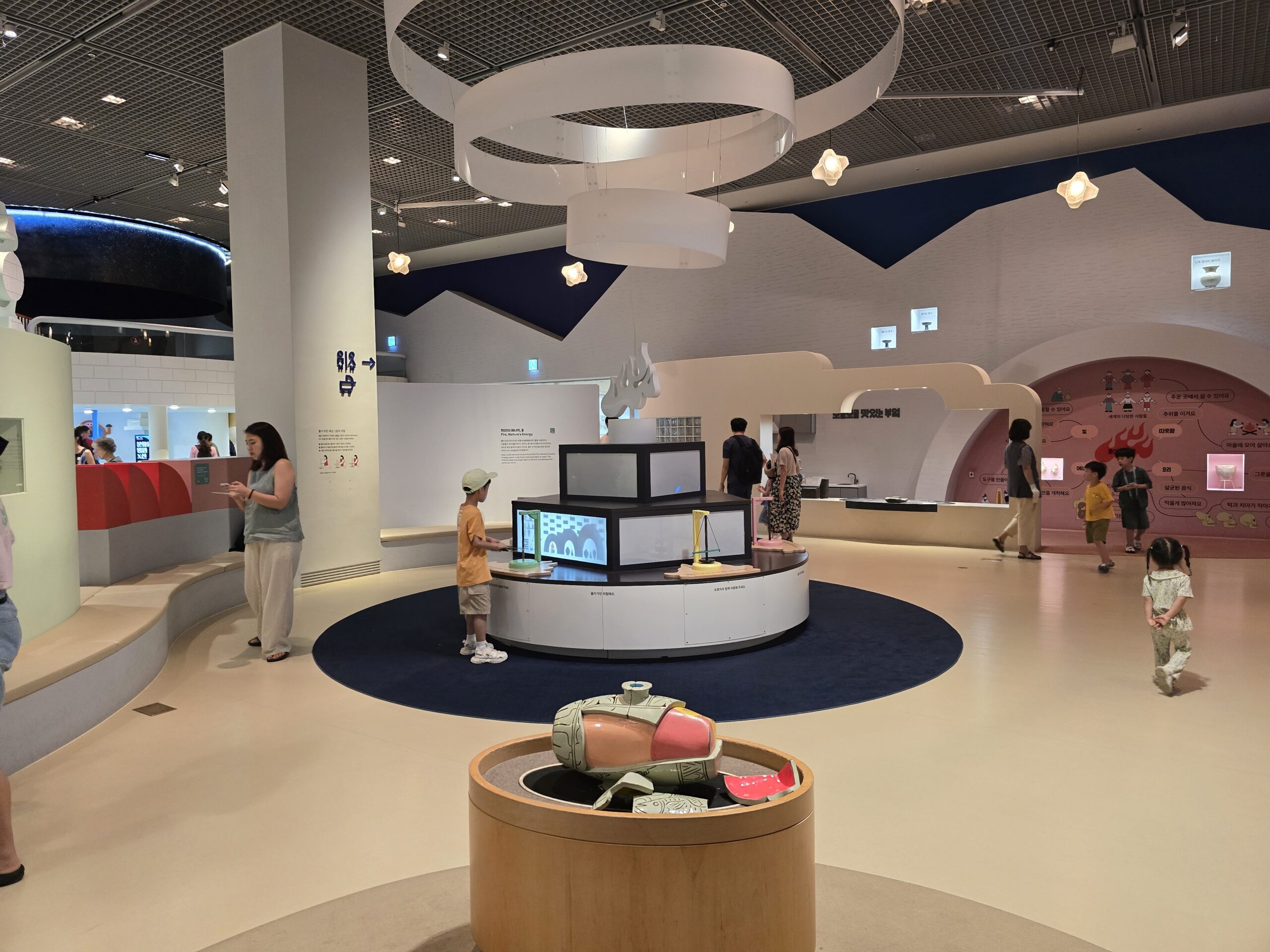
Interactive screens, celadon puzzle assembly, and physical exhibits kids can handle directly.
This was the section that pulled even the adults in. There’s a reassembled celadon vessel you can touch and manipulate, interactive screens that respond to movement, and visual storytelling that connects Korean craft traditions to modern design thinking. Genuinely interesting, even for a parent who’s seen a lot of museum exhibits.
Connect Your Heart (마음을 이어요)
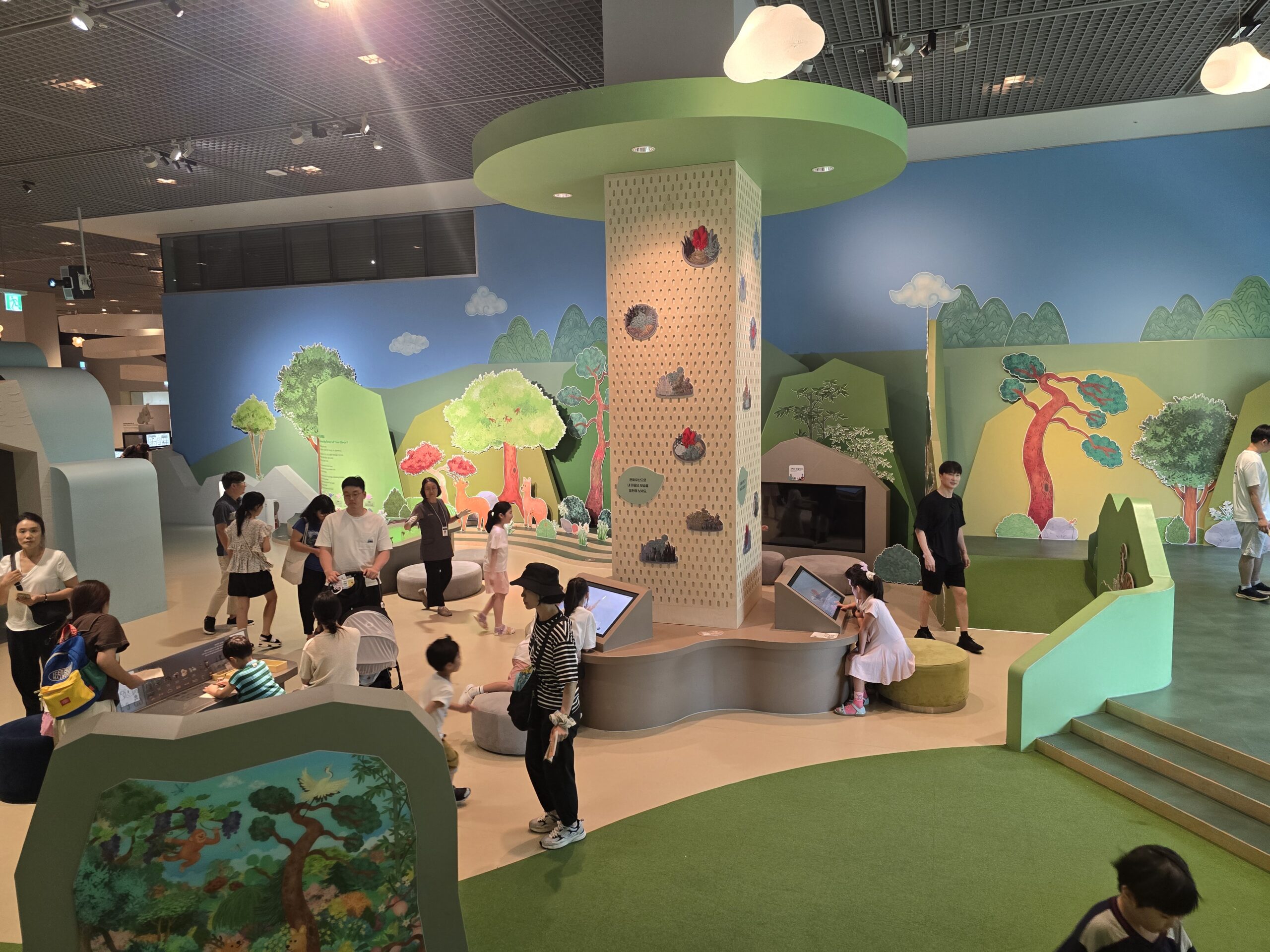
The “Connect Your Heart” section. Nature murals, a climbable tree structure, and quieter activities for winding down.
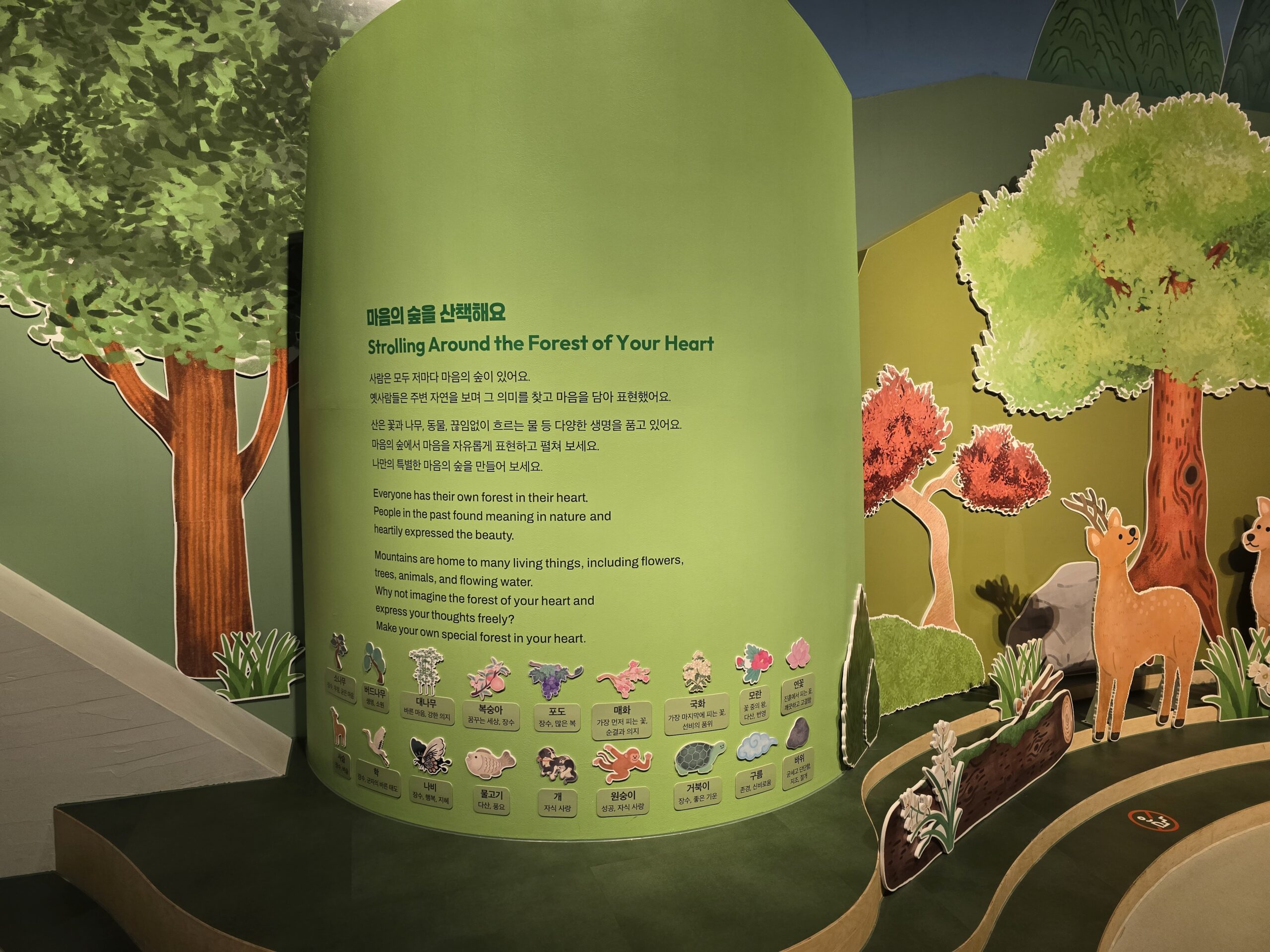
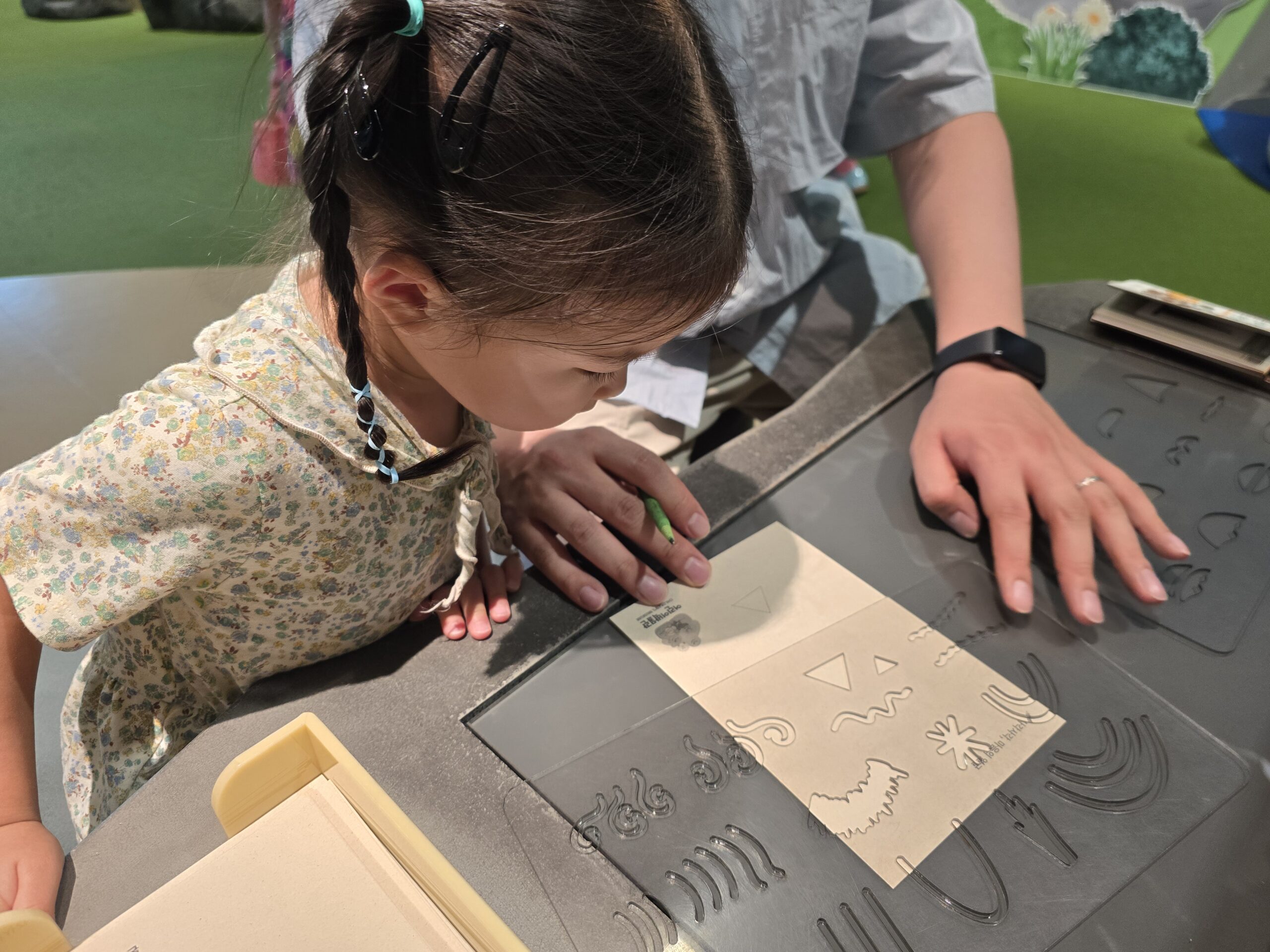
Hands-on activities here slow the pace down and create space for conversation between parent and child.
This final zone has a different energy — calmer, more reflective. The nature-themed murals and collaborative activities made it a natural place to slow down and actually talk with our daughter about what she’d seen. One of those rare museum moments where the experience becomes a real conversation.
We Brought a 30-Month-Old — Here’s How It Went
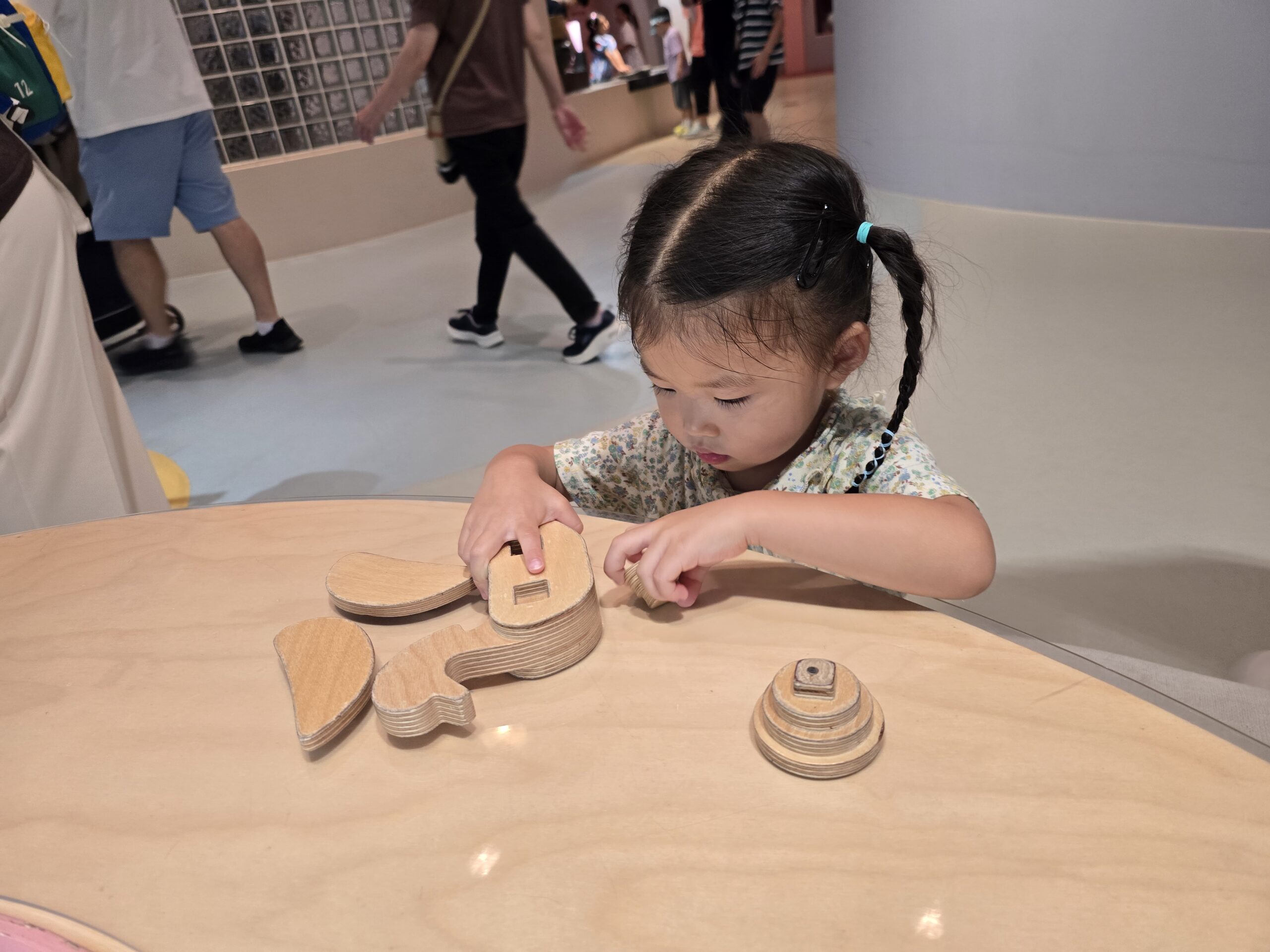
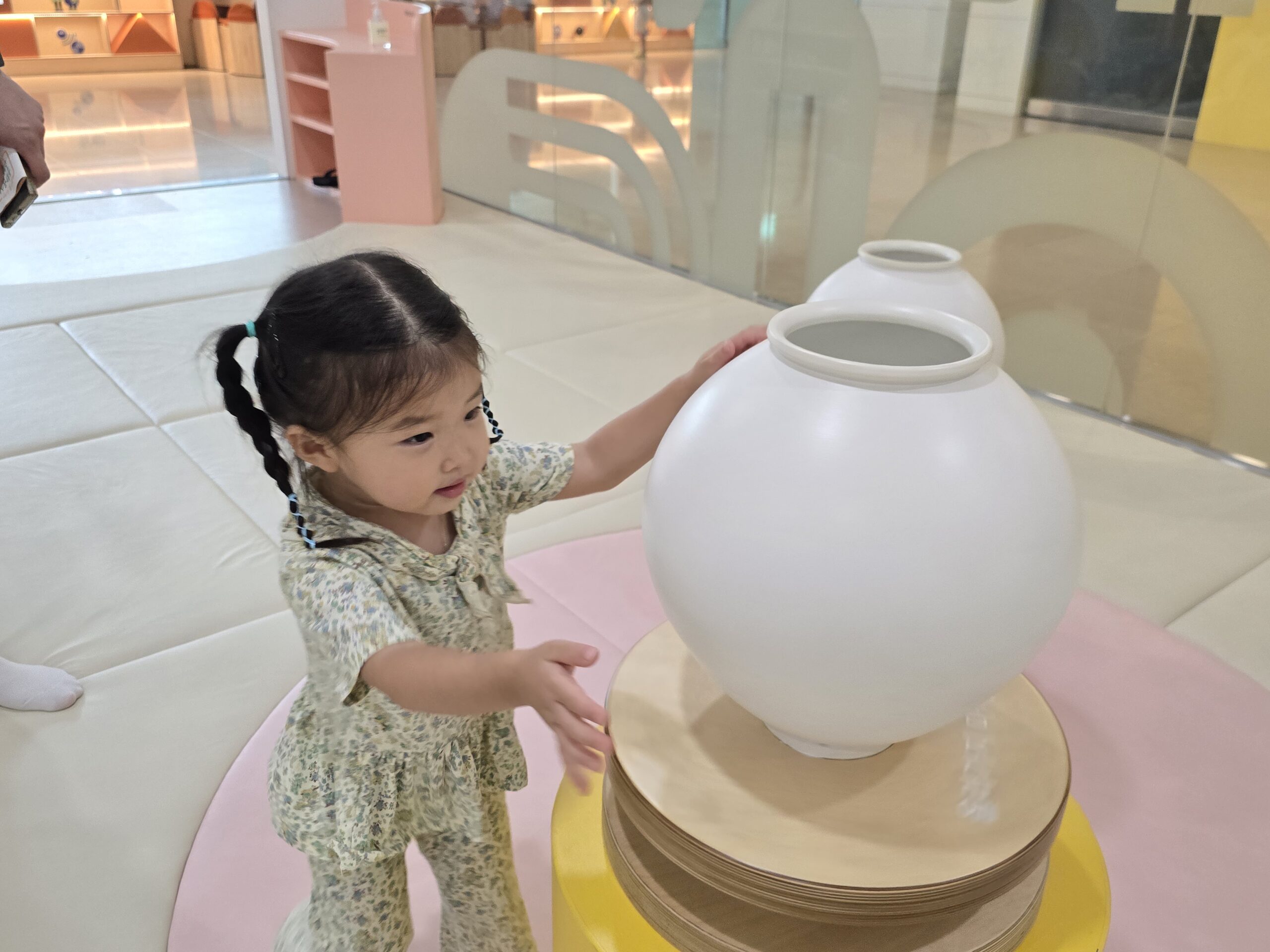
Wooden puzzles and tactile moon jar replicas — the kind of hands-on elements that work well even for younger toddlers.
The official target age is 5–9. Our daughter was 30 months. She lasted the full session without melting down, which around here counts as a win.
What worked: anything she could touch, climb on, or watch move. She didn’t understand the cultural context — but she didn’t need to. The exhibit is visually stimulating enough that younger kids stay engaged just by moving through it. The larger worry with toddlers at museums (boredom, restraint, “don’t touch that”) basically didn’t apply here.
What was harder: the interactive screens require some fine motor coordination she didn’t quite have yet. A few stations needed an adult to assist. But that’s a minor point — there was more than enough to keep her happy.
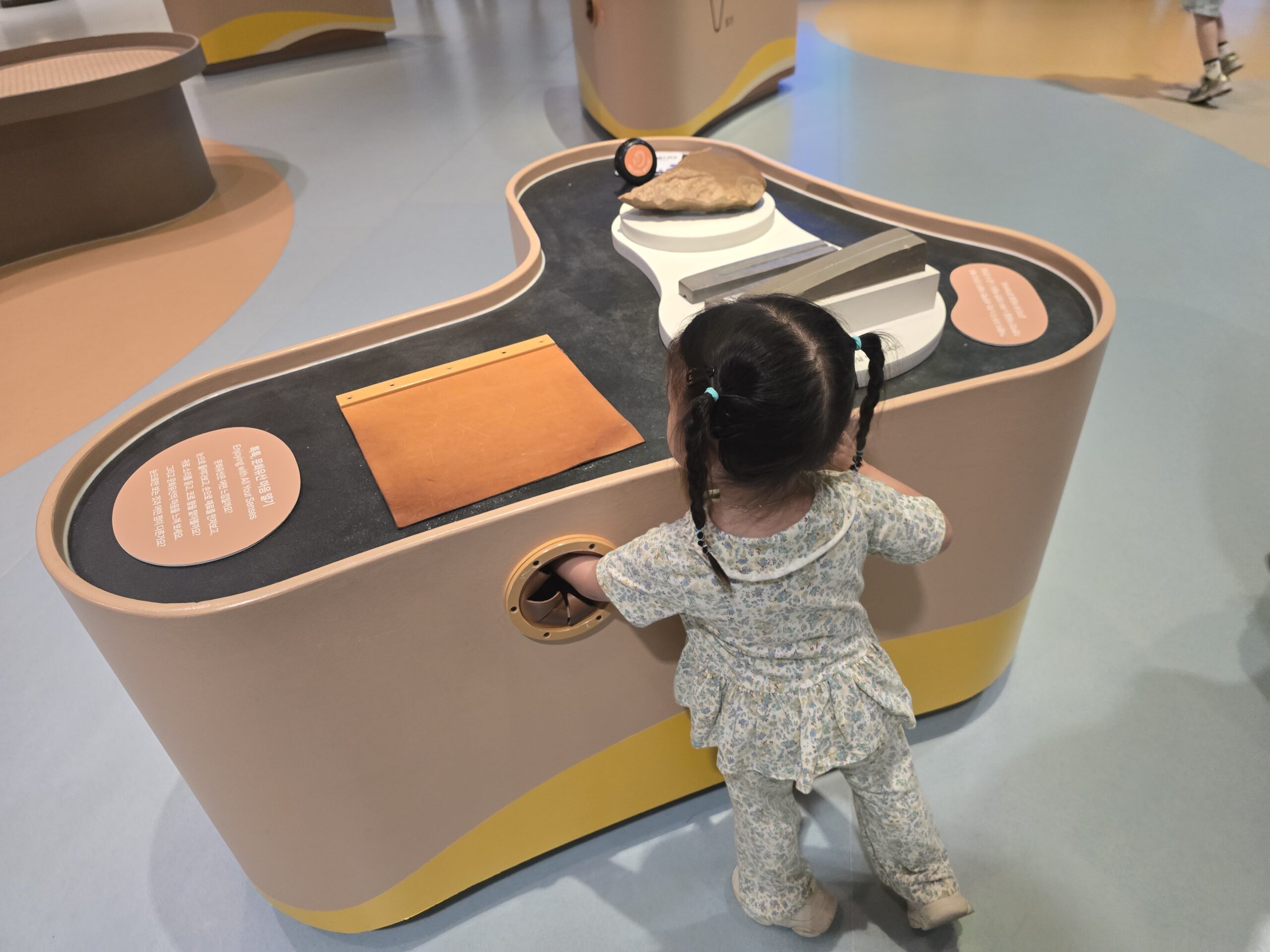
Interactive stations throughout the exhibition have physical controls kids can operate themselves.
Under 3? There’s a Dedicated Space — Deulguldeul Playground
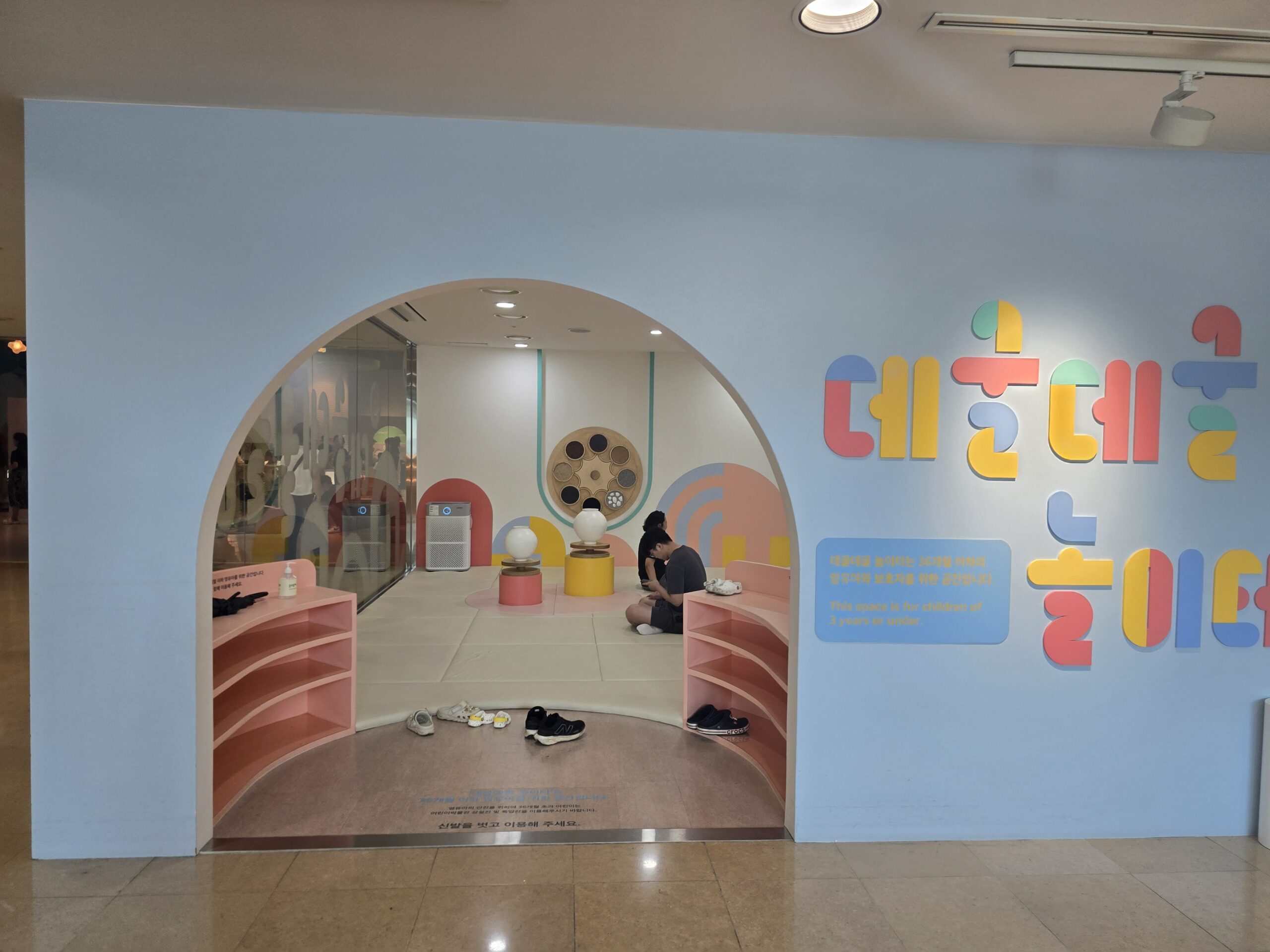
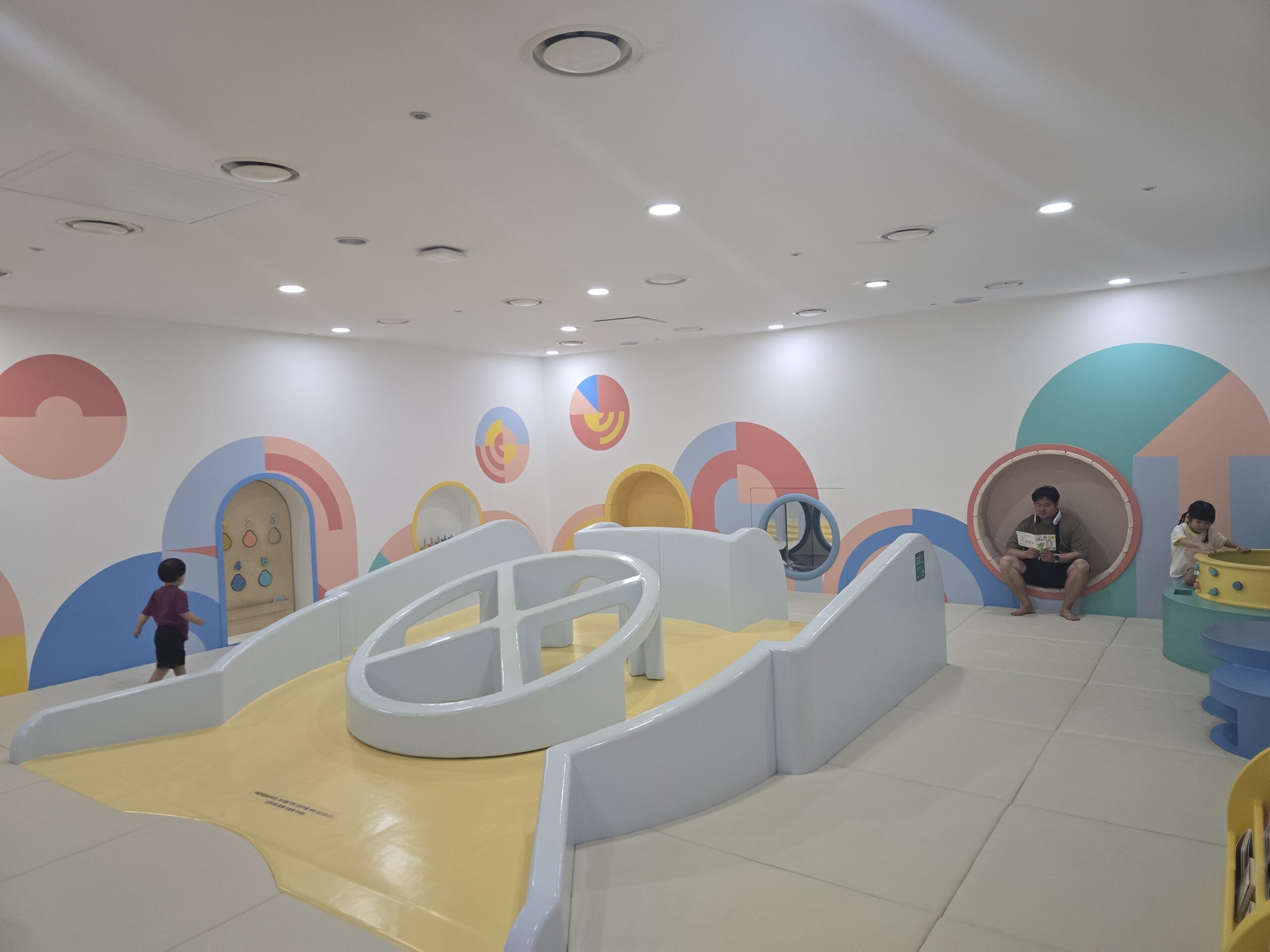
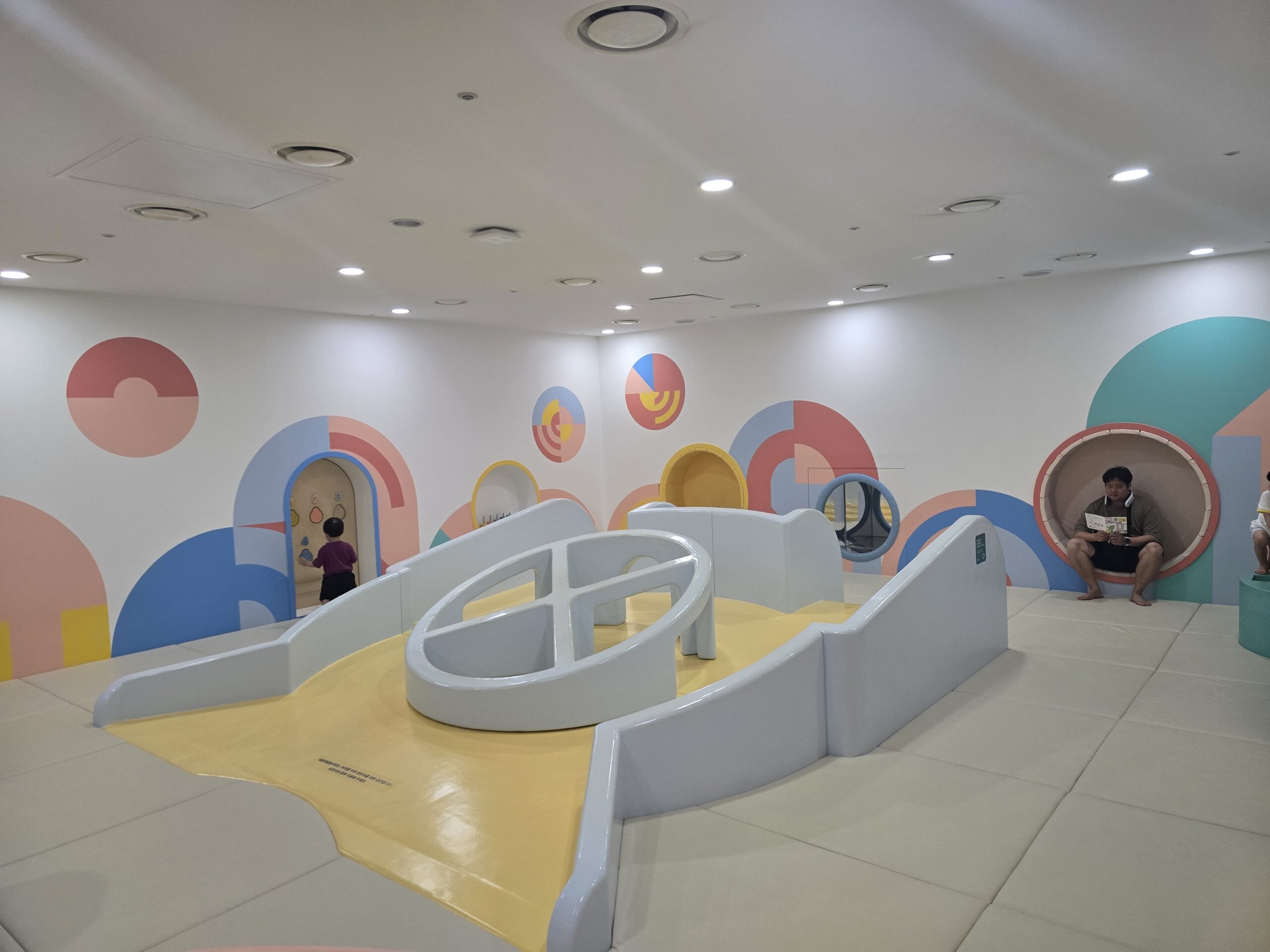
Deulguldeul Playground — the dedicated under-36-months zone. Shoes off at the entrance; soft flooring, slides, tunnels, and padded play structures throughout.
This soft-play area runs alongside the main exhibition and is reserved exclusively for children 36 months and under. Shoes off at the door; the whole space is padded and low-impact. If your child is very young, this is worth planning time for specifically — it’s genuinely well-designed for that age group, not just a token corner.
Stroller-Friendly? Yes — Here’s What to Expect
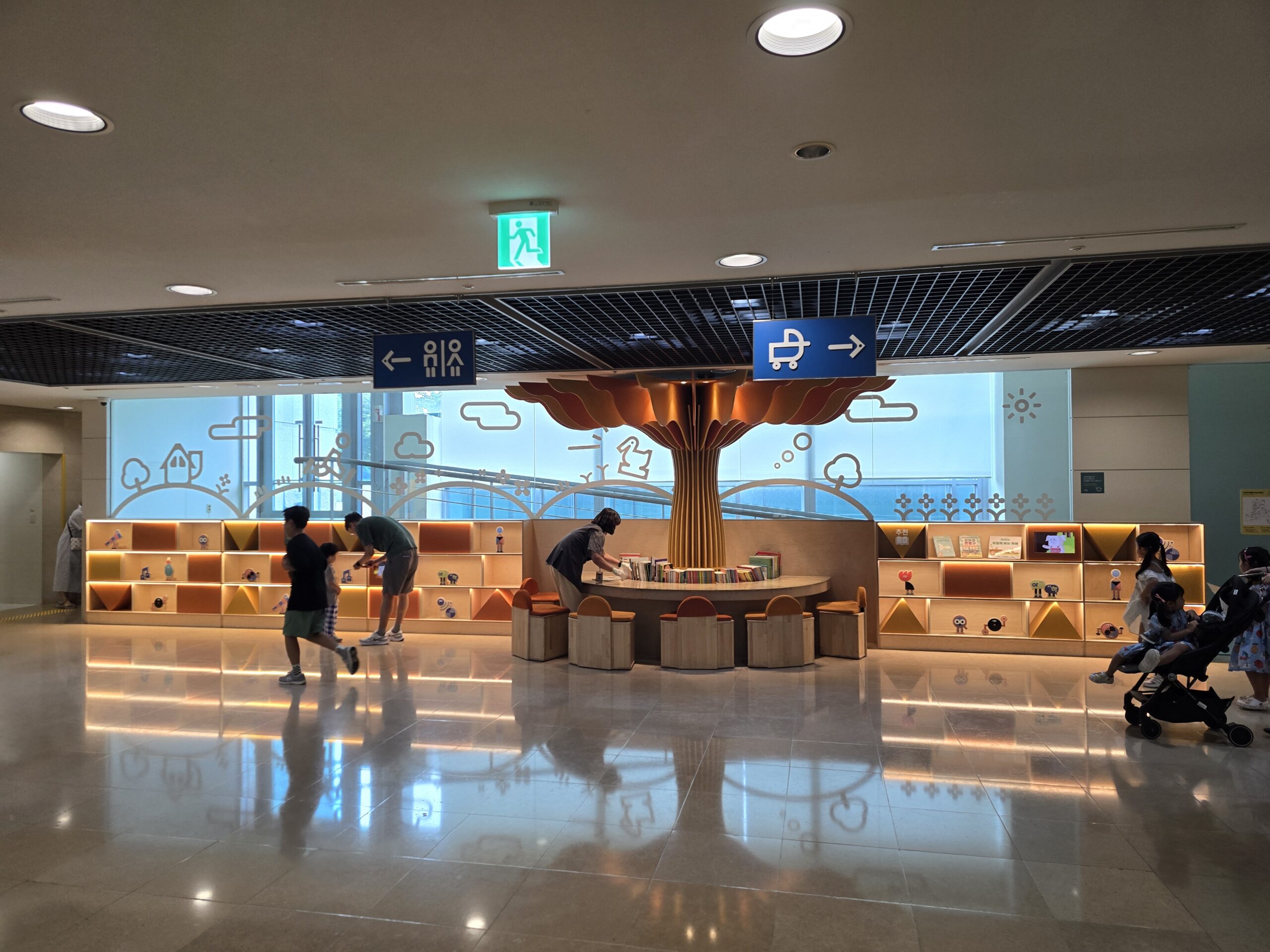
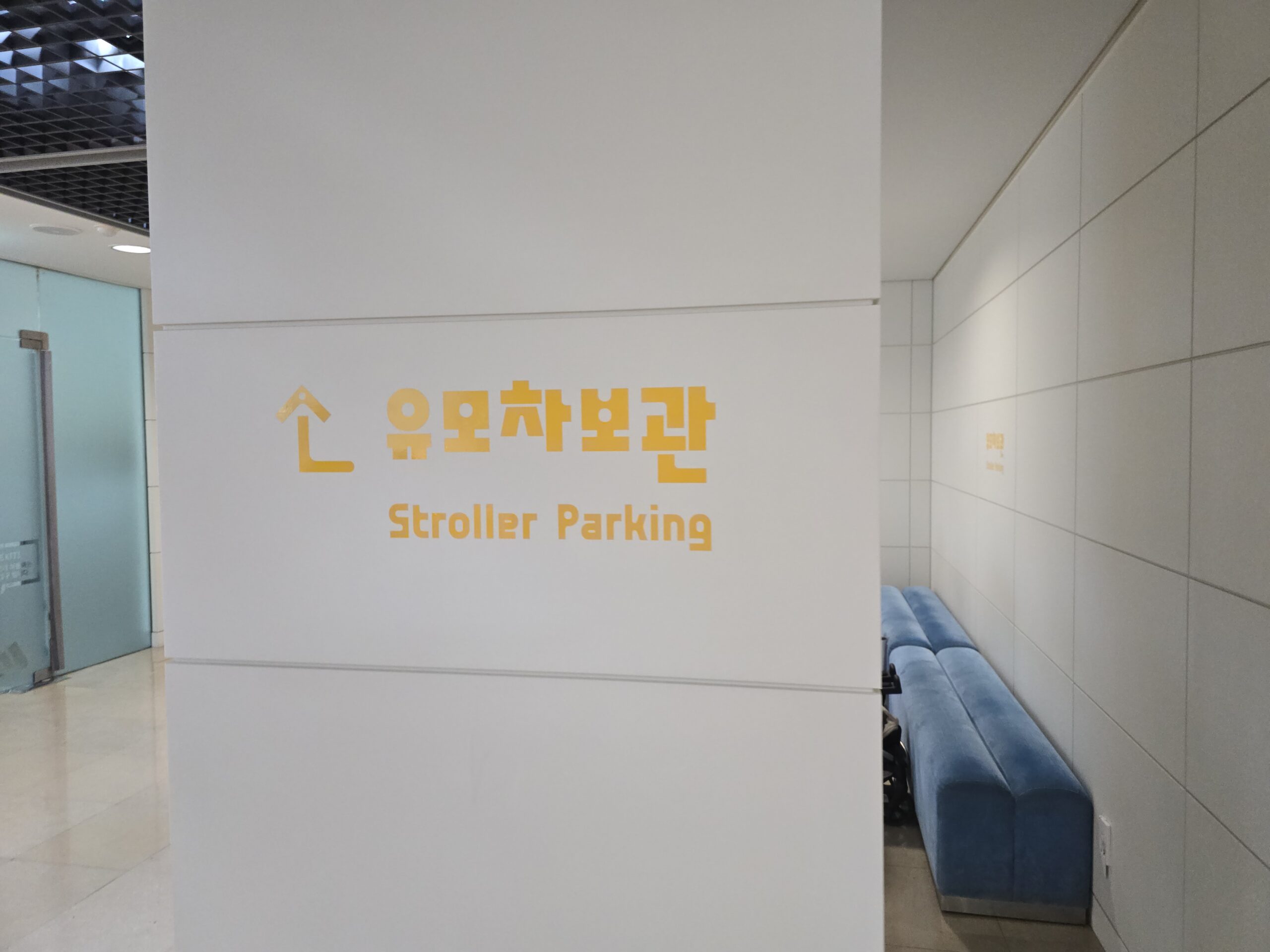
Stroller parking is clearly signed just outside the main entrance. The lobby also has lockers for bags during your session.
The National Museum of Korea campus is one of the more stroller-friendly spots we’ve visited in Seoul. Wide pathways, working elevators, and no unexpected steps. A dedicated stroller parking area is right outside the Children’s Museum entrance.
- Strollers: Can be taken through the whole campus. Designated parking at the Children’s Museum entrance.
- Lockers: Available in the waiting area — for the duration of your session (80 min) only.
- Photography: Allowed throughout (no flash, non-commercial use).
- Food: Not permitted inside. The main museum building has a café.
After the Children’s Museum — What Else to Do Here
The Children’s Museum is the destination, but the main National Museum of Korea is right there — and it’s also free. With a child who’s just spent 80 minutes running around, you might not do a full tour of the permanent collection. But there are two things worth making time for.
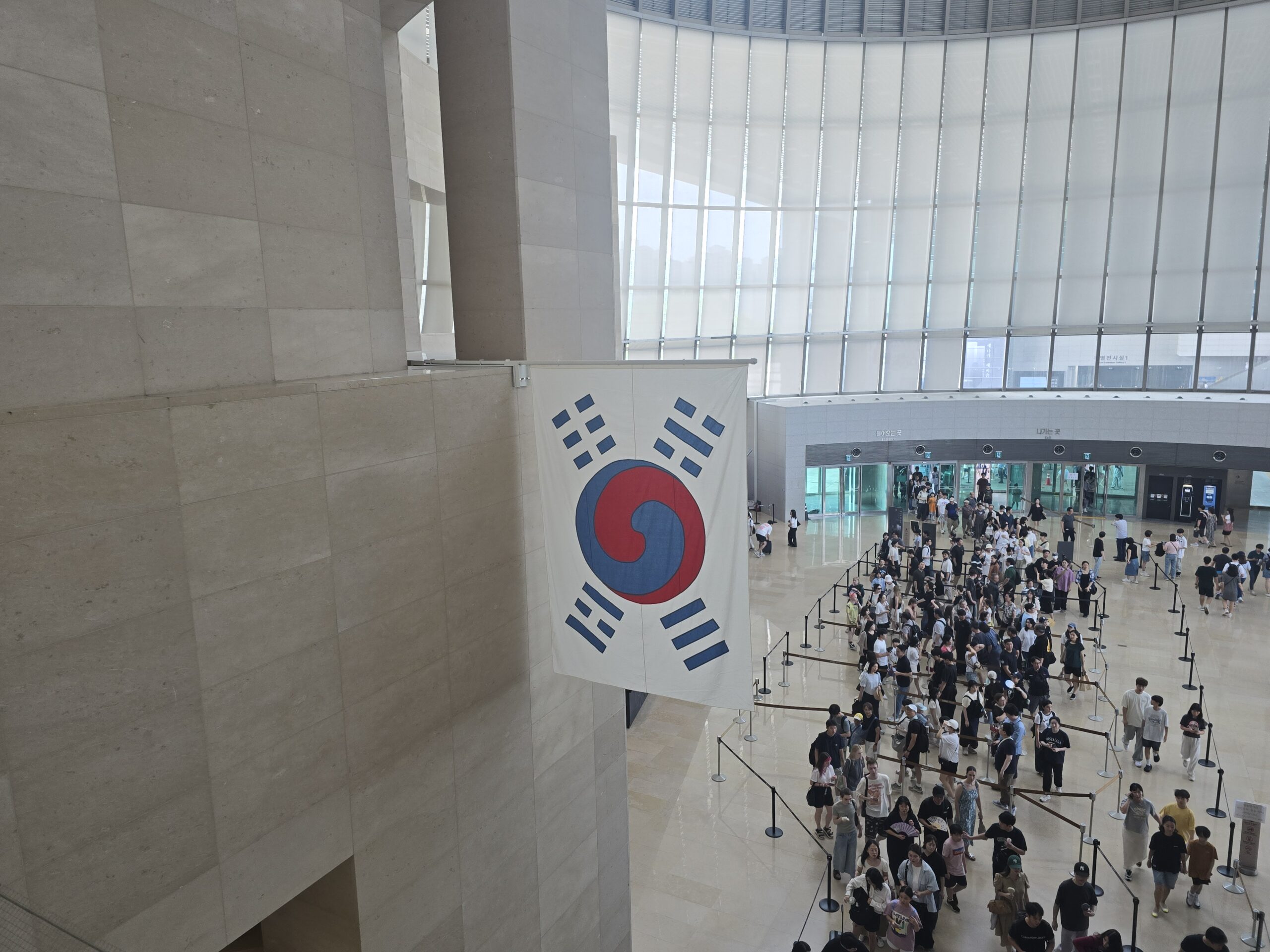
The main museum lobby. The scale of the building hits you as soon as you walk in — Taegukgi hanging from the ceiling, hundreds of visitors moving between galleries.
The Room of Contemplation (사유의 방)
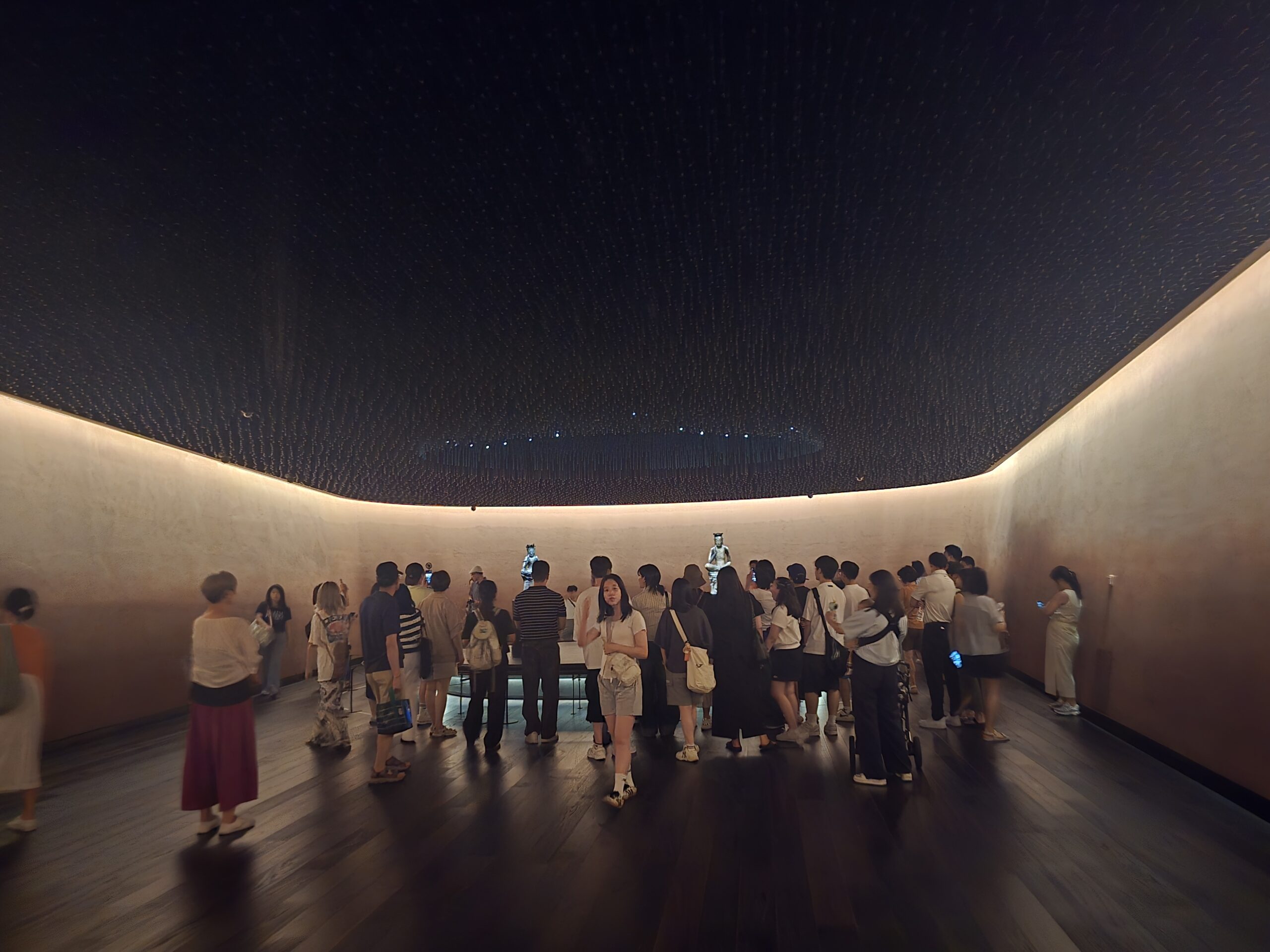
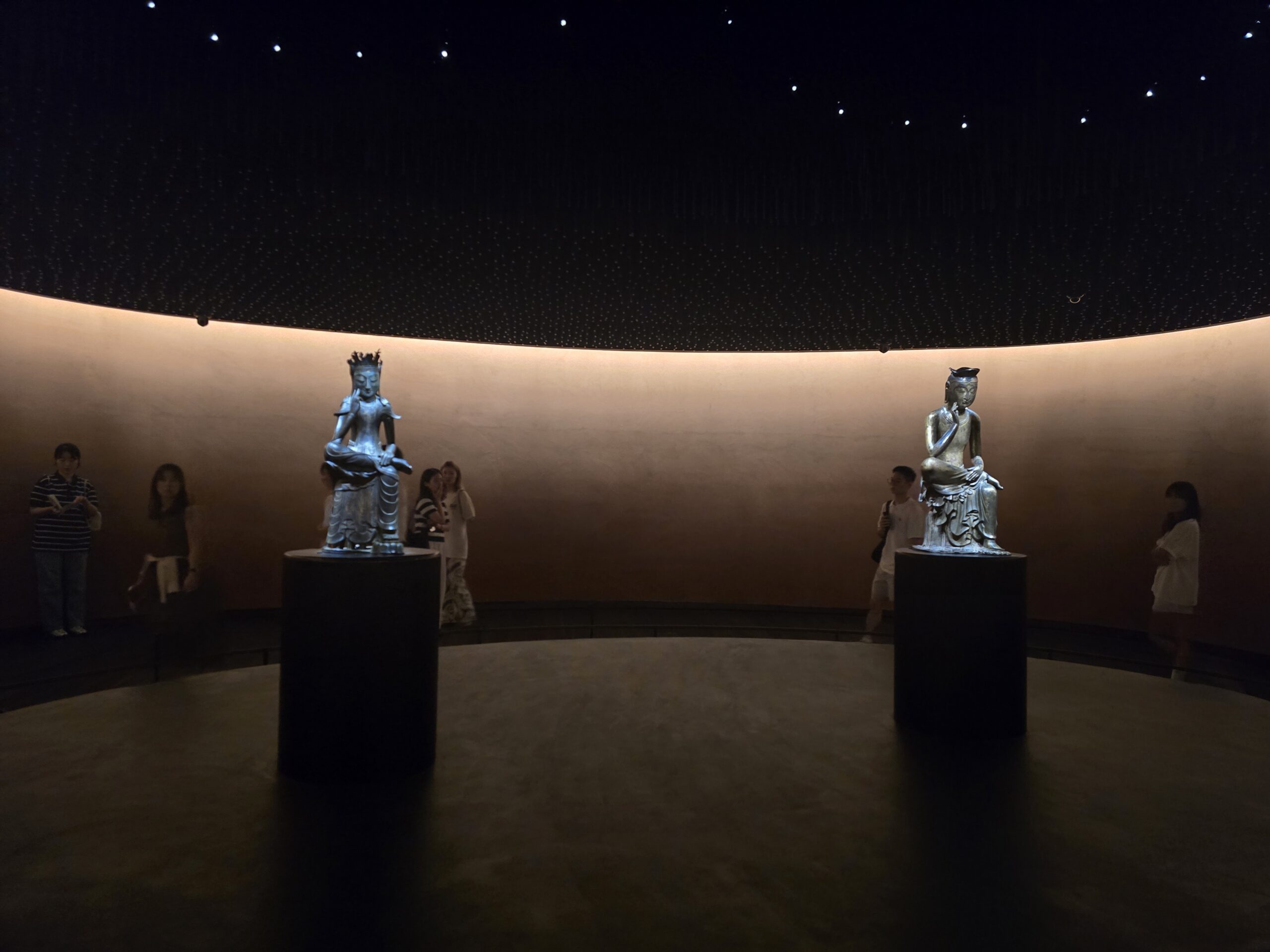
The Room of Contemplation. Two National Treasure pensive bodhisattva statues face each other in a dark oval room with a pinhole ceiling. It’s one of those rooms that actually earns its reputation.
This is the one room I tell every visitor to see regardless of how much time they have. Two Korean National Treasure sculptures — pensive bodhisattvas from the Three Kingdoms period — face each other in a curved, darkened gallery. No glass cases. No crowd barriers. The room is always full, but somehow still quiet. Even small children tend to go still in there.
Seoul View + N Seoul Tower
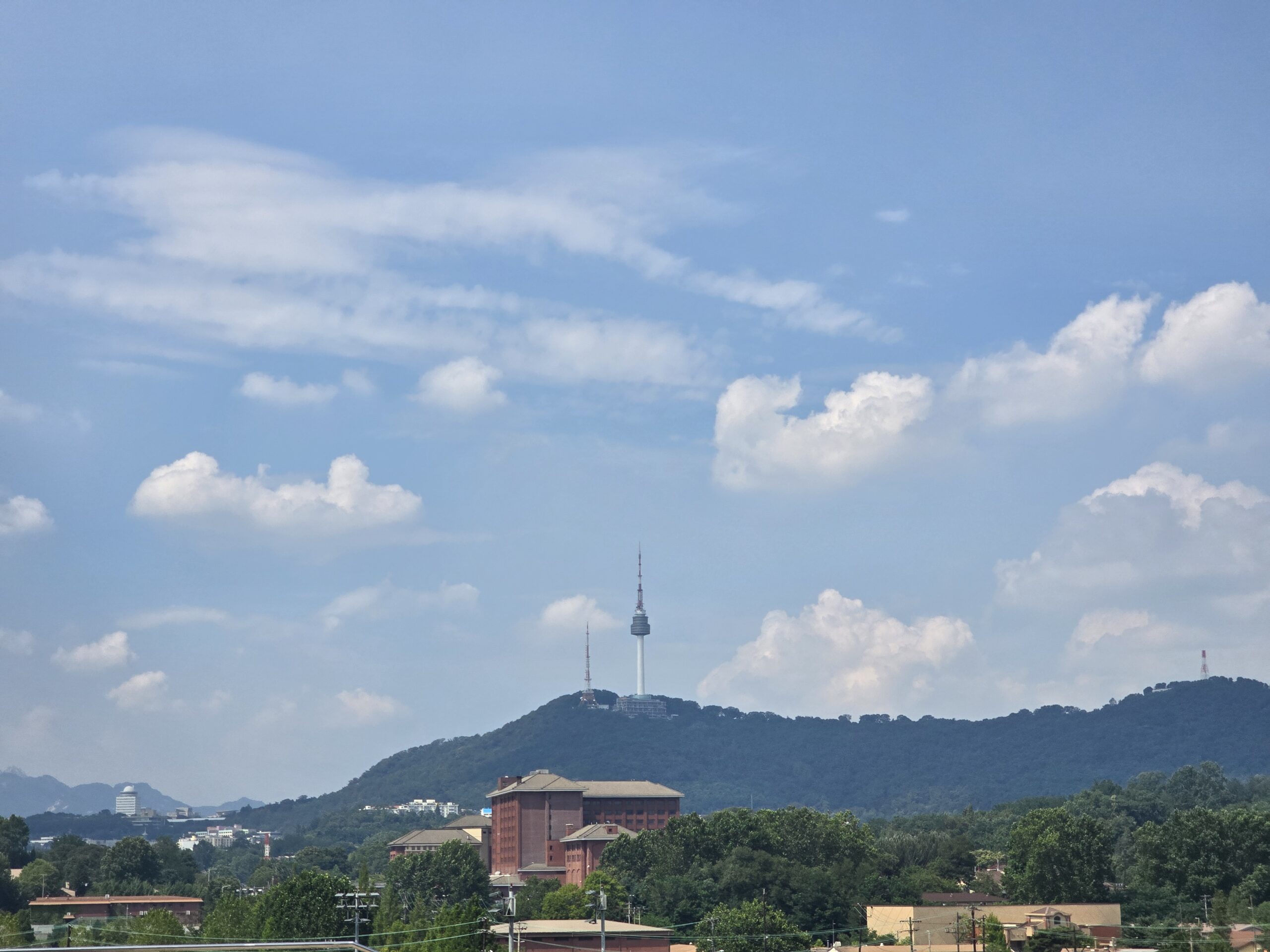
The view from the museum grounds. On a clear day you can see N Seoul Tower on Namsan — and it’s only about 20 minutes away if you want to add it to the day.
Museum Shop & Bookstore
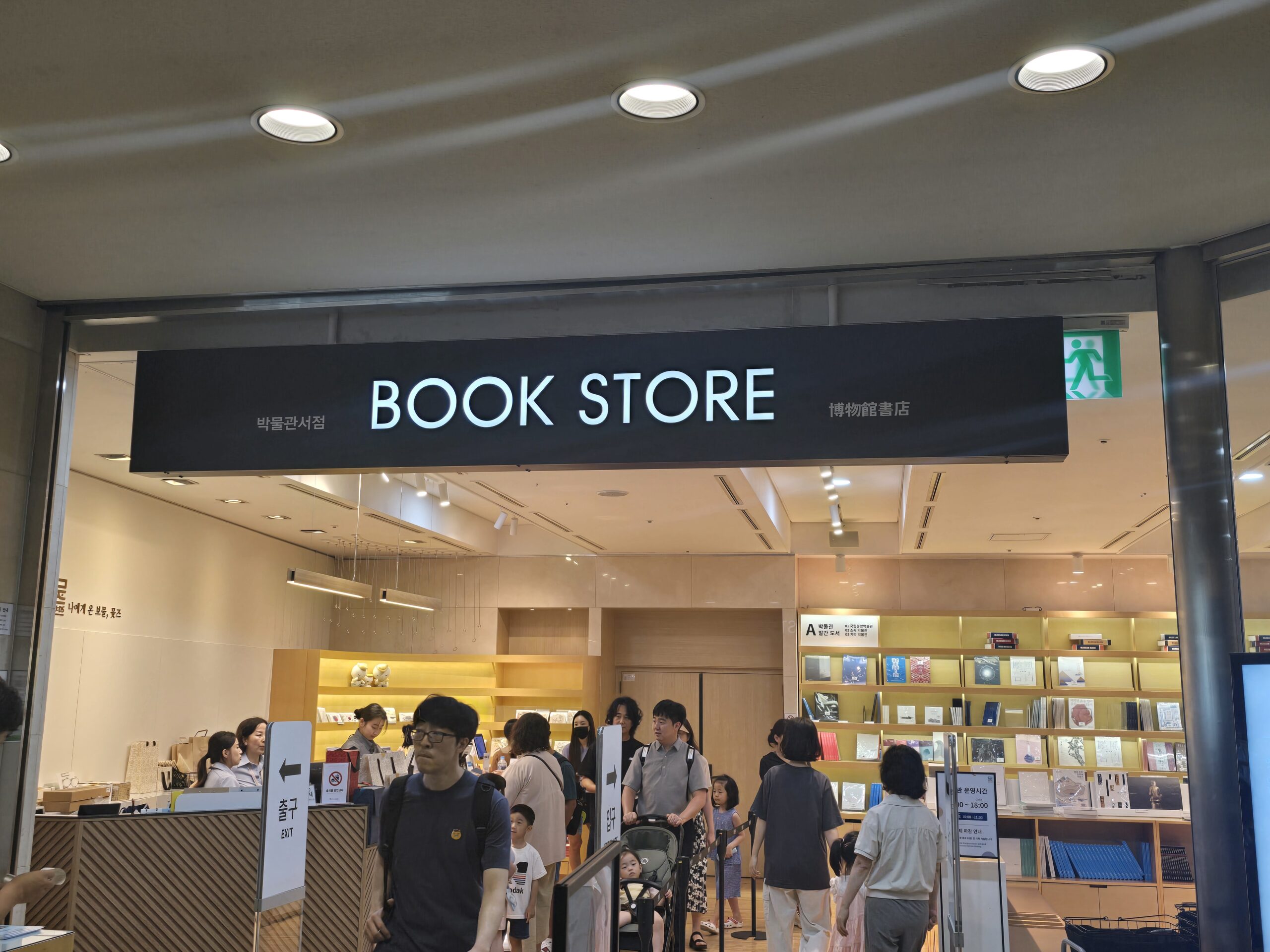
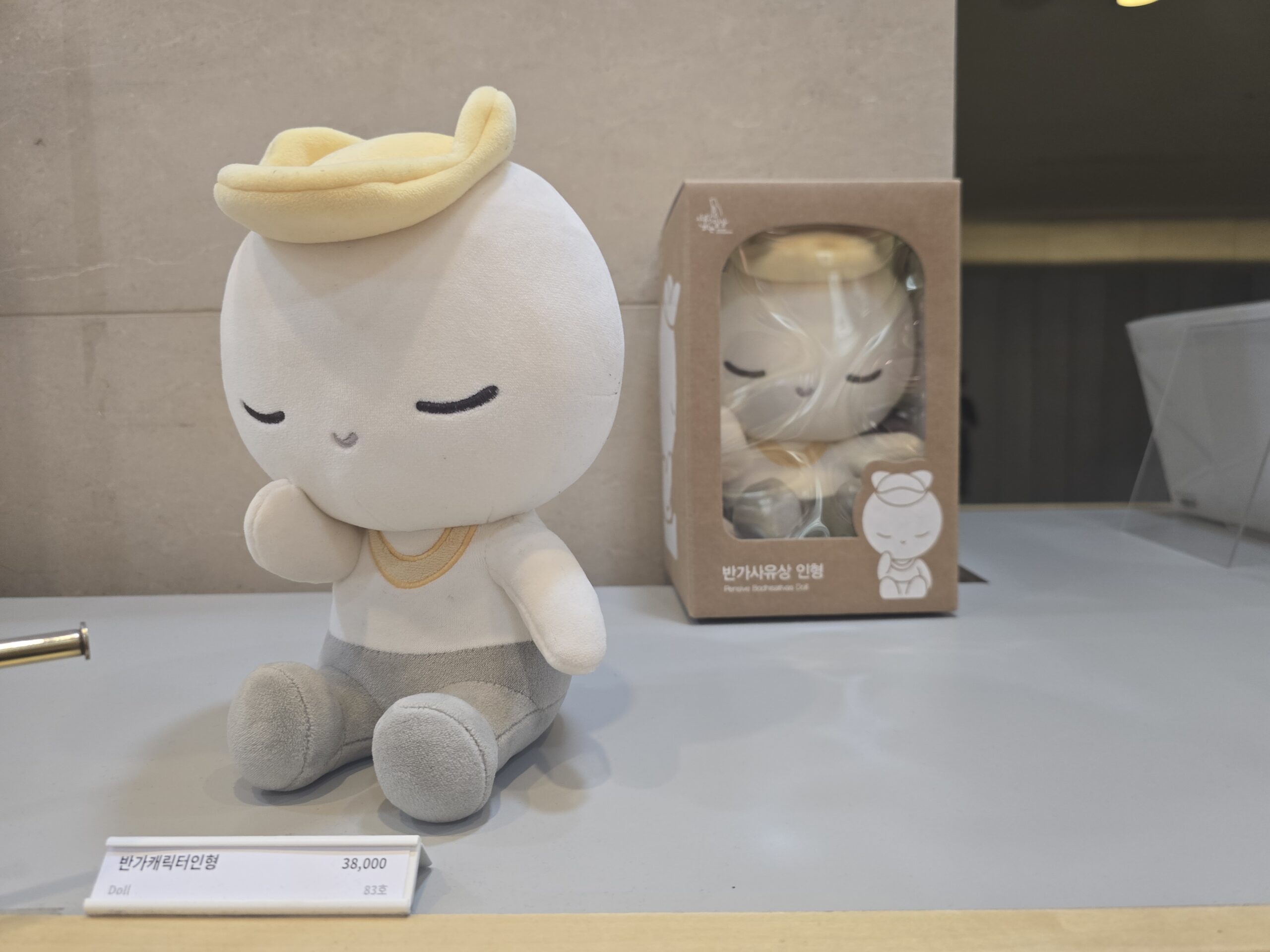
The museum bookstore and gift shop. The pensive bodhisattva character plush (around ₩38,000) is the most popular souvenir — and genuinely hard to find anywhere else.
The museum gift shop and bookstore are worth a browse even if you’re not a museum person. The design is distinctly Korean — stationery, ceramics, prints, and character merchandise based on the collection. The pensive bodhisattva plush toy has become something of an icon. If you’re looking for a souvenir that’s actually interesting, this is a better option than most of what you’ll find in Myeongdong.
Character Photo Spot
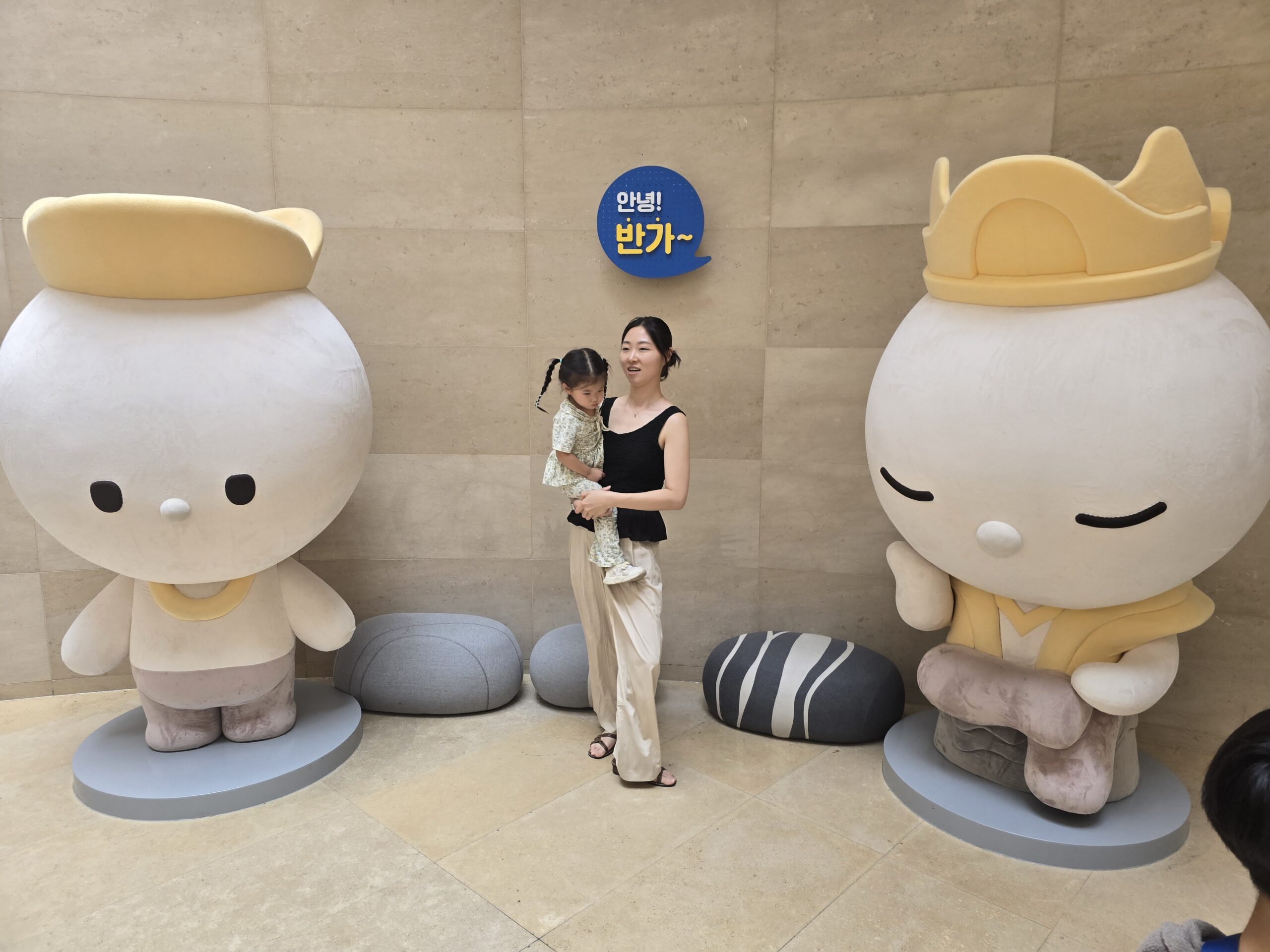
The character photo spot outside the Children’s Museum. Two oversized pensive bodhisattva characters make for a very good family photo.
Right outside the Children’s Museum exit — two large character versions of the pensive bodhisattva. Easy family photo, zero effort. Our daughter was a big fan. Highly recommend not leaving without one.
Where to Stay Nearby
The museum is in Yongsan, which puts you close to Itaewon, Namsan, and the Han River. It’s a solid base for families who want easy access to both central Seoul and the river parks.
Itaewon · 5★
Classic Seoul stay with Namsan views. Walking distance to Itaewon and easy access to the museum.
Check rates on Agoda →
Yongsan · 4★
Closest hotel to the museum. Right next to Yongsan Station with fast subway access.
Check rates on Agoda →
Myeongdong · 4★
Great value, central location. A few subway stops from the museum with easy access to shopping and street food.
Check rates on Agoda →
Final Verdict
If I could only recommend one free thing to do in Seoul with a young child, this would be it. It’s not as loud or thrilling as a theme park — and that’s entirely the point. What it gives you is something more lasting: a genuine encounter with Korean culture, at a child’s level, in a setting that’s also genuinely beautiful for adults.
The pensive bodhisattva room alone is worth the trip. The Children’s Museum is a bonus that happens to be one of the best of its kind in the country.
Free. Indoor. Stroller-friendly. English signage. Incredible main museum attached. Book two weeks out and just go.
| Name | National Museum of Korea — Children’s Museum |
| Address | 137 Seobinggo-ro, Yongsan-gu, Seoul (04383) |
| Subway | Ichon Station (Line 4 / Gyeongui–Jungang), Exit 2 → 5 min walk |
| Hours | 09:30 – 17:20 (daily) |
| Sessions | 5 sessions per day · 80 min each · 320 visitors per session |
| Admission | Free |
| Reservation | Required online · Opens 14 days in advance |
| Phone | 02-2077-9647 |