
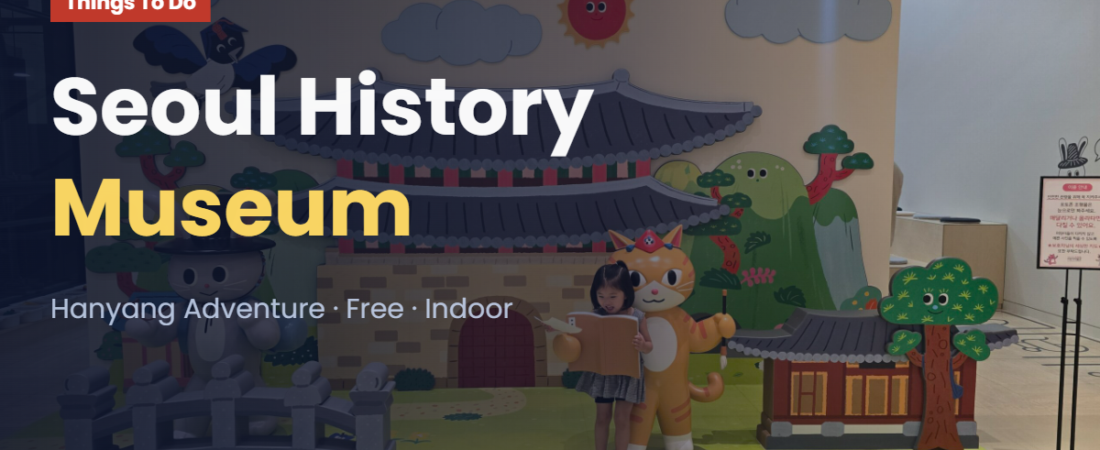
Seoul Children’s Museum of History: Our Honest Family Review (Hanyang Adventure)
Free · Fully Indoor · Stroller-Friendly · Gwanghwamun Area · Reservation Required
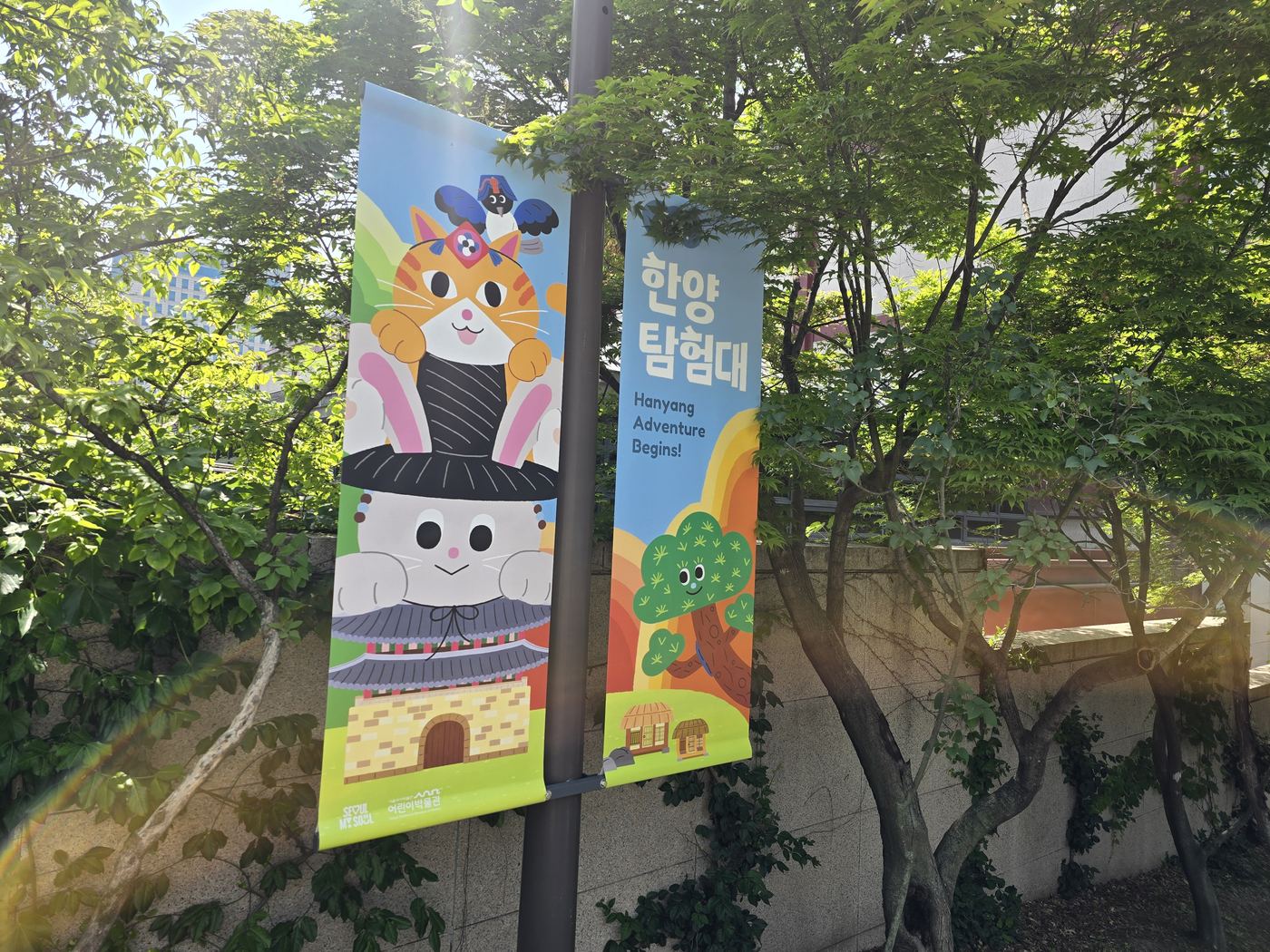
The Hanyang Adventure banner at the museum entrance.
If you’re looking for a hands-on cultural experience for kids in Seoul â one that’s completely free, fully indoors, and genuinely engaging â the Seoul Children’s Museum of History (ìì¸ìì¬ë°ë¬¼ê´ ì´ë¦°ì´ë°ë¬¼ê´) belongs on your list.
The current exhibition, Departure! Hanyang Adventure (ì¶ë°! íìííë), takes kids back to Joseon-era Seoul â known then as Hanyang. Children receive their own digital coin tag, spend sangpyeongtonbo (traditional copper coins), shoot arrows, make herbal medicine, and visit a traditional school. There are no passive displays here: everything is interactive, physical, and surprisingly engaging for adults too.
- â Free admission (advance reservation required)
- â Fully indoors â perfect for rainy days, hot summers, cold winters
- â Stroller-accessible throughout â flat paths, elevators, wide corridors
- â Kids use real (digital) coins to participate in activities
- â Recommended age 6+ â our 5-year-old had a great time
- â Right next to Gyeonghuigung Palace â easy to combine for a half-day
- â Walking distance from Gyeongbokgung, Gwanghwamun, and Insadong
Where to Go Before or After â Suggested Itineraries
The museum sits between Gwanghwamun and Seodaemun Station, making it a natural fit with several of Seoul’s most visited landmarks. Gyeonghuigung Palace is immediately next door, and Gyeongbokgung is a short walk away.
Option 1 â Full Joseon Culture Day (half-day to full day)
â
Hanyang Adventure (timed entry)
â
Afternoon Gyeonghuigung Palace stroll
ð¡ Kids who’ve just shot arrows and made herbal medicine walk through a real palace with completely different eyes.
Option 2 â Gwanghwamun City Loop (half-day, subway only)
â
Hanyang Adventure
â
Afternoon Insadong browse
ð¡ Entirely doable by subway â no car needed.
Option 3 â Short Half-Day (2â3 hours)
â
5-min walk Gyeonghuigung casual visit
â
Optional Lunch nearby
ð¡ Book the 10:00 AM first slot and your afternoon is completely free.
- From Seodaemun Station to the museum: flat sidewalk, no stairs
- Inside: full elevator access between floors, wide corridors between activity zones
- Most activities require kids to run around freely â better suited for walking toddlers
- Nursing room available inside the museum
Essential Info Before You Visit
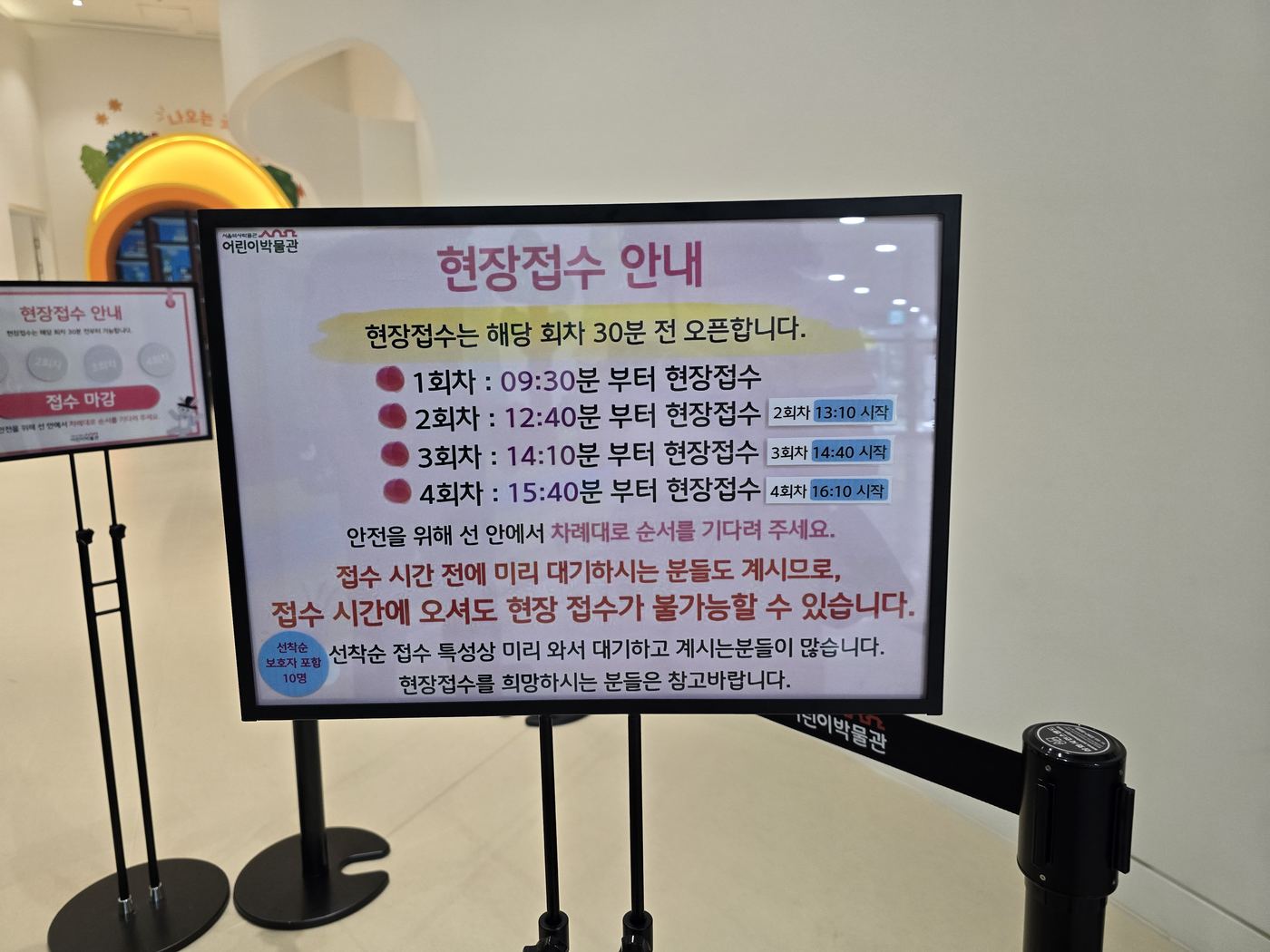
The session schedule board at the entrance. Four sessions run daily â advance booking is essential.
| Admission | Free (reservation required) |
| Hours | Tuesday â Sunday, 10:00 AM â 5:20 PM |
| Closed | Every Monday and January 1st (If a public holiday falls on Monday, the museum opens as normal) |
| Recommended Age | Ages 6â7 and elementary school / guardian must accompany |
| Session Duration | Approx. 60â90 minutes per session |
| Check-In | Desk at the entrance â name + last 4 digits of phone number |
| Reservation | Seoul Public Service Reservation (English available) â search “Seoul Children’s Museum of History” |
| Address | 55 Saemunan-ro, Jongno-gu, Seoul (Seoul Museum of History building) |
| Subway | Line 5 Gwanghwamun Station (Exit 7) or Line 5 Seodaemun Station (Exit 4) |
Daily Sessions
| Session | Time |
|---|---|
| Session 1 | 10:00 AM â 11:30 AM |
| Session 2 | 1:00 PM â 2:20 PM |
| Session 3 | 2:40 PM â 3:50 PM |
| Session 4 | 4:10 PM â 5:20 PM |
We got in on a last-minute cancellation slot, but if you have a specific date in mind, book as early as possible. Walk-in spots are occasionally available but not guaranteed. Don’t forget â the museum is closed every Monday.
ð How to Reserve (Step by Step)
- Go to yeyak.seoul.go.kr â click the English button (top right) if needed
- In the search bar, type Seoul Children’s Museum of History
- Select your preferred date and session time
- Enter visitor details (name, phone number) and confirm
- At the museum desk: give your name + last 4 digits of your phone number â no printout needed
The site has an English version, but if you have trouble, the museum name in Korean is: ìì¸ìì¬ë°ë¬¼ê´ ì´ë¦°ì´ë°ë¬¼ê´
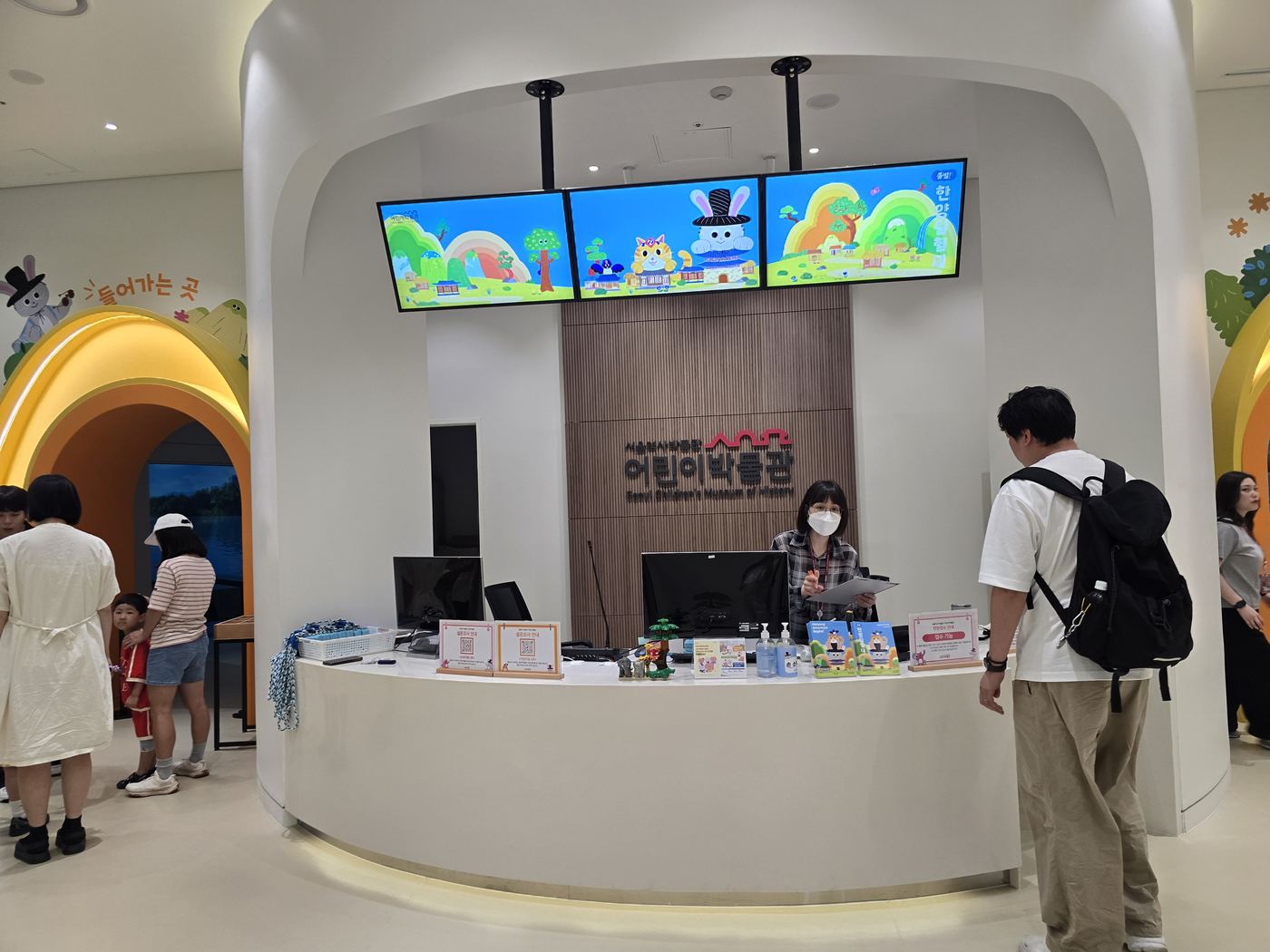
The check-in desk just inside the entrance. Quick and easy â name and phone number digits only.
What Is the Hanyang Adventure?
Hanyang (íì) was the name of Seoul during the Joseon Dynasty (1392â1897). The Hanyang Adventure exhibition drops kids into the world of that city â letting them take on roles as citizens, scholars, archers, and healers.
On entry, each child receives a Paerongi (í¨ë¡±ì´) â a digital NFC tag device pre-loaded with 10 sangpyeongtonbo (traditional copper coins). They use these coins to buy materials and participate in each activity zone. The moment they hold it, the adventure begins.
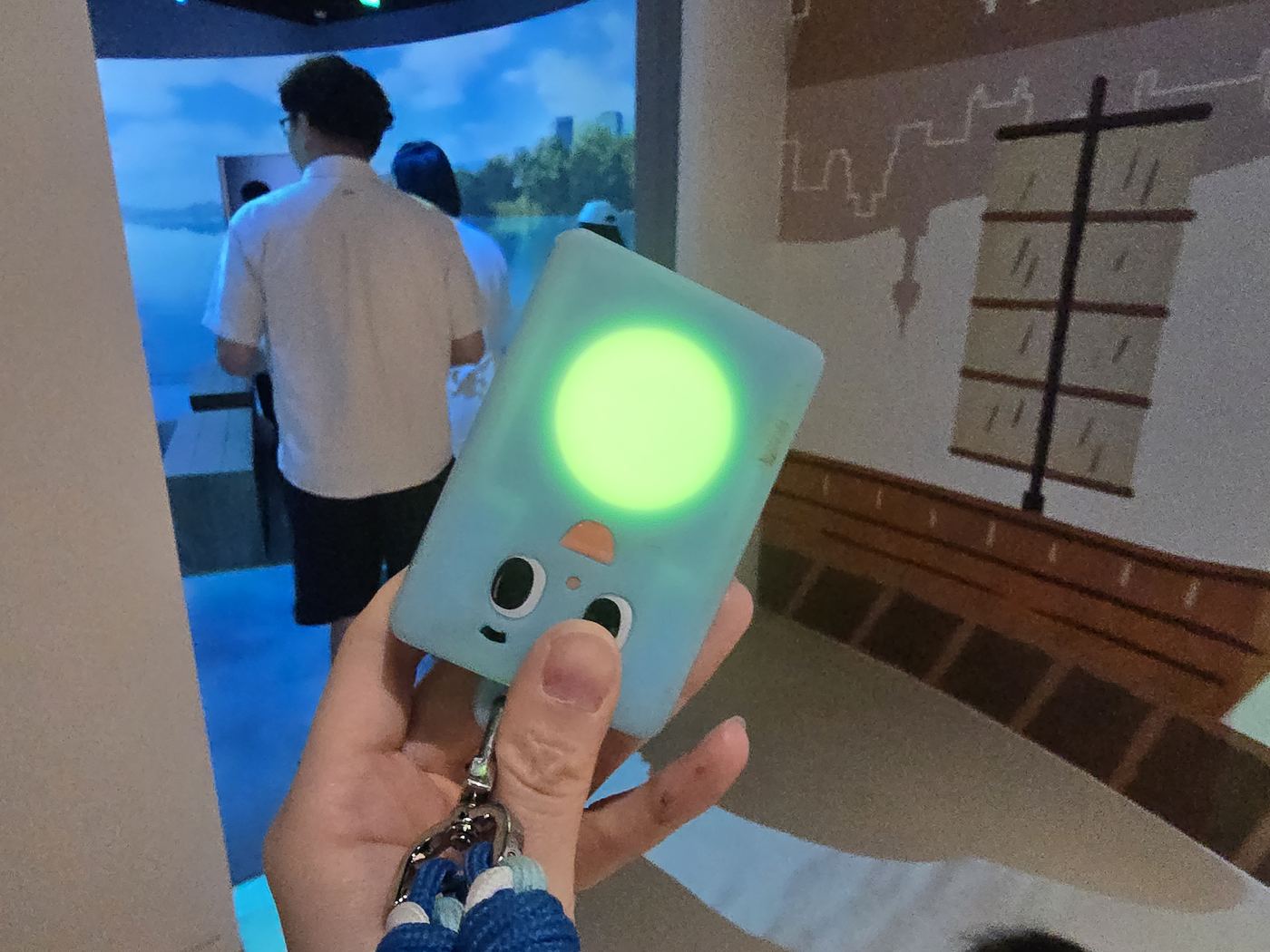
The Paerongi device â each child’s personal coin tag for the day. Kids go from curious to fully invested the second they hold it.
Inside the Exhibition â Zone by Zone
Photo Station â Start Your Record
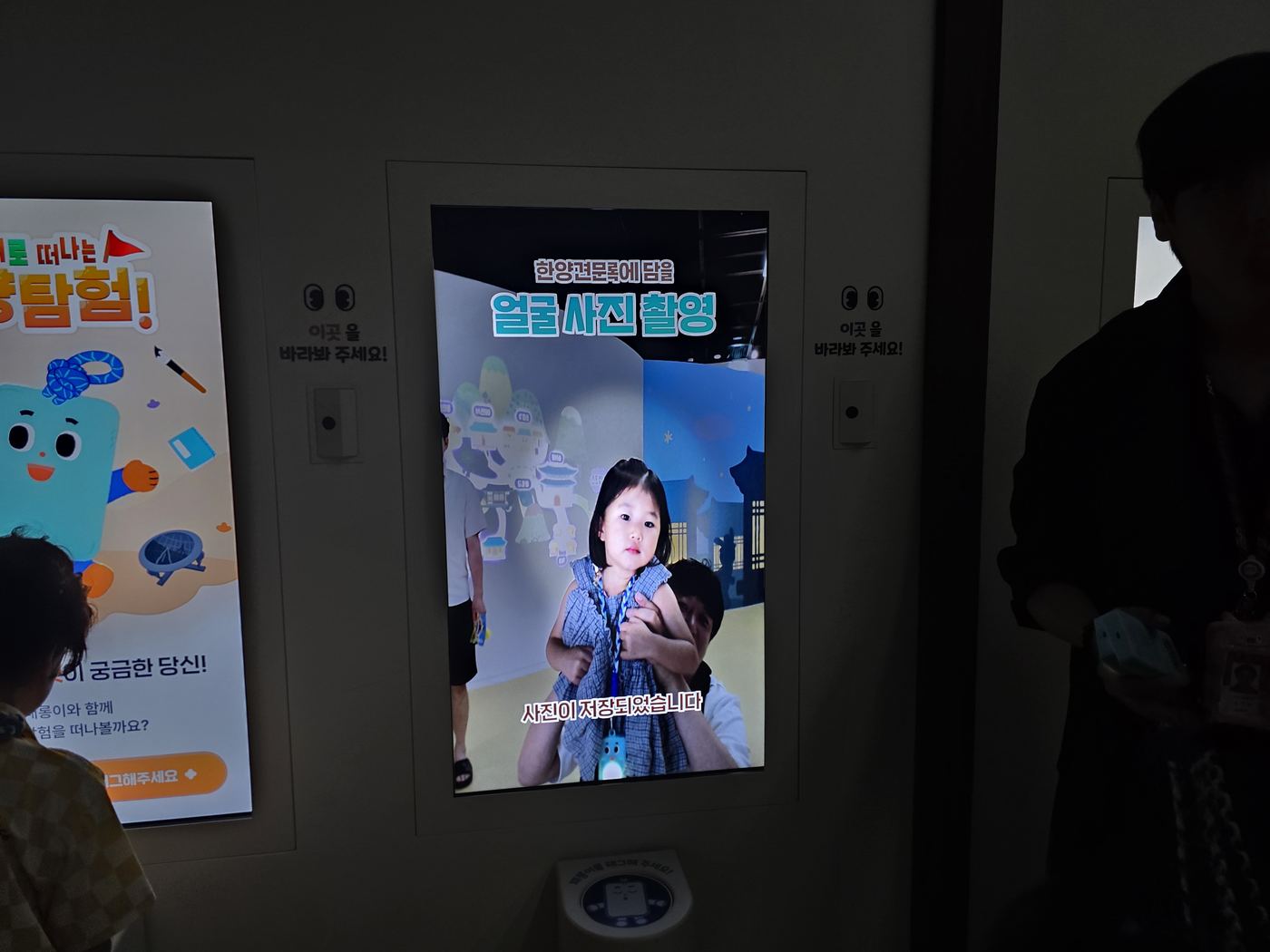
A quick photo at the start creates a personal record that appears in the final Hanyang Journal at the end of the session.
The first stop is a quick photo capture. At the end of the session, kids can review a printed Hanyang Journal (íì견문ë¡) showing which activities they completed â with their photo included. A small but memorable touch.
Gwansanggam â Joseon Observatory
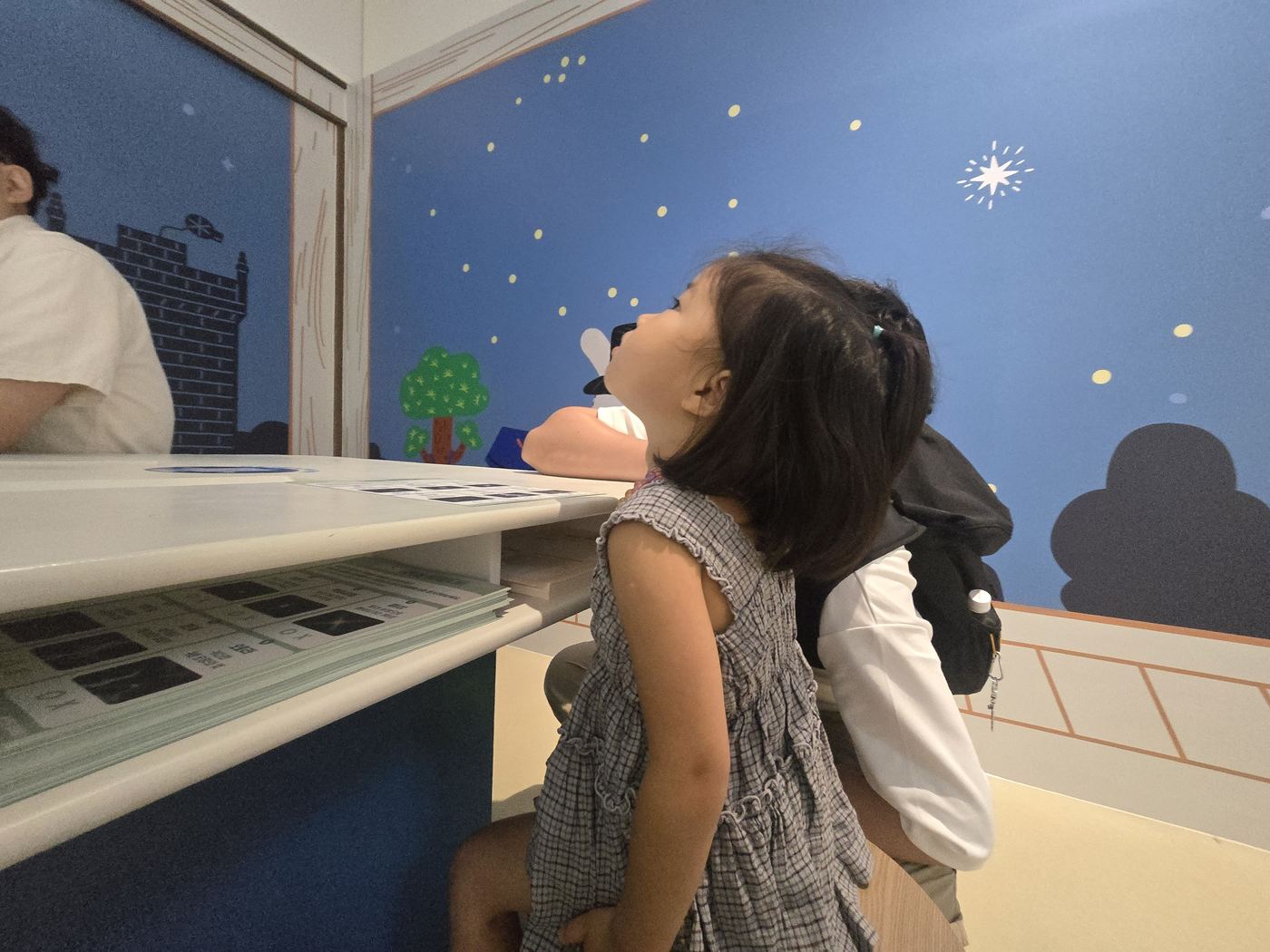
Inside the Gwansanggam (ì²ë¬¸ë). Stars and constellations projected overhead â atmospheric and beautiful.
A recreation of the Joseon royal observatory, where children buy a compass, observe star maps, and record their findings. For younger kids (ours was 5), the concept is a bit abstract â but the star-filled ceiling alone makes it worth walking through. Elementary-age children will get much more out of the activity itself.
Hullyeonwon â Archery Range
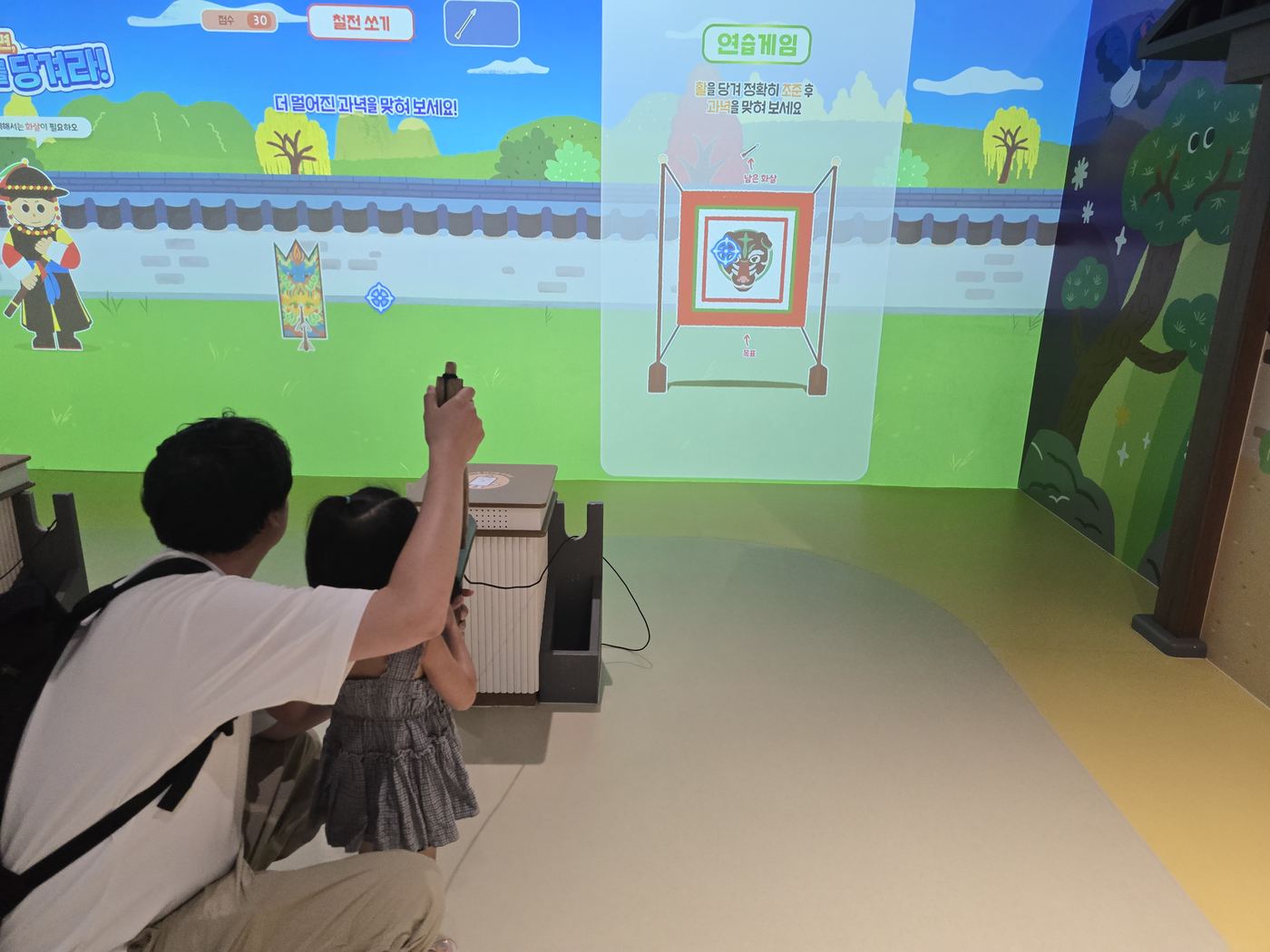
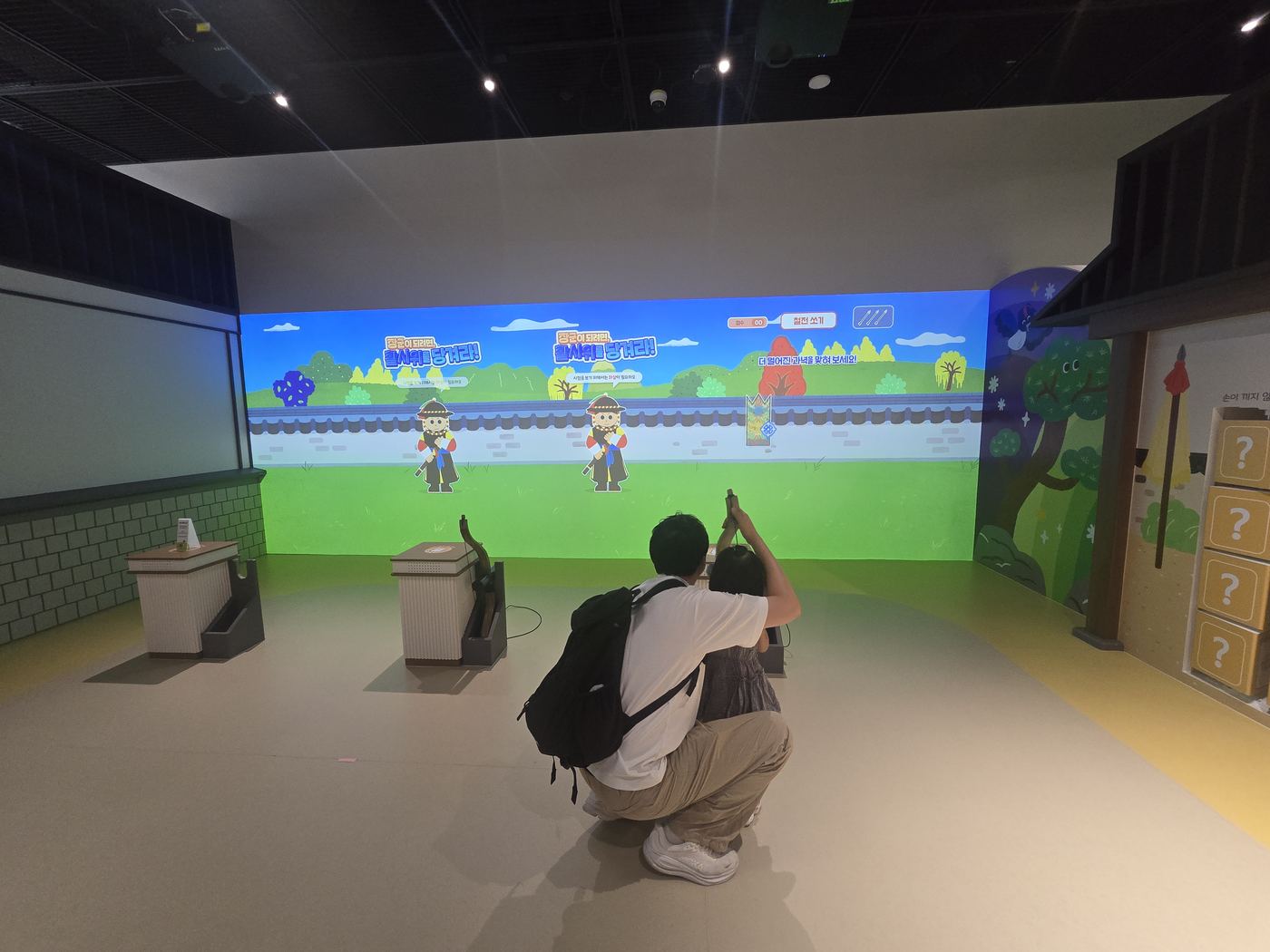
Dad and daughter at the archery range (top), and the full range setup (bottom). The large projection screen makes it feel like a game.
This was the first place our daughter sprinted to â and the one she came back to for a second round. Kids purchase arrows with their coins, then shoot at a large projection screen target. It’s intuitive, physical, and works for a wide age range. One of the clear highlights of the whole exhibition.
Seodang â Traditional School
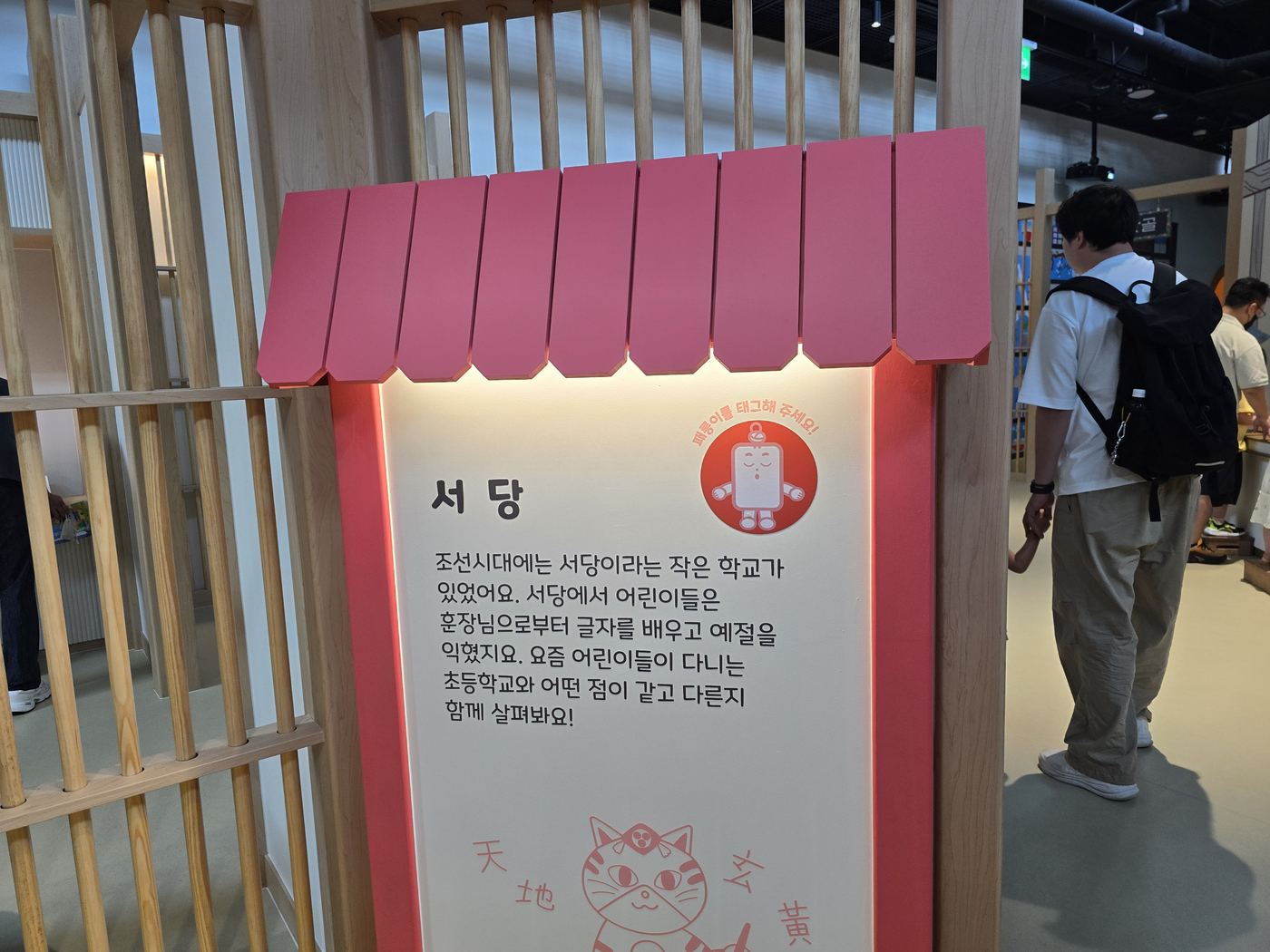
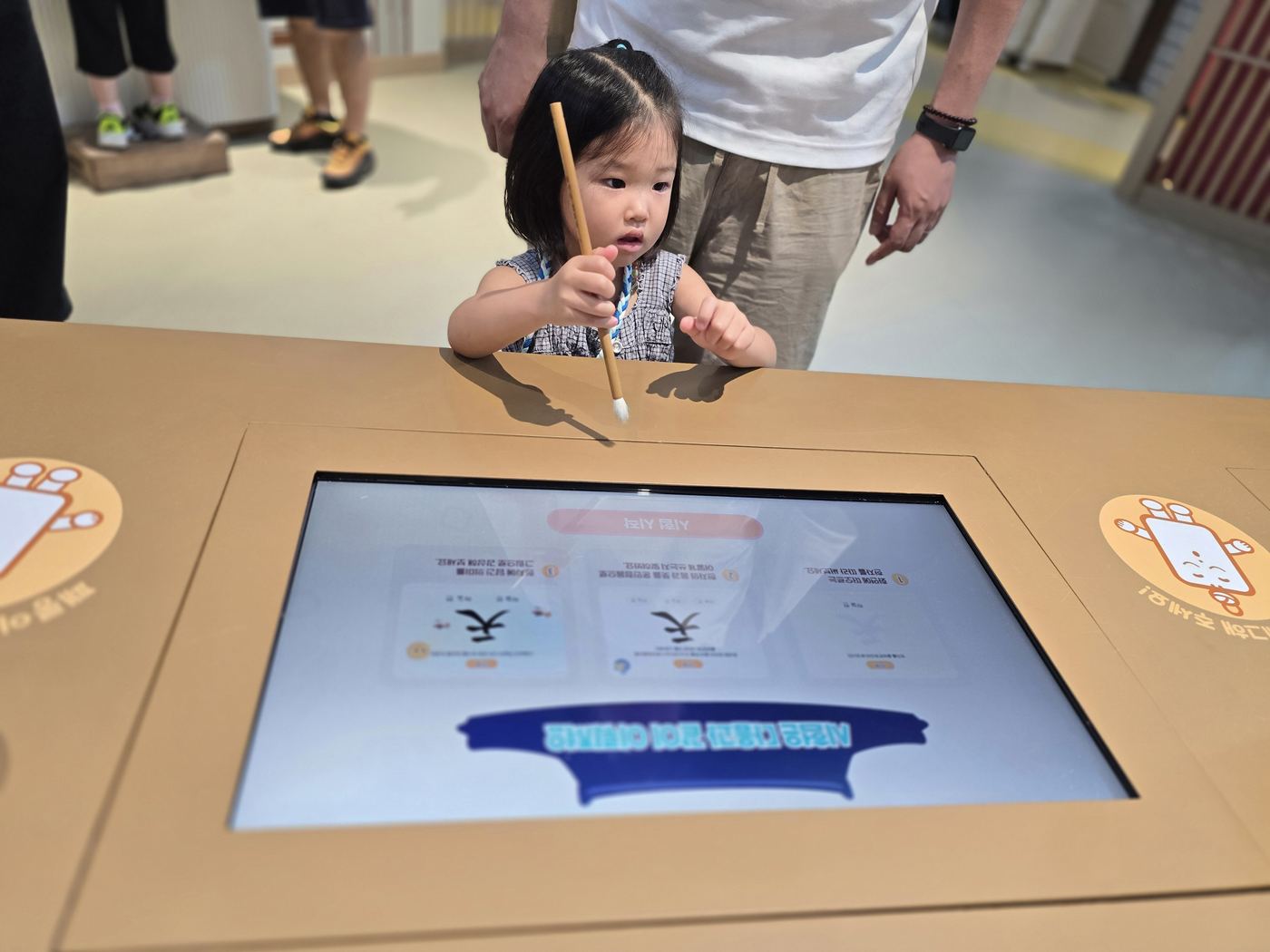
The Seodang entrance sign (left) and our daughter attempting to write Chinese characters with a brush (right).
A recreation of a Joseon-era village school. Kids buy a brush and try writing Chinese characters (cheonjamun â the traditional primer). Kids who enjoy drawing or writing tend to linger here. Trying to write with a brush is a genuinely fun challenge at any age.
Hyeminseo â Traditional Medical Hall
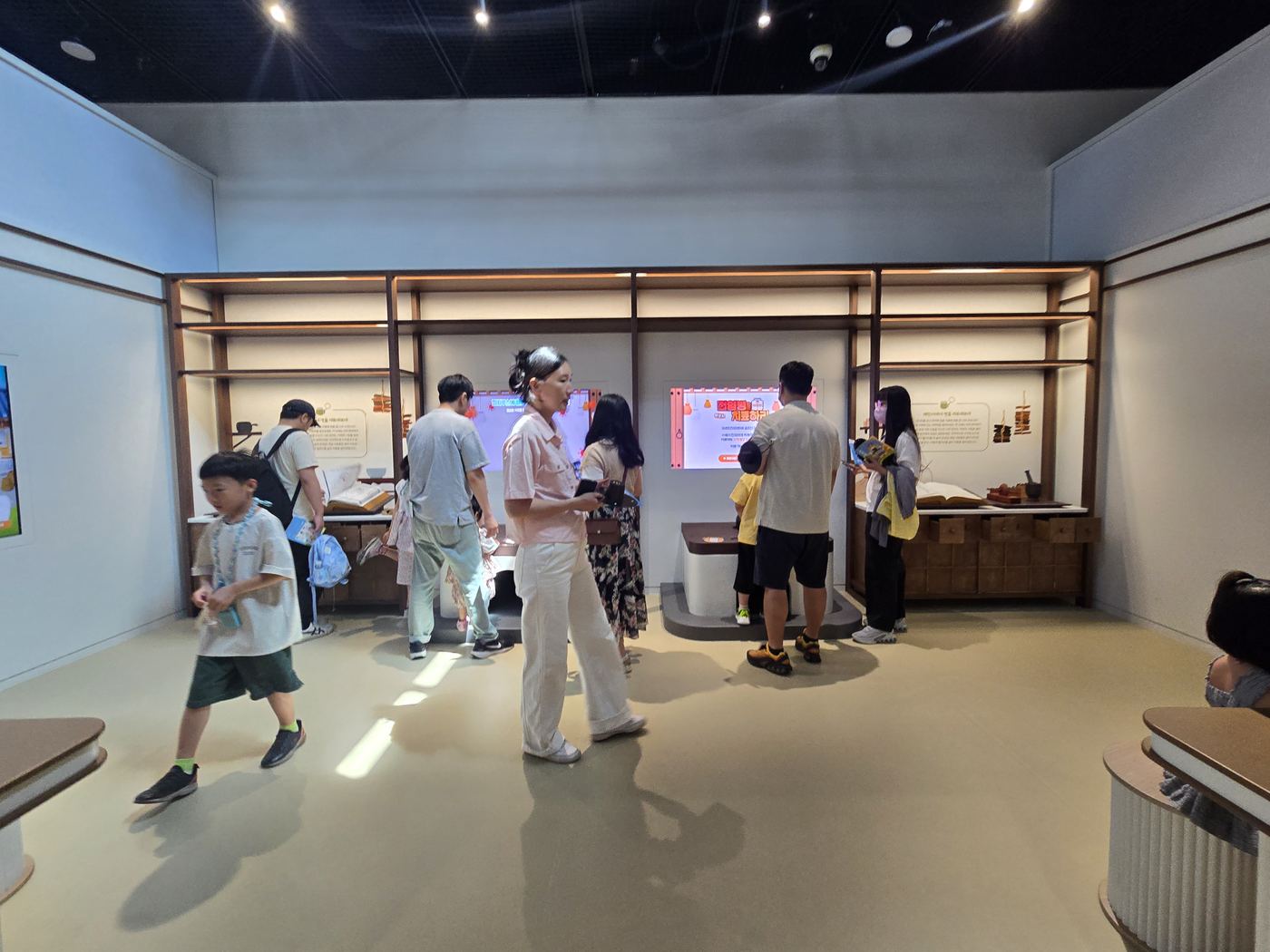
The Hyeminseo (traditional apothecary and clinic) â the busiest and most content-rich zone in the exhibition.
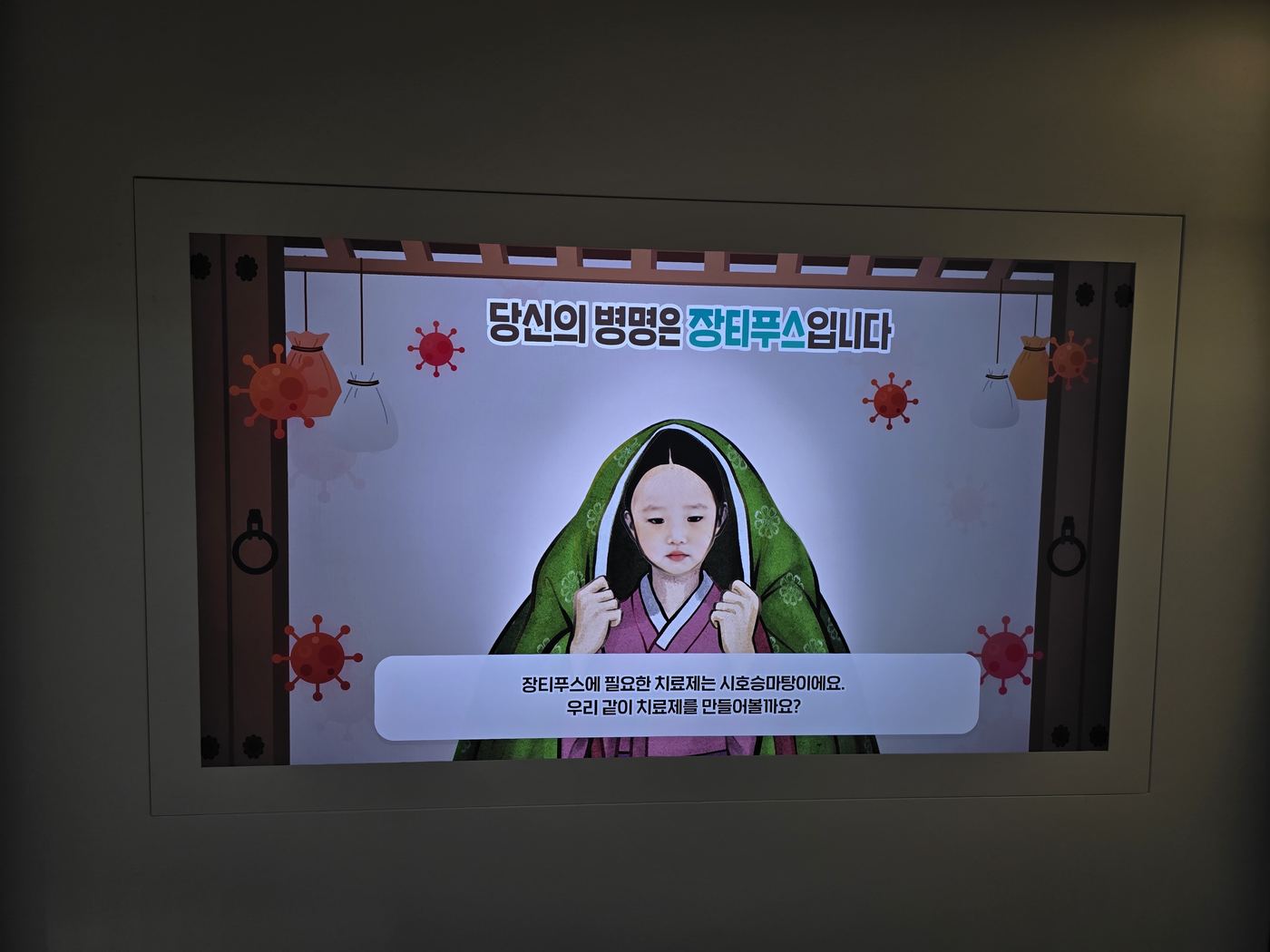
The interactive diagnosis screen: match symptoms to herbs and brew a cure. Our daughter played this twice.
This is the most content-rich zone in the entire exhibition. Three activities run here:
- Making herbal medicine â an interactive touchscreen game where kids match symptoms to herbs and brew a cure.
- Making a herb sachet (í¥ë) â filling a small fabric pouch with fragrant medicinal herbs to take home.
- Decorating a jokduri (족ë리) â designing a traditional Korean ceremonial headpiece.
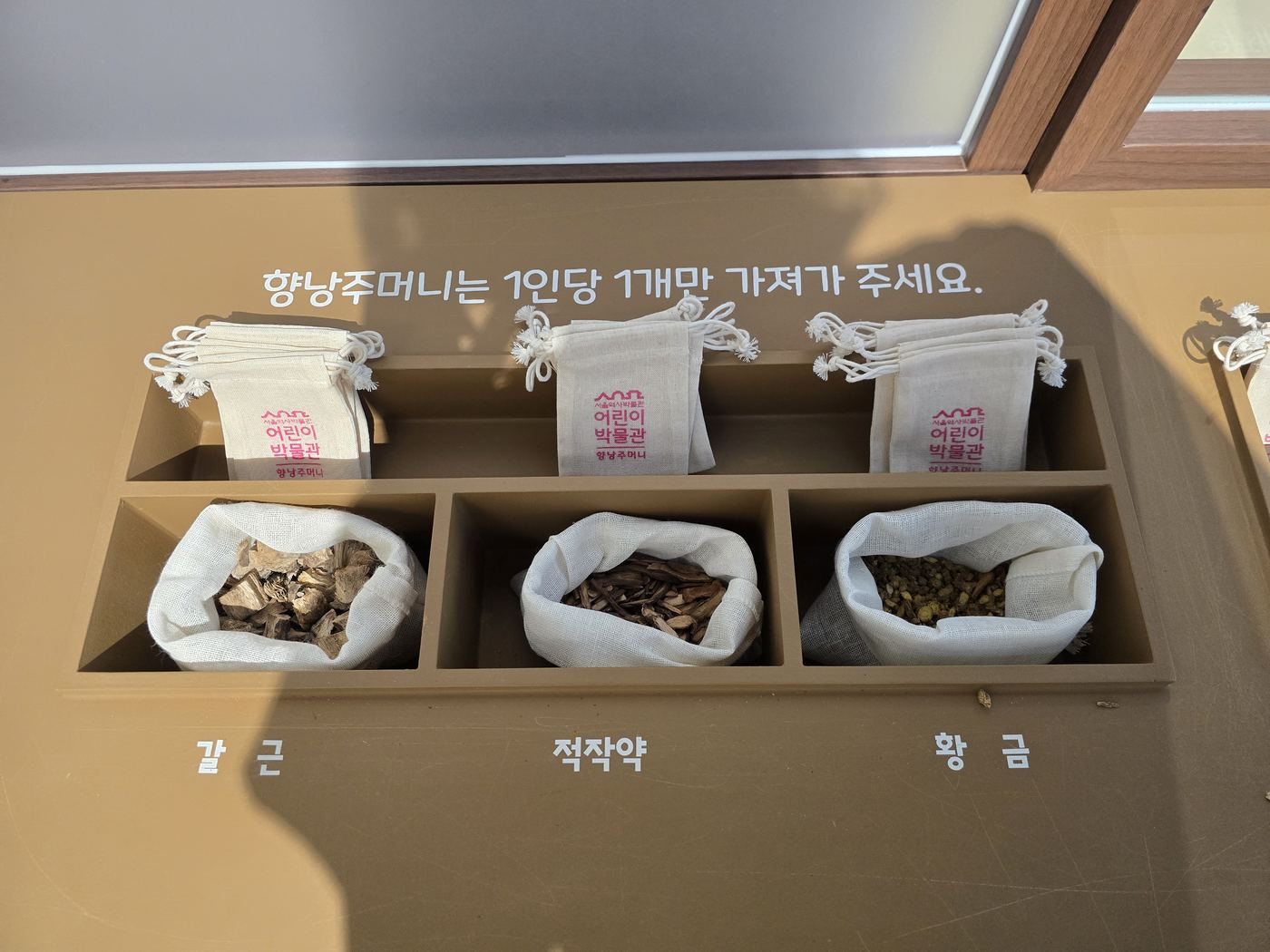
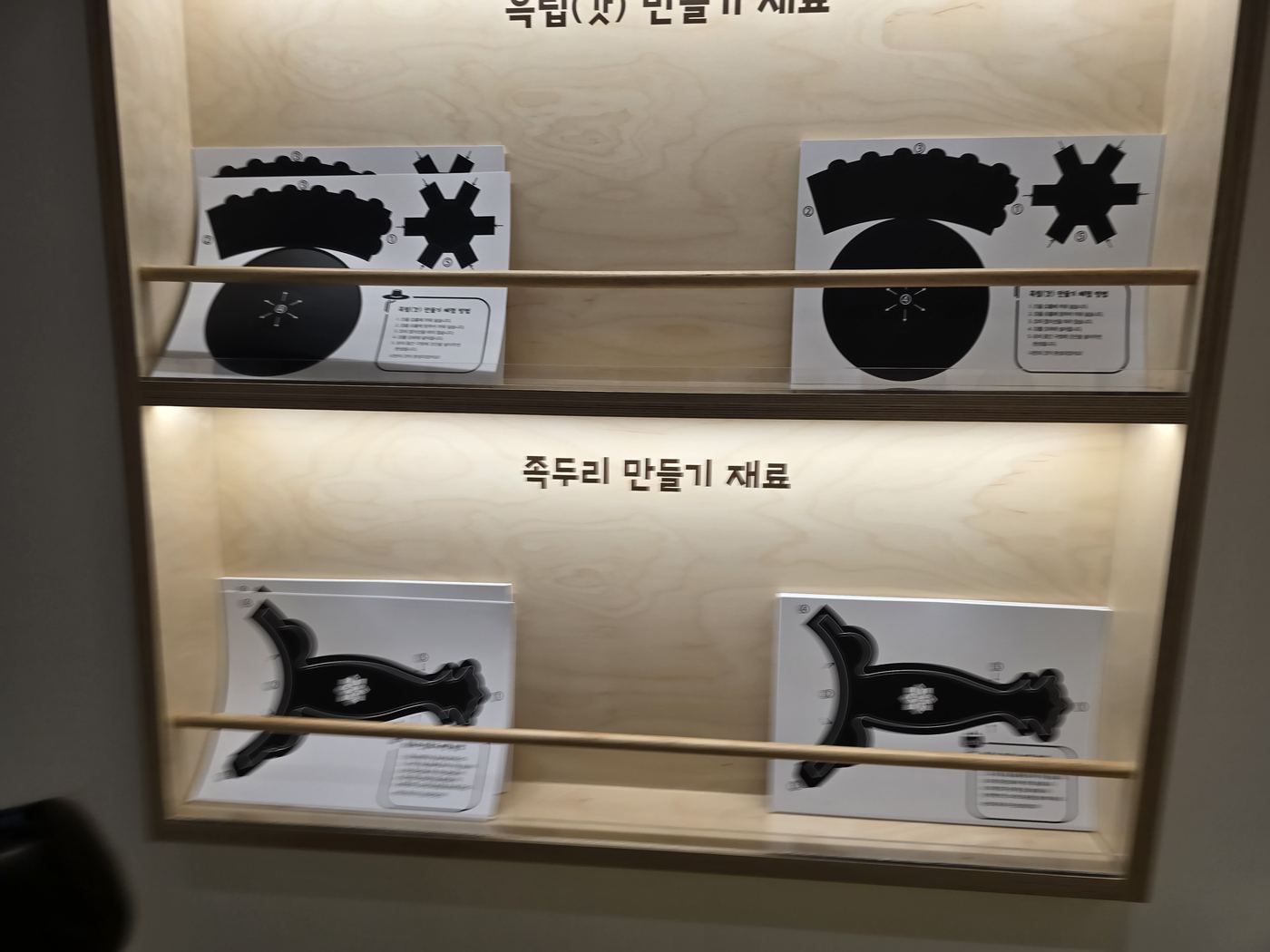
Herbal medicine game (left) and jokduri craft (right).
Gat & Jokduri Craft â Traditional Headwear
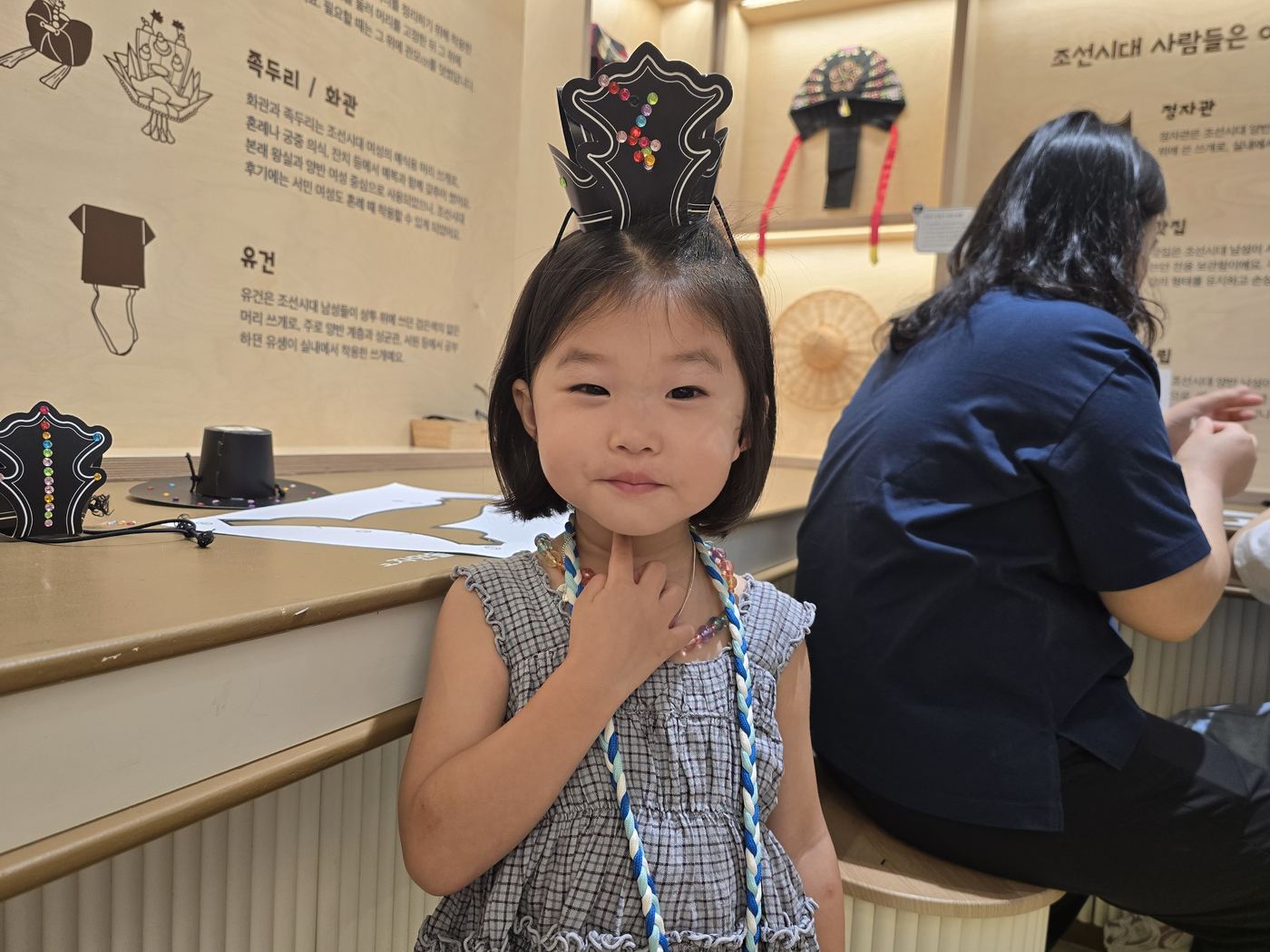
Proudly wearing the jokduri she decorated herself. The highlight photo of our visit.
Kids design and decorate their own traditional Korean headwear â a gat (ê°, men’s formal hat) or jokduri (족ë리, women’s ceremonial headpiece). The finished piece goes home with them. Watching our daughter parade around in hers was the moment of the day.
Saechaekjeom â The Living Storybook
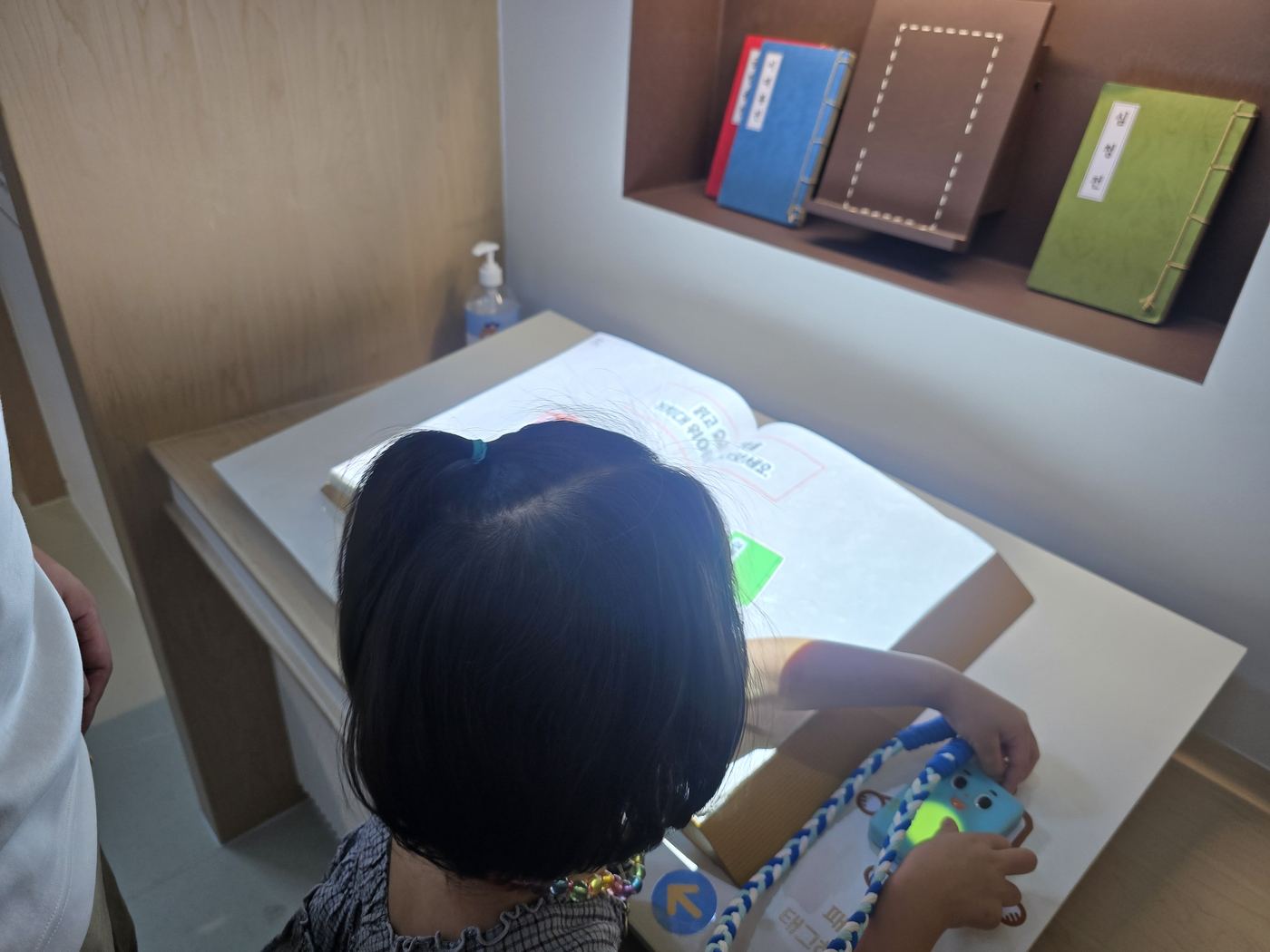
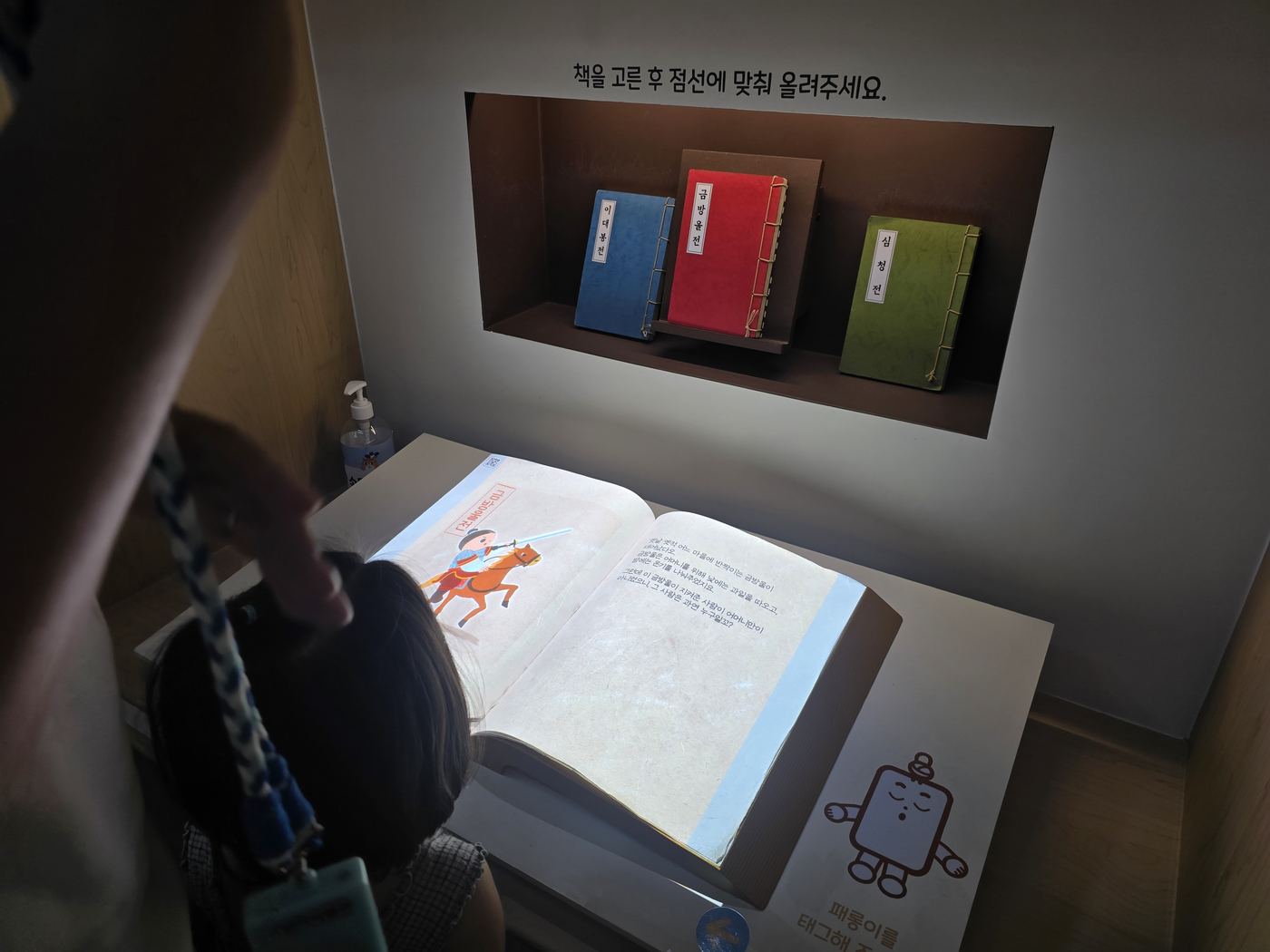
Kids draw their own character (left), tap with Paerongi, and watch it come alive inside the projected storybook (right).
Personally, this was the most impressive zone. Kids draw a character on paper, tap it with their Paerongi, and watch it animate inside a large projected storybook on the wall. The character they drew literally appears in the story. Our daughter stood there for a very long time â completely mesmerized. A genuinely clever piece of technology that earns its place in the exhibition.
Facilities
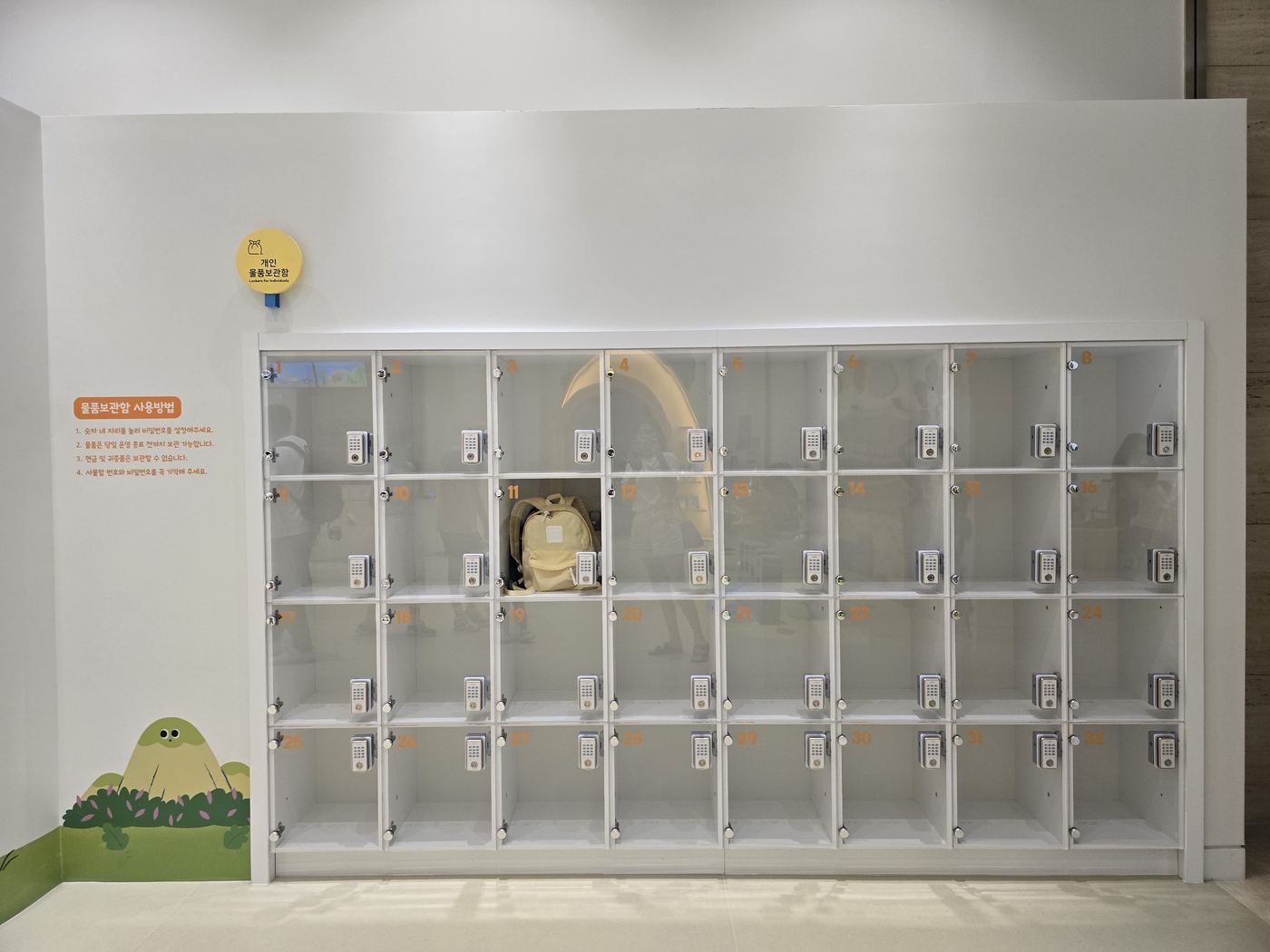
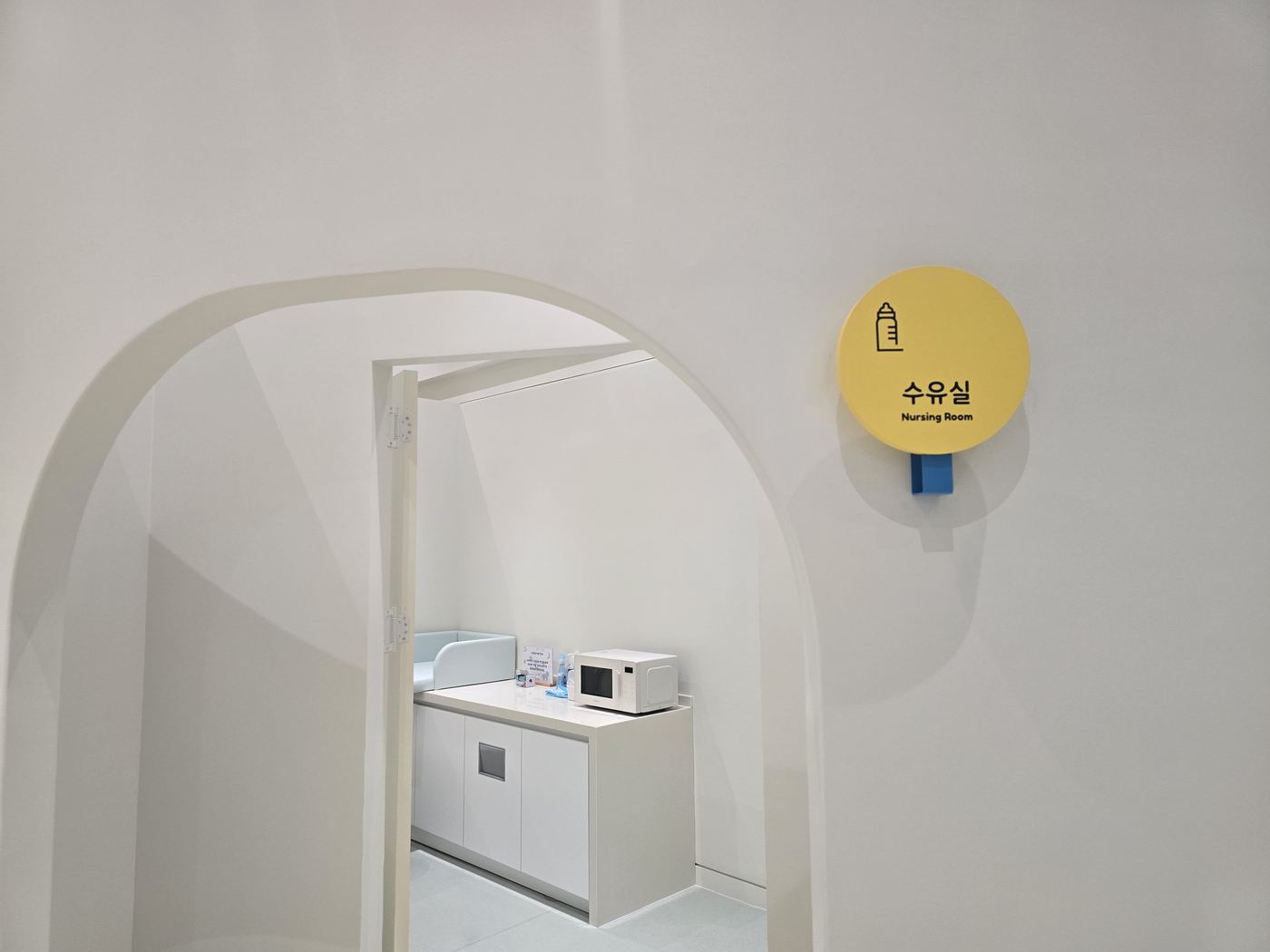
Personal lockers near the entrance (left) and the nursing room (right).
- Elevators â full access throughout, no stairs required
- Lockers â personal and group storage available near the entrance
- Nursing room â available for families with infants
- Caffe Pascucci â café inside the main museum building, good for a post-session coffee
- Gift shop â museum merchandise and Seoul-history-themed items
- Block play area â free play zone in the museum lobby; popular with kids after the main session ends
Is It Worth It for a 5-Year-Old?
The official recommended age is 6 and up, and the majority of visitors we saw were elementary school-aged. That said, our 5-year-old had no trouble with the most popular activities: archery (twice), herbal medicine game (twice), and the living storybook. The observatory was a bit abstract for her, but she enjoyed the atmosphere. The jokduri craft was a highlight regardless of age.
Honest recommendation: best from age 5 to 10. Under 4, more than half the activities will likely be too complex to engage with meaningfully. Over 10, it might feel slightly young â though the storybook zone has universal appeal.
Frequently Asked Questions
Nearby Experiences in Seoul â Book via Klook
After exploring Joseon-era Seoul at the museum, why not dress the part? Gyeongbokgung Palace is a short distance away and one of the most popular spots in Seoul to rent a hanbok (traditional Korean dress).
ðï¸ Book Ahead on Klook
Traditional dress rental near Gyeongbokgung Palace · All ages welcome
Book on Klook
Near Gyeongbokgung · Traditional hanbok + professional styling + photo session
Book on Klook
Where to Stay Nearby
The museum is in central Seoul, putting you within easy reach of multiple neighborhoods. Here are two options at different price points:
Final Verdict
If the National Museum of Korea Children’s Museum gives kids a broad view of Korean culture, the Seoul Children’s Museum of History goes deeper â turning children into participants rather than observers. They shoot arrows, spend coins, make medicine, and walk away with a handmade headpiece. The history sticks because they lived a version of it.
It’s free. It’s indoors. It connects naturally to Gyeongbokgung, Changdeokgung, and Gwanghwamun â some of the most visited spots in Seoul. If you’re planning a trip to Korea with young children and want an experience that goes beyond theme parks and selfie spots, the Hanyang Adventure is one of the best things you can do in the city.