
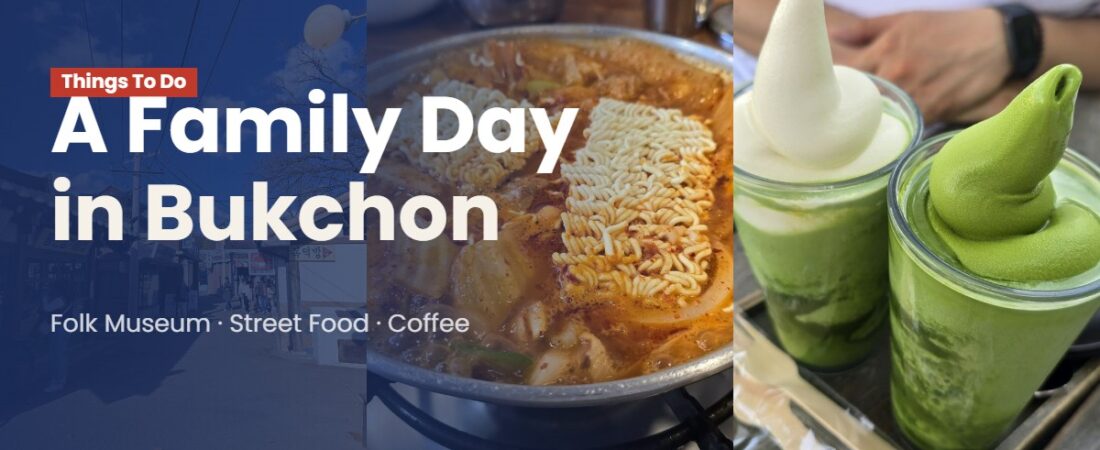
If you’re looking for a full day out in Seoul with a toddler or young child, the Anguk Station area is one of the best days you can build — and most of it is free. We first did this route when our daughter was around two and a half, and we’ve come back since. It holds up every time.
You get a dedicated children’s museum with hands-on exhibitions and outdoor play equipment, a fascinating outdoor folk village that kids and adults both find interesting, a walk through one of Seoul’s most beautiful neighbourhoods, street food that kids always remember, and a cafe worth sitting in at the end. The whole day flows naturally — no complicated logistics, no paid entry queues, no venues that aren’t set up for families.
Here’s exactly how we’d build the day, from the museum gates to late afternoon matcha — including what’s actually useful to know before you go with a young child.
Area: Anguk / Bukchon / Samcheongdong, Seoul
Nearest subway: Anguk Station, Line 3 — Exit 1 (Folk Museum) · Exit 2 (Bukchon)
Best for: Toddlers and up
Cost: National Folk Museum is free. Budget around ₩30,000–50,000 per person for food and coffee.
Time needed: 4–6 hours
Stroller-friendly: Museum grounds yes. Bukchon’s uphill hanok lanes are hilly but doable.
Tip: Weekdays are much better. Bukchon on spring/fall weekends gets crowded fast.
Yes — this is genuinely one of the best Seoul days we’ve had with our daughter. The Folk Museum has a dedicated children’s annex, outdoor rope climbing equipment, and wide flat grounds where little ones can run freely. Strollers work well throughout the museum. The hanok lanes in Bukchon require some uphill walking, but nothing that a stroller can’t handle at a slower pace.
Best age: 18 months and up — the play areas, lantern installations, and street food are consistently hits across ages. Older kids (5+) will get more from the indoor exhibitions.
Nap-friendly: The museum grounds are ideal for a stroller nap — flat, shaded in parts, and quiet on weekdays.
Feeding: Family-friendly restaurants throughout the area. The kimchi jjigae restaurant is fine with kids — they’ll often bring plain rice on request.
National Folk Museum of Korea — Free Entry, Genuinely Worth Your Time
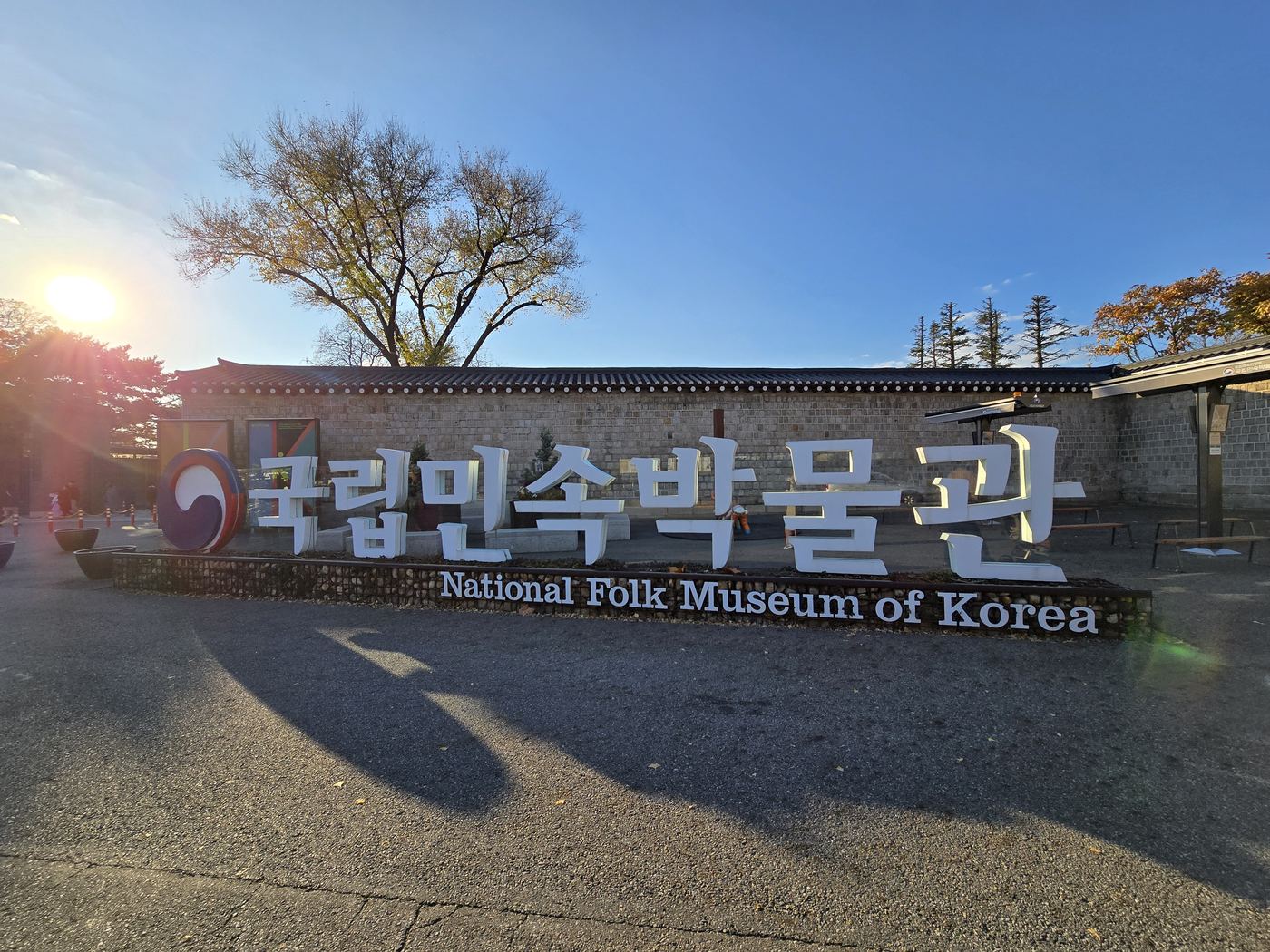
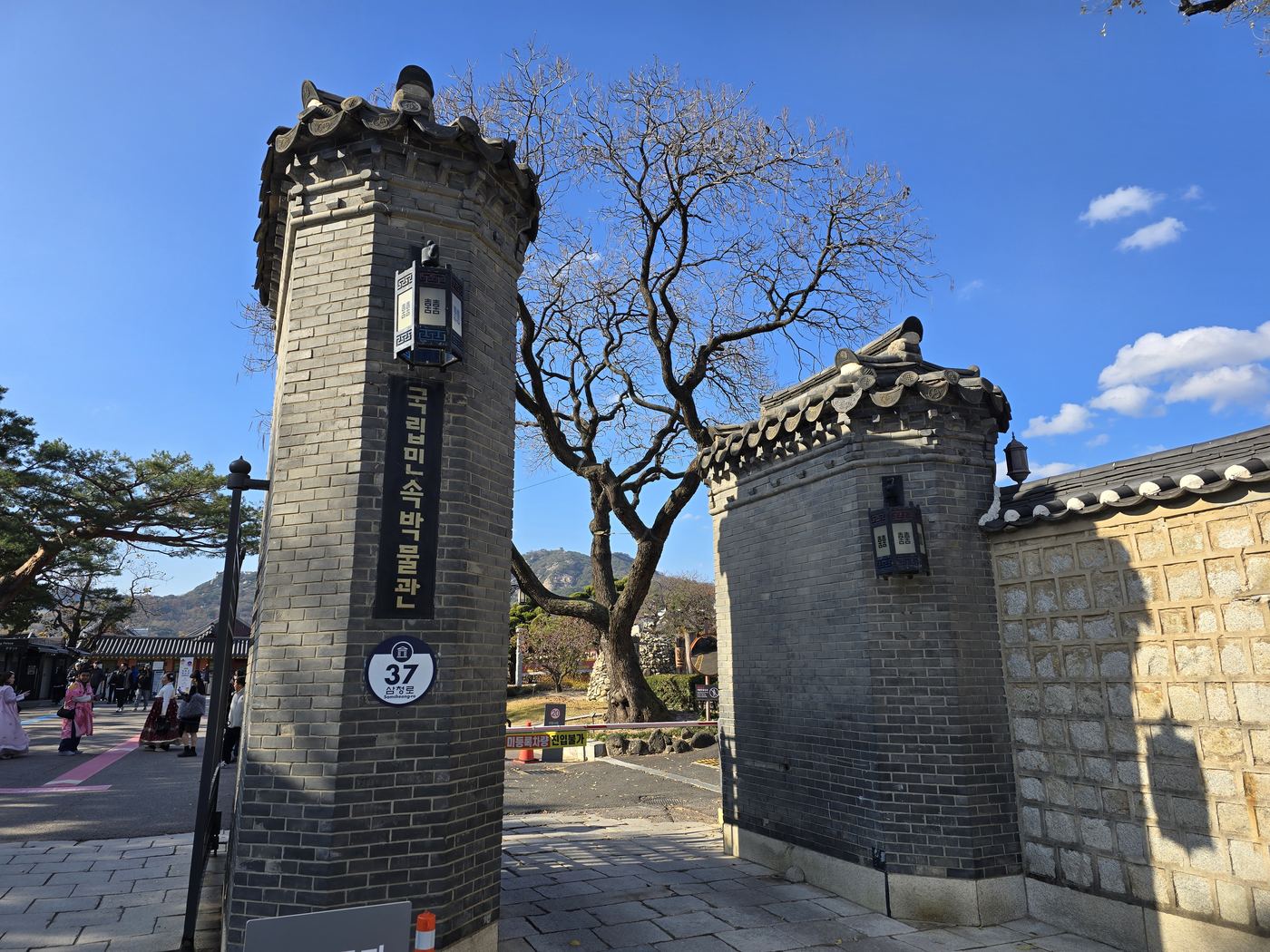
The National Folk Museum (국립민속박물관) sits inside the Gyeongbokgung Palace grounds. You can enter for free through the Hyoja-ro pedestrian gate — no palace ticket needed. It’s easy to miss this, but it means one of Seoul’s most interesting museum experiences costs you nothing.
The Outdoor 1970s–90s Korean Village
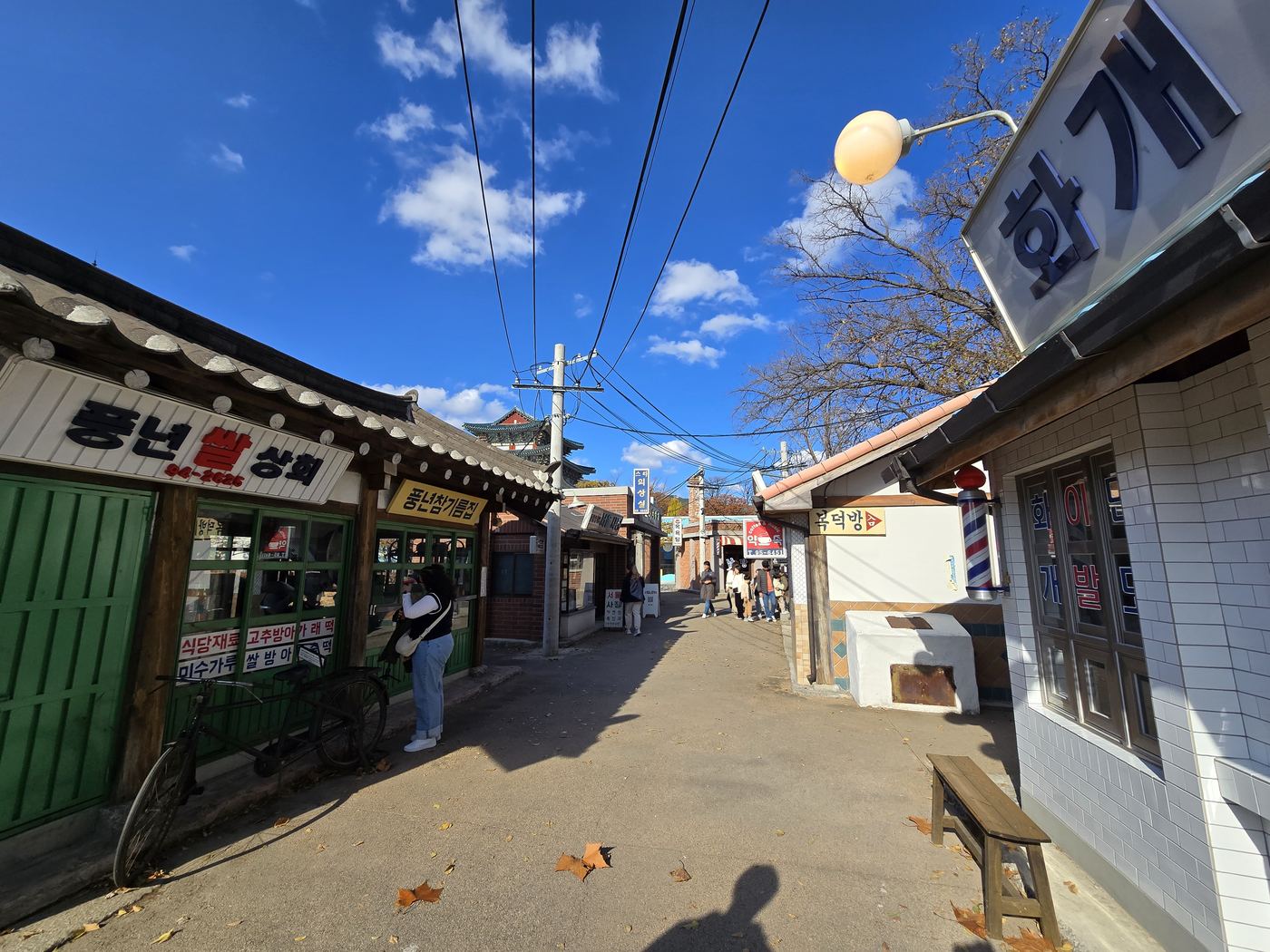
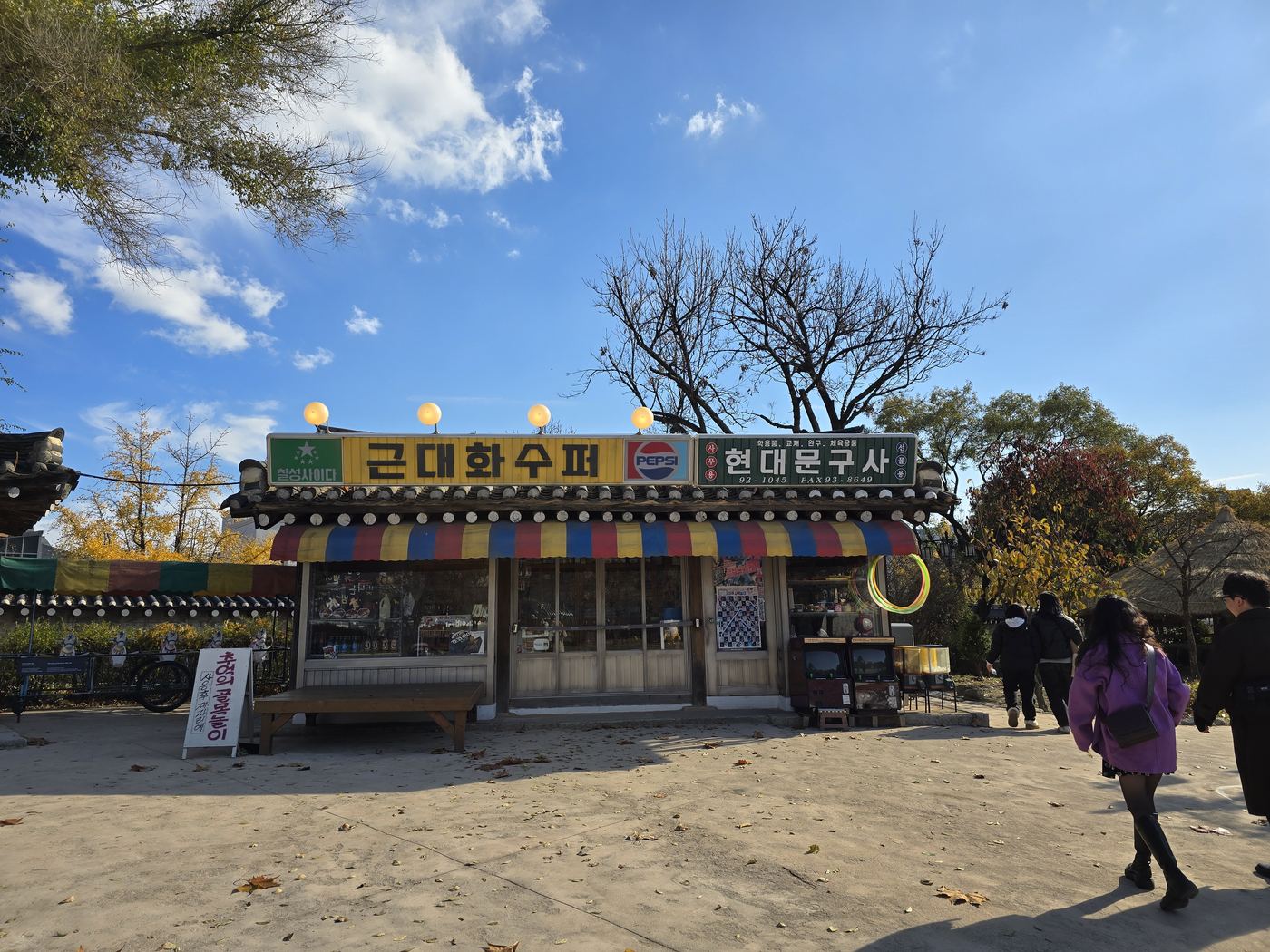
Before you even go inside, spend time in the outdoor area. The museum has reconstructed a slice of 1970s–90s Korean daily life — old barbershop signs, a neighbourhood stationery shop, narrow alleyways, era-accurate storefronts. For Korean adults it’s pure nostalgia. For kids and foreign visitors, it’s a genuinely interesting window into what urban Korea looked like not that long ago. Young children tend to be drawn to the small doorways and low windows — everything is at a slightly different scale from the usual city streetscape, which works in your favour.
Outdoor Play Space
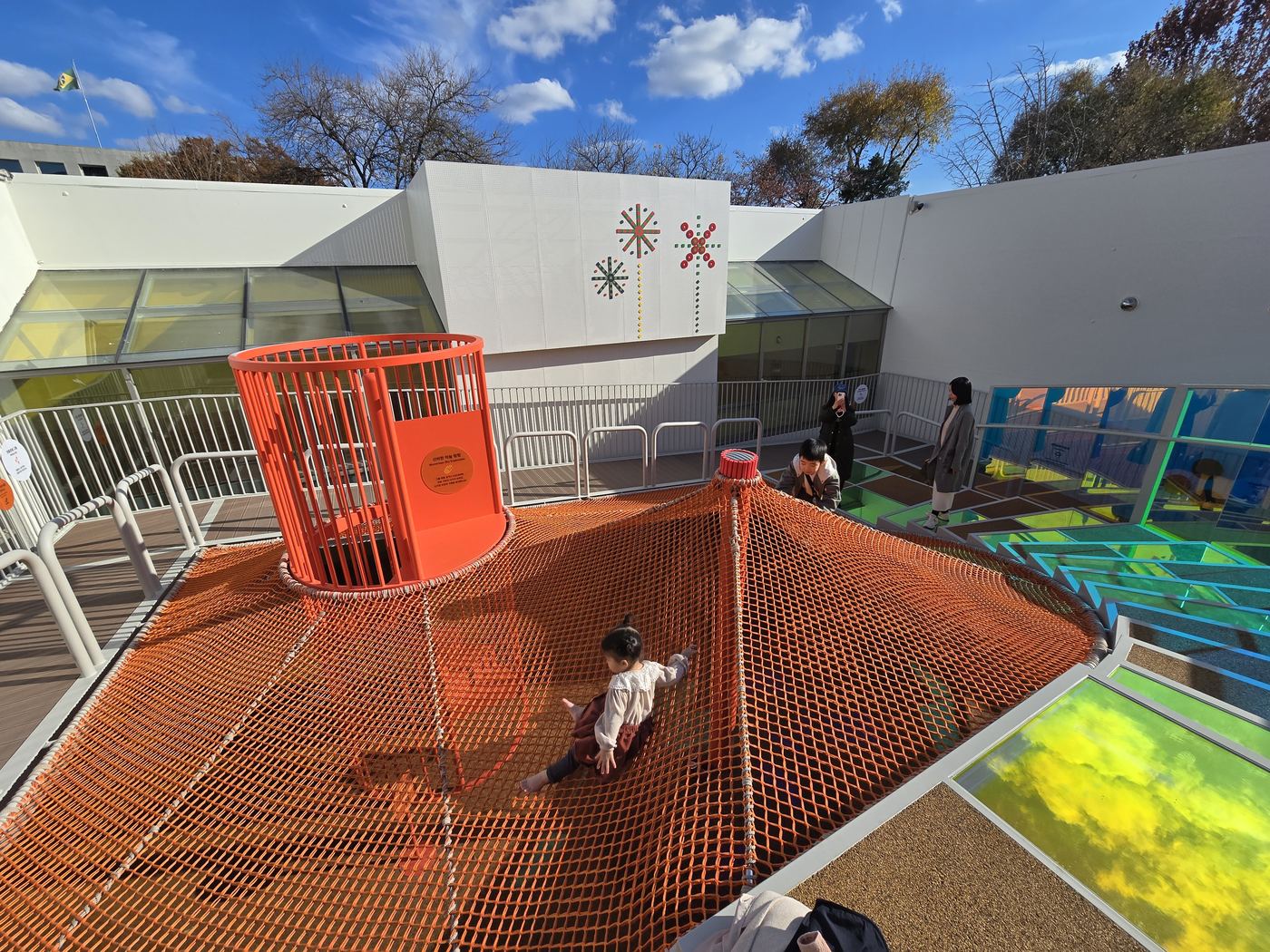
There’s also a dedicated outdoor play area with a large rope climbing structure that kids can scramble all over. The grounds are flat and open — toddlers can run freely without you worrying. The museum is not the hushed, don’t-touch kind of experience. Kids are expected here.
Children’s Folk Museum — The Separate Annex
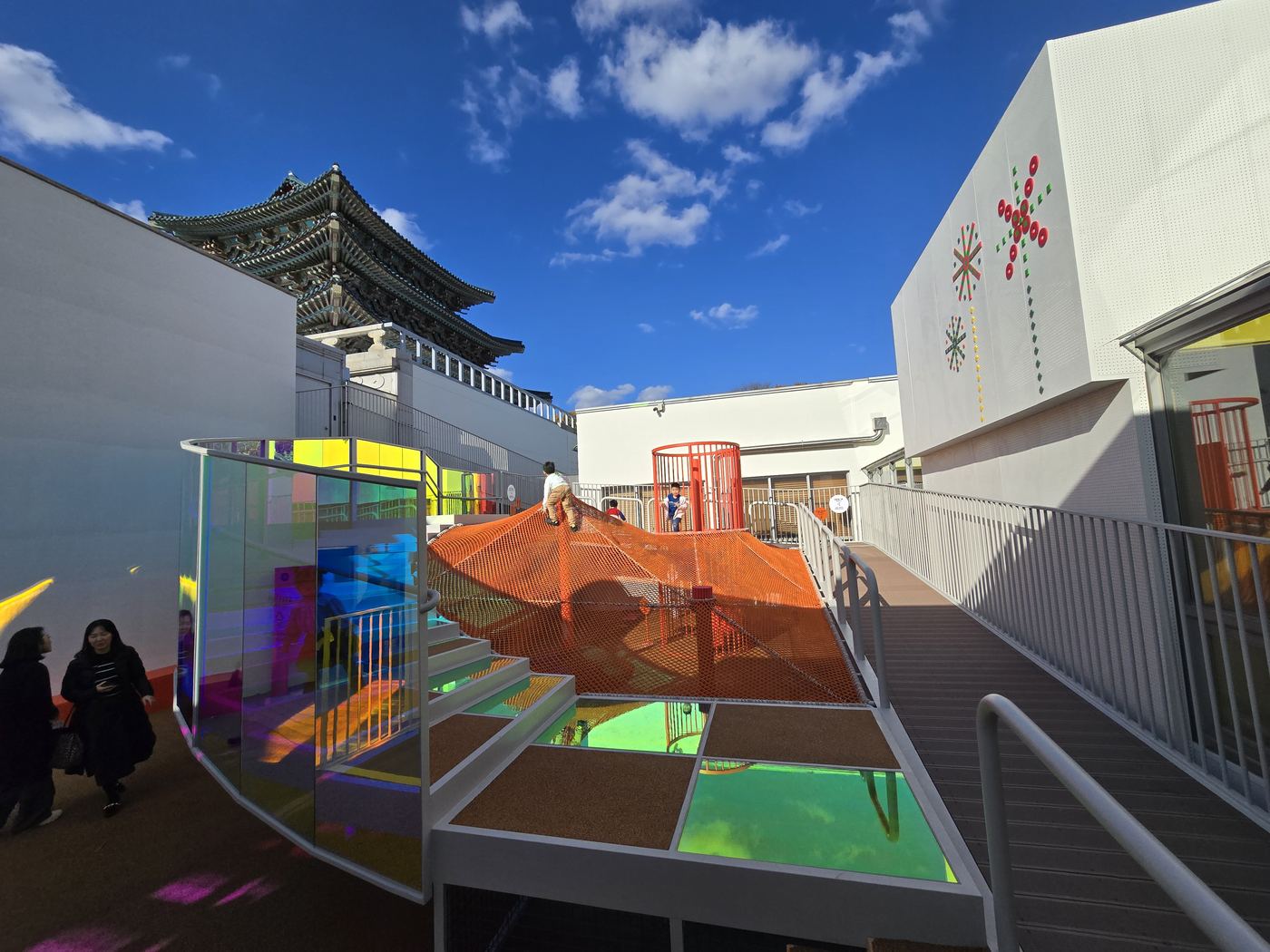
There’s a separate children’s museum building on the grounds — this is the part specifically designed for young kids, and it’s excellent. The building itself sits right up against the Gyeongbokgung Palace walls, which makes for one of the better photo backdrops in Seoul. Inside, exhibitions are designed entirely for hands-on participation — everything is meant to be touched, explored, and interacted with. Advance reservation is required, but it’s free.
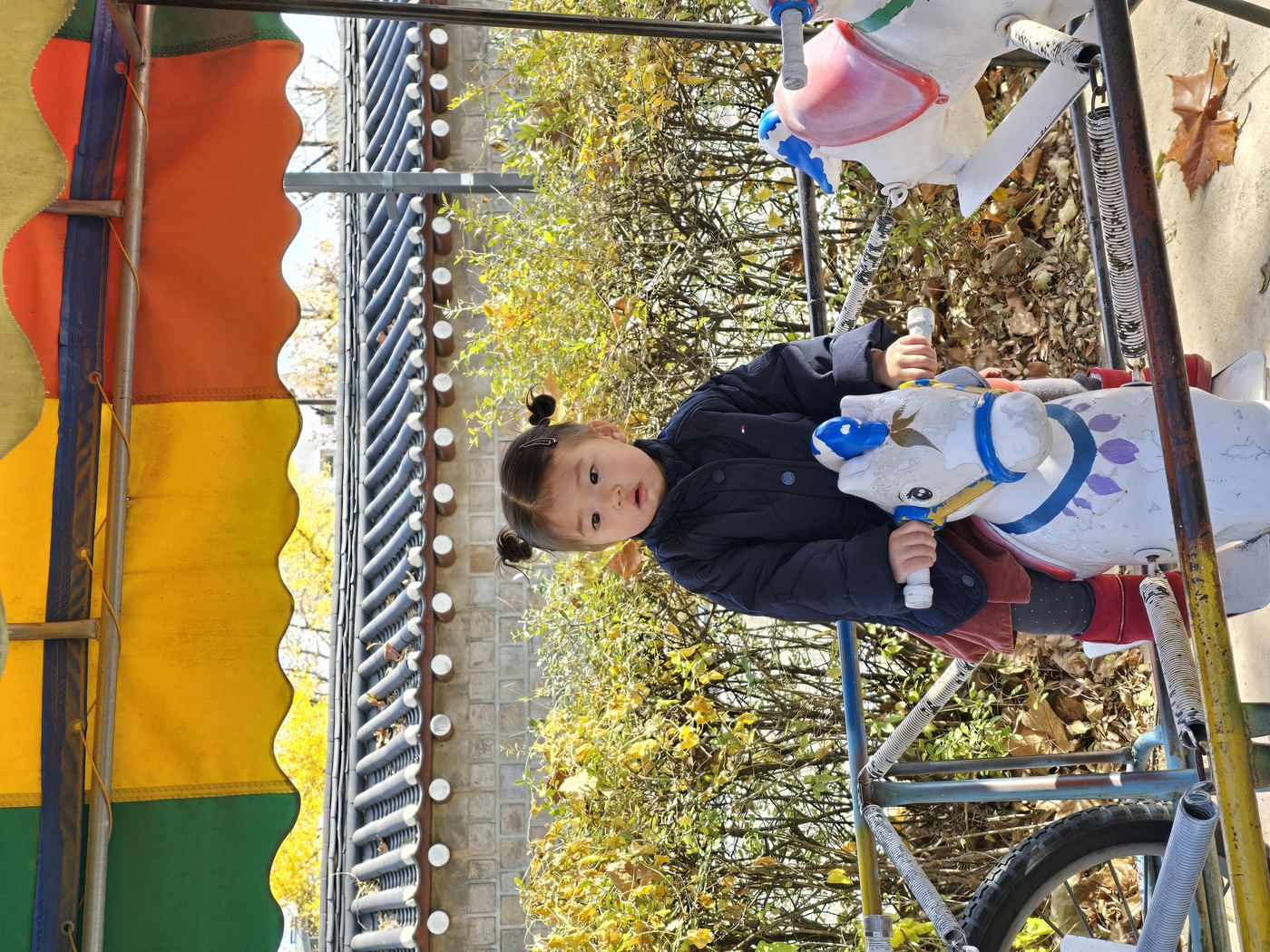
Starry Starry Night (총총! 별이 빛나는 밤) — Running until May 2027. An immersive children’s exhibition with moon and rabbit characters, interactive play areas, and hands-on activities designed for young children.
My Friend Dokkaebi (내 친구 도깨비) — Opened June 30, 2026. Based on the beloved Korean folk creature, the Dokkaebi (a goblin-like trickster). Runs until May 2028.
Advance reservation required — book online via the museum website up to 2 weeks ahead. Opens at 9am daily.
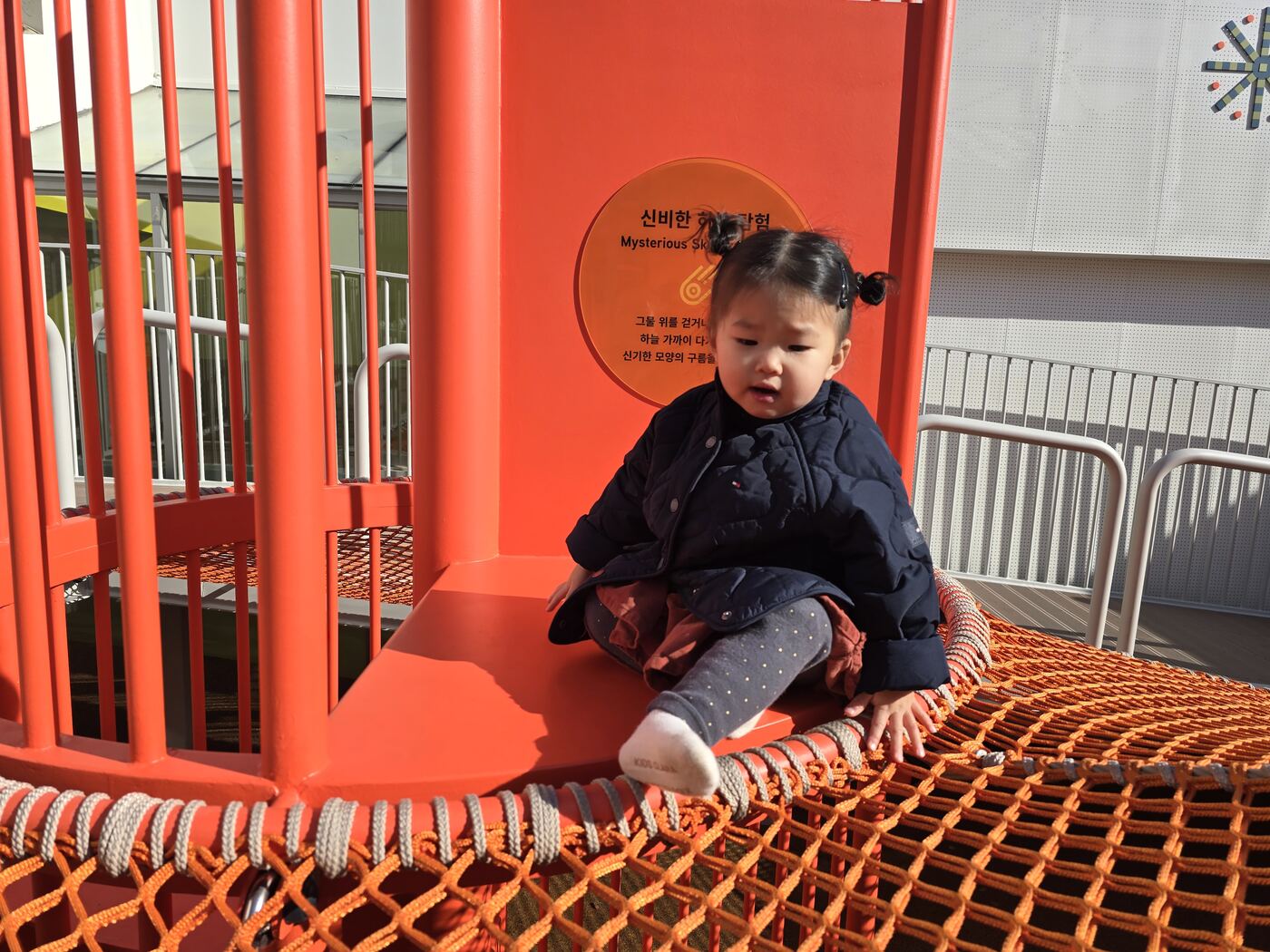
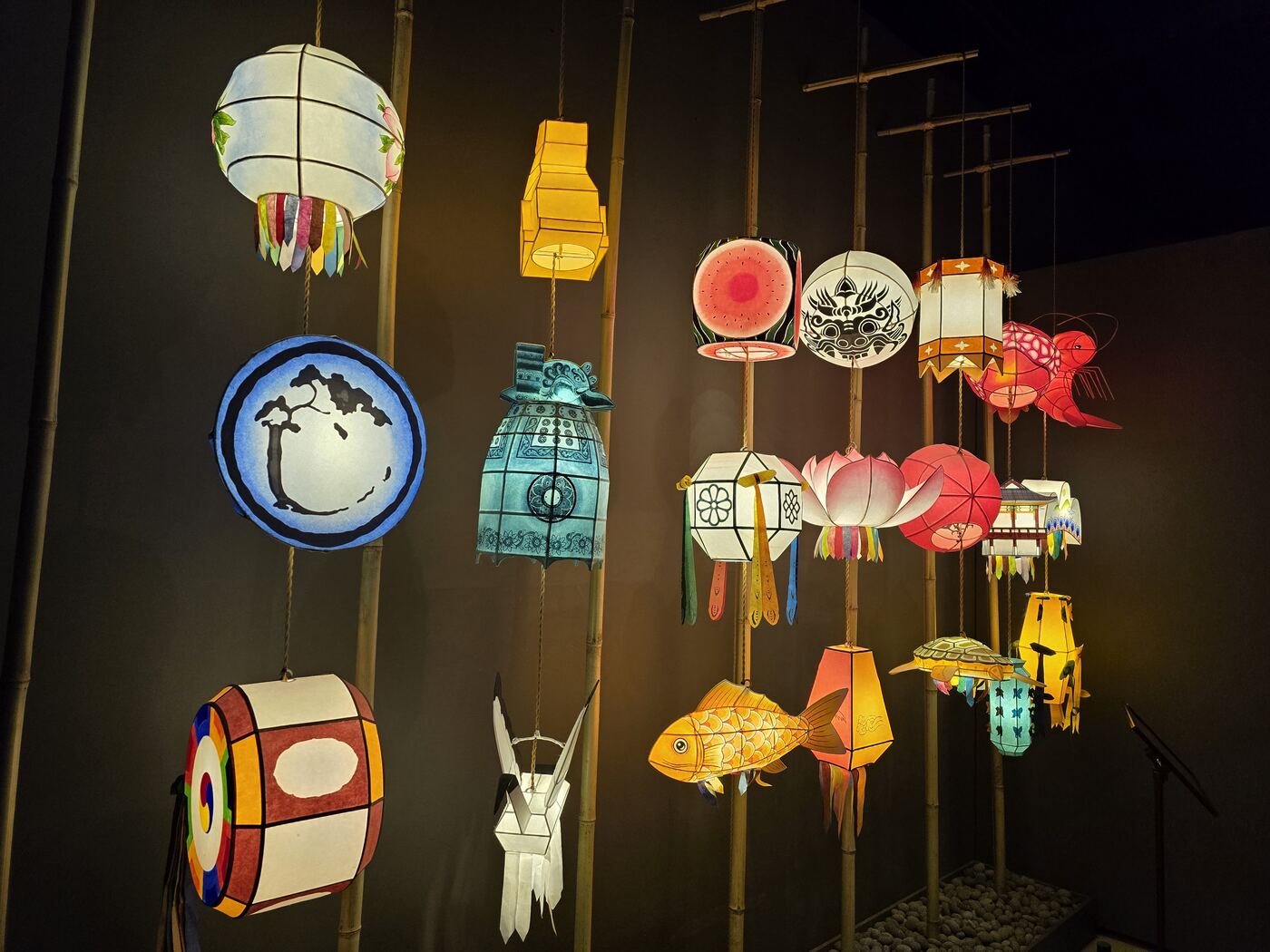
Main Building Exhibitions — Don’t Skip These
If you only do the outdoor areas, you’ve seen maybe half the museum. The permanent exhibitions inside the main building cover Korean farming life, traditional clothing, folk religion, and everyday objects across centuries — all displayed with well-labelled, accessible English signage. The quality rivals paid national museums.
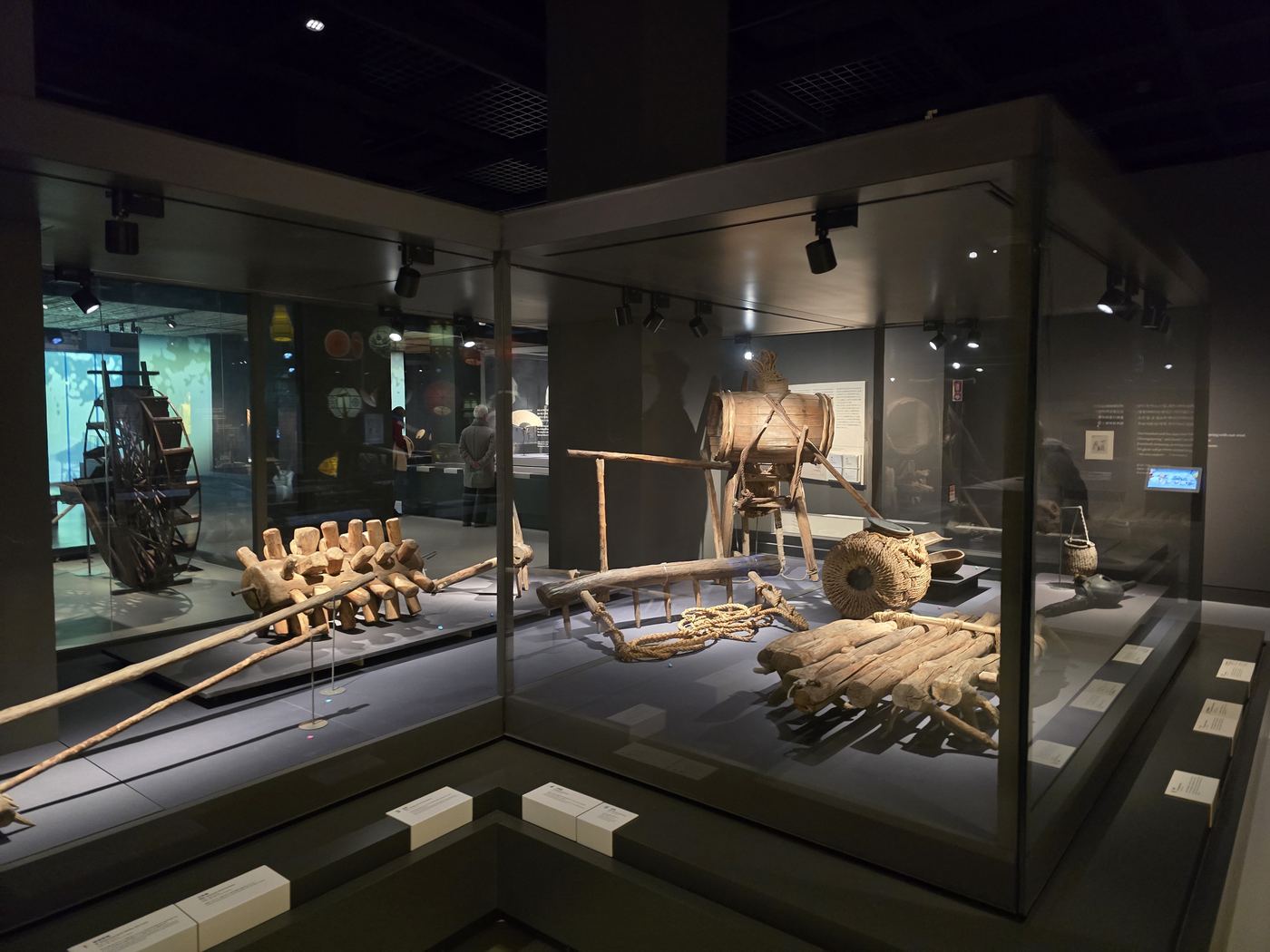
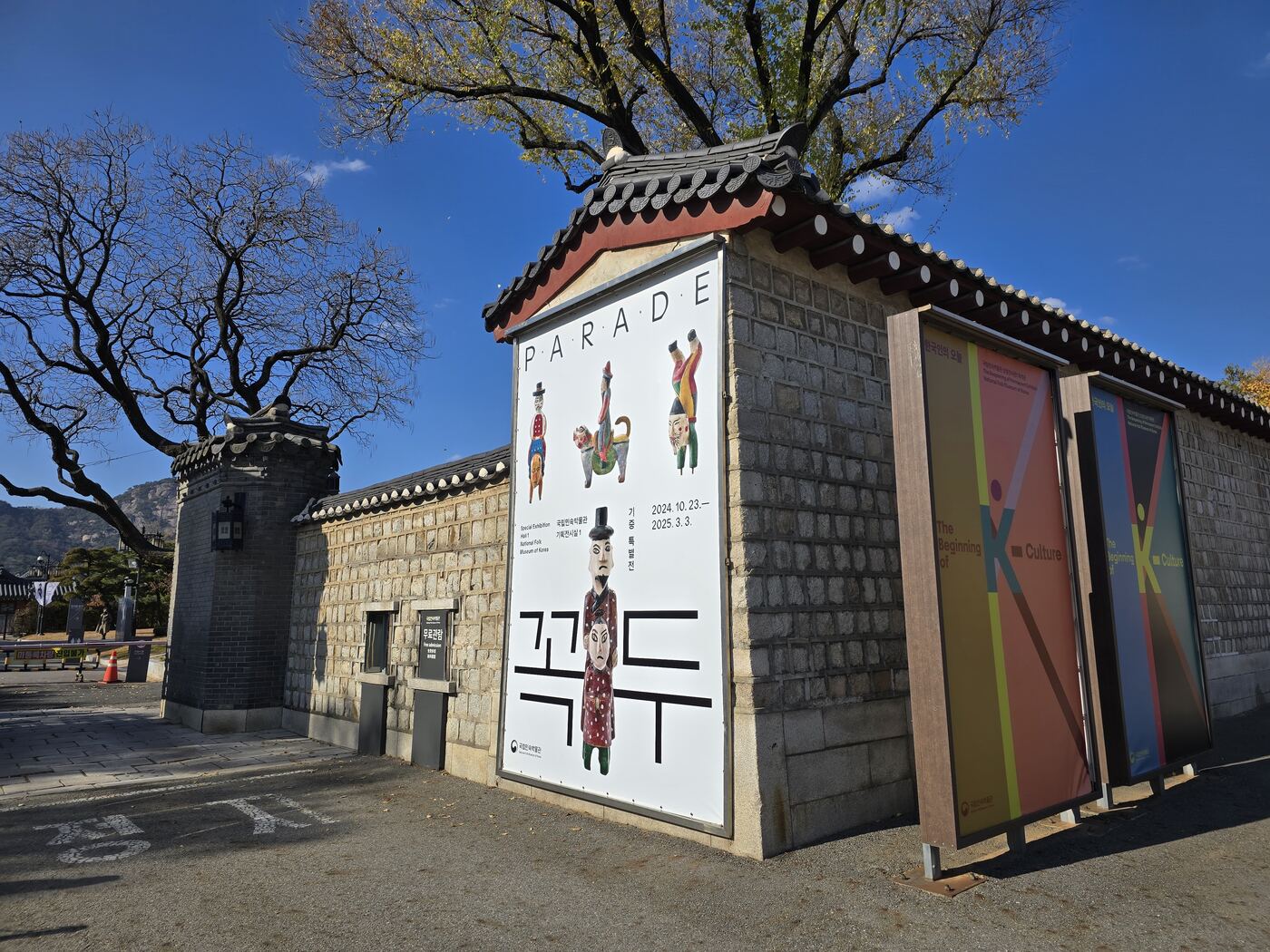
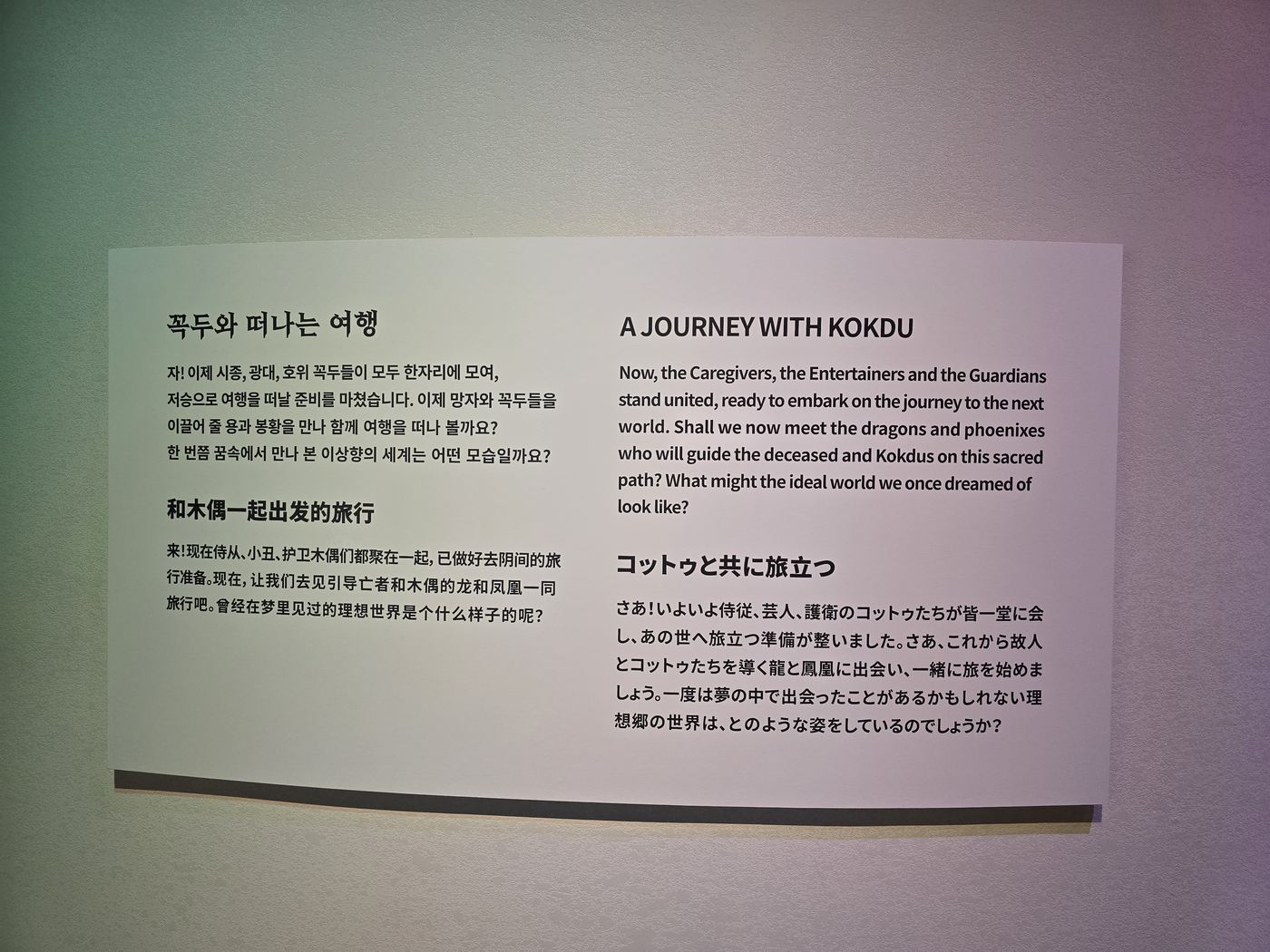
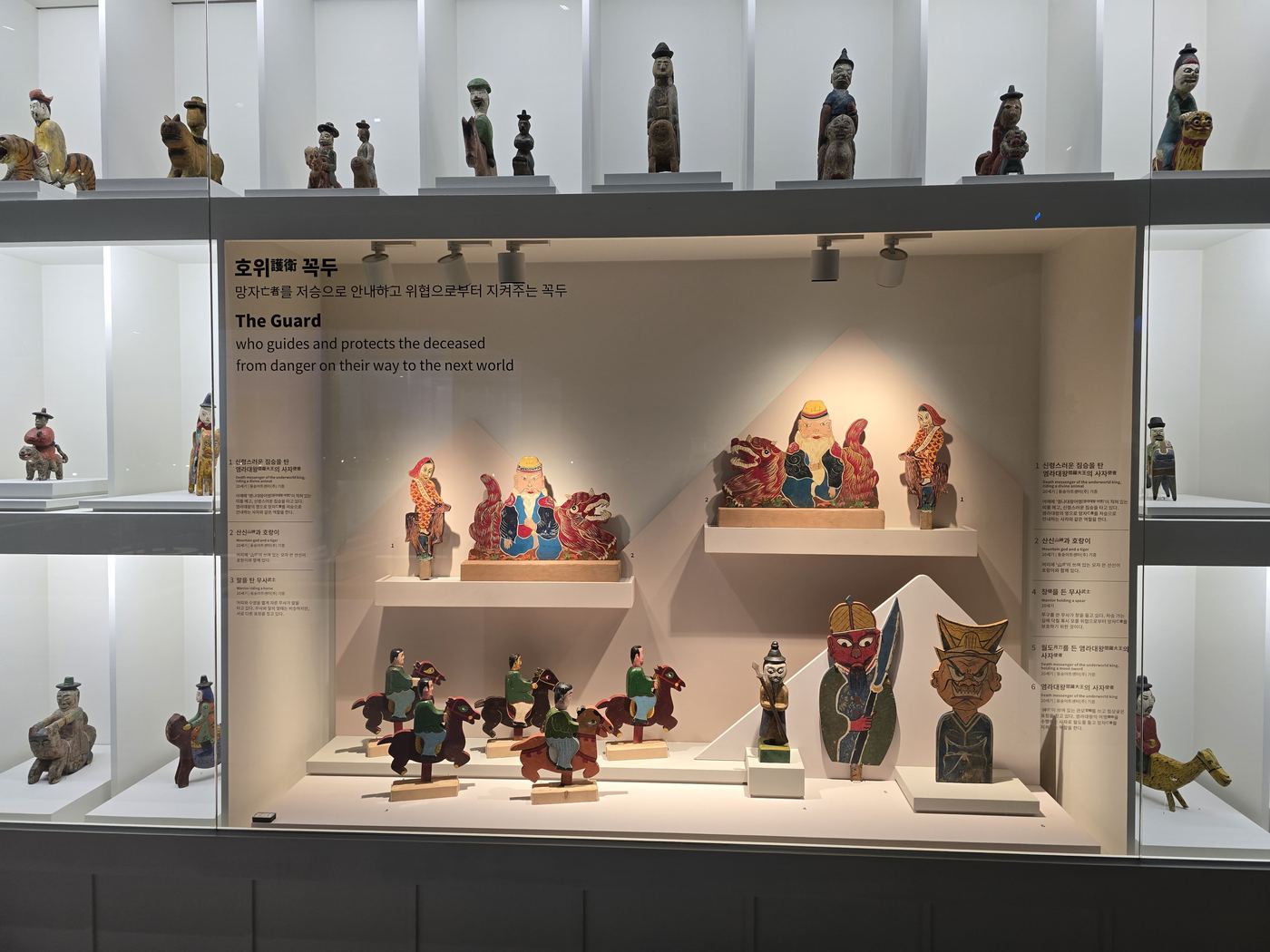
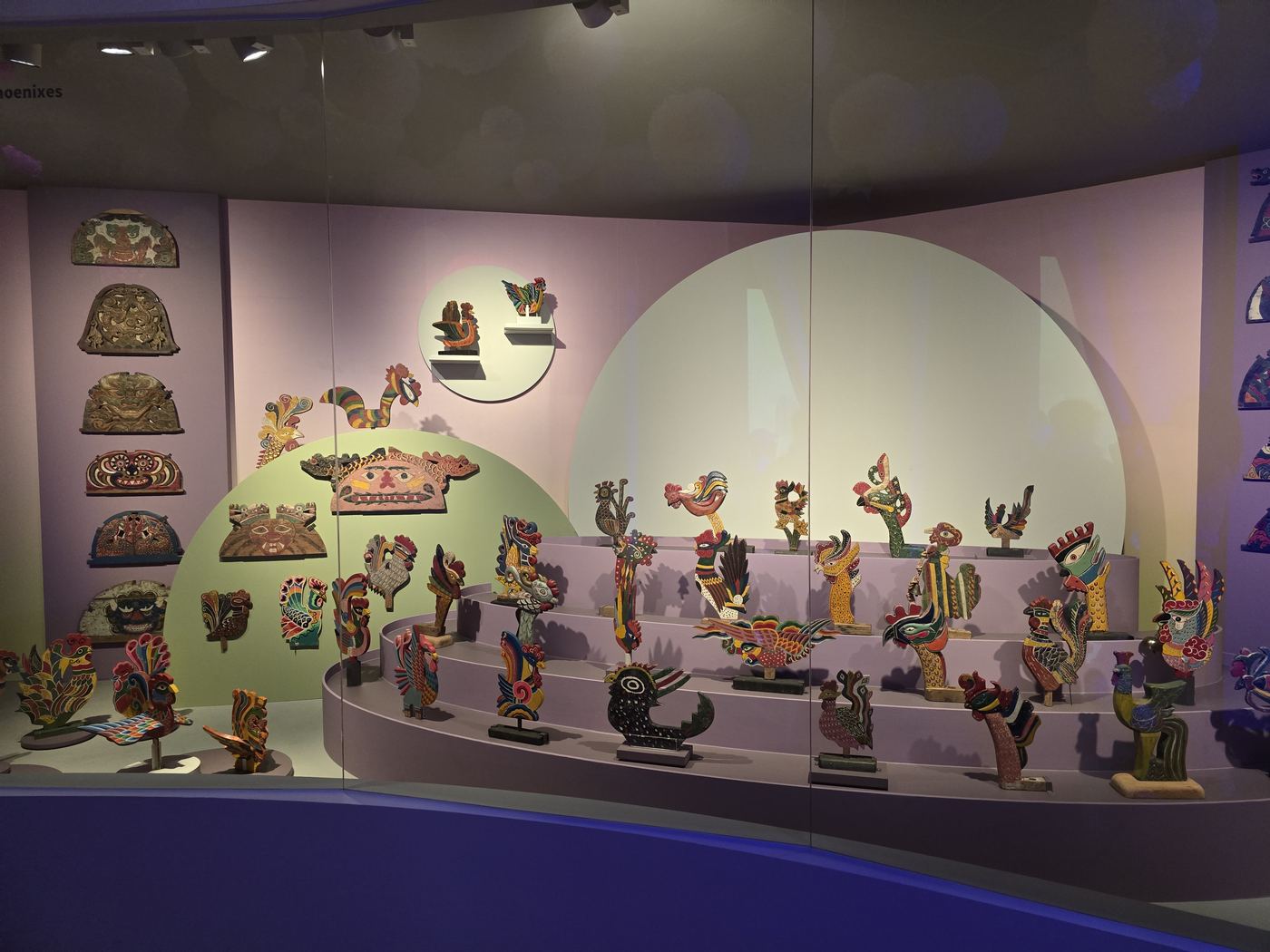
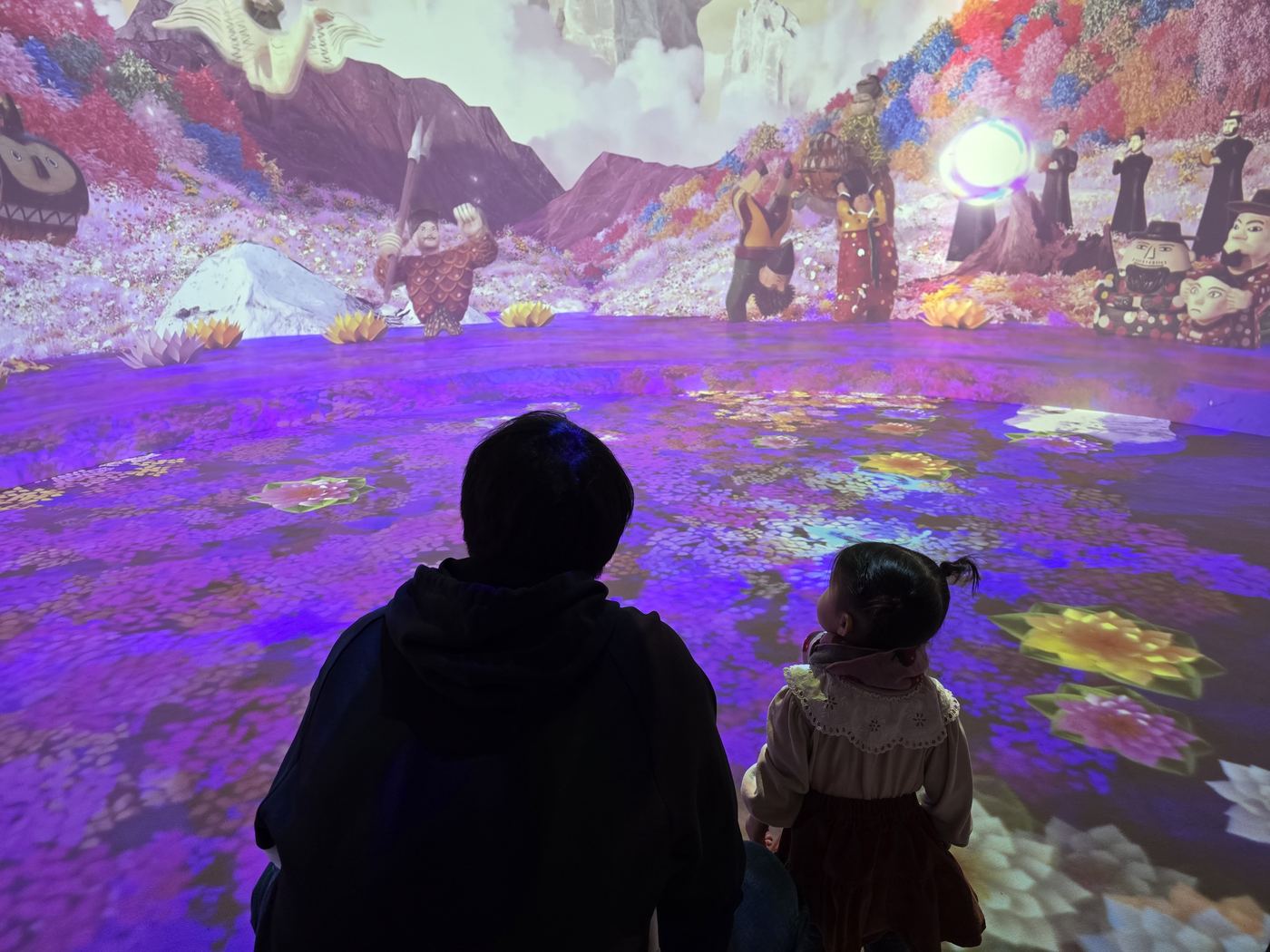
During our visit there was also a special exhibition called Journey with Kkokdu. Kkokdu are traditional Korean wooden figures believed to guide the deceased to the afterlife — intricately carved, brightly painted, and completely fascinating once you understand the context. The exhibition ended in an immersive projection room where the floor and walls became moving imagery drawn from Korean folklore. We stayed there far longer than planned.
📍 37 Samcheong-ro, Jongno-gu, Seoul (inside Gyeongbokgung Palace grounds)
🕐 Tuesday–Sunday 09:00–18:00 · Closed Mondays · Free admission
🚇 Anguk Station Line 3, Exit 1 → 10-minute walk
🍼 Strollers welcome throughout · Nursing room and family restrooms available
🌐 Enter via the Hyoja-ro pedestrian gate — no palace ticket needed
🎫 Children’s Museum requires advance online reservation (free, up to 2 weeks ahead)
→ View on Google Maps
Lunch — Bukchon Kimchijae
After the museum, walk into the Bukchon lanes for lunch. The neighbourhood itself is reason enough to walk — traditional tile-roofed hanok houses lining narrow alleys, the sound of footsteps on stone, glimpses of palace rooftops over the walls. Bukchon Kimchijae is a local favourite tucked into the lanes just above Anguk Station — unpretentious, consistently good, and exactly the kind of place you want after a morning of walking.
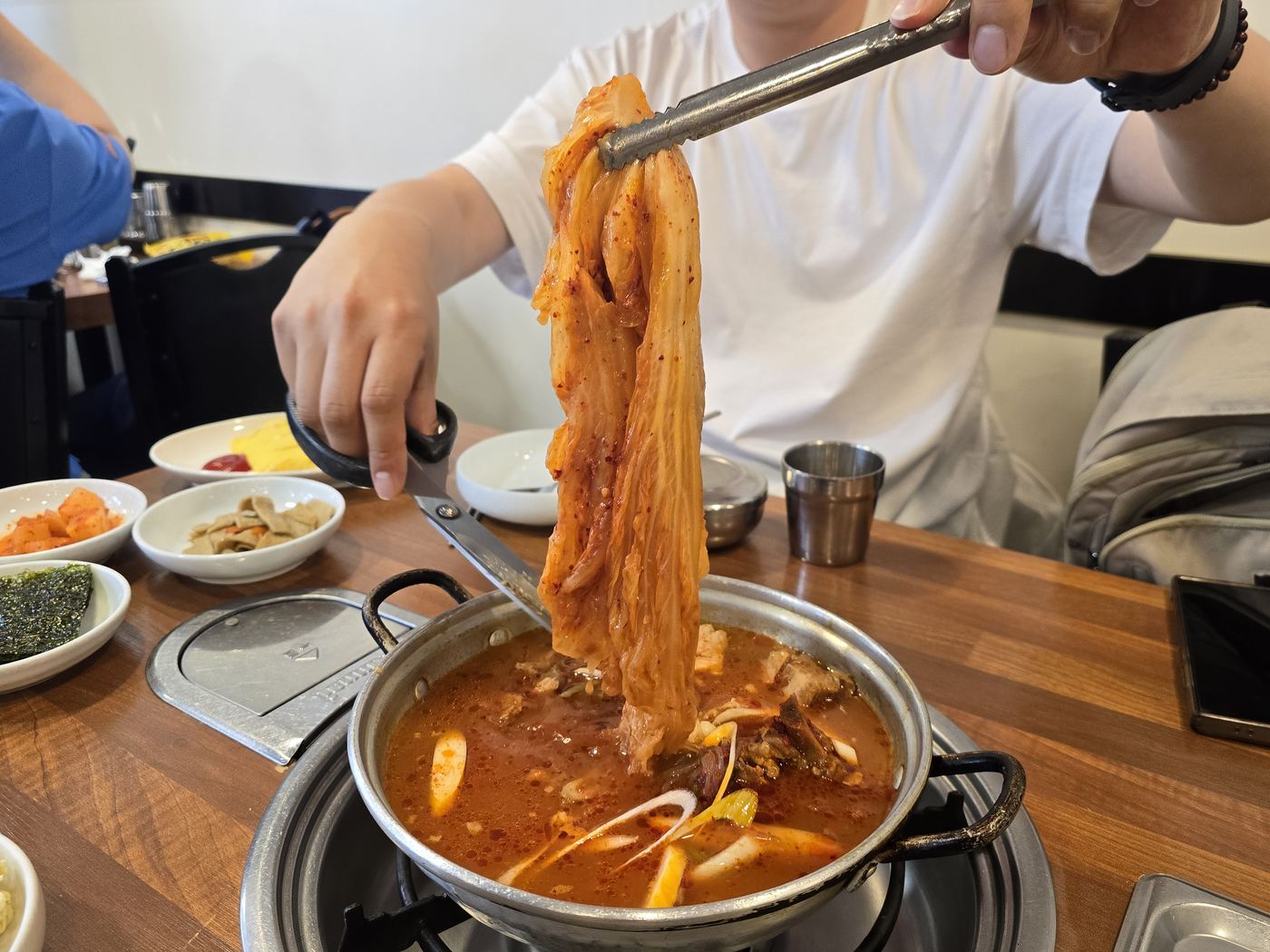
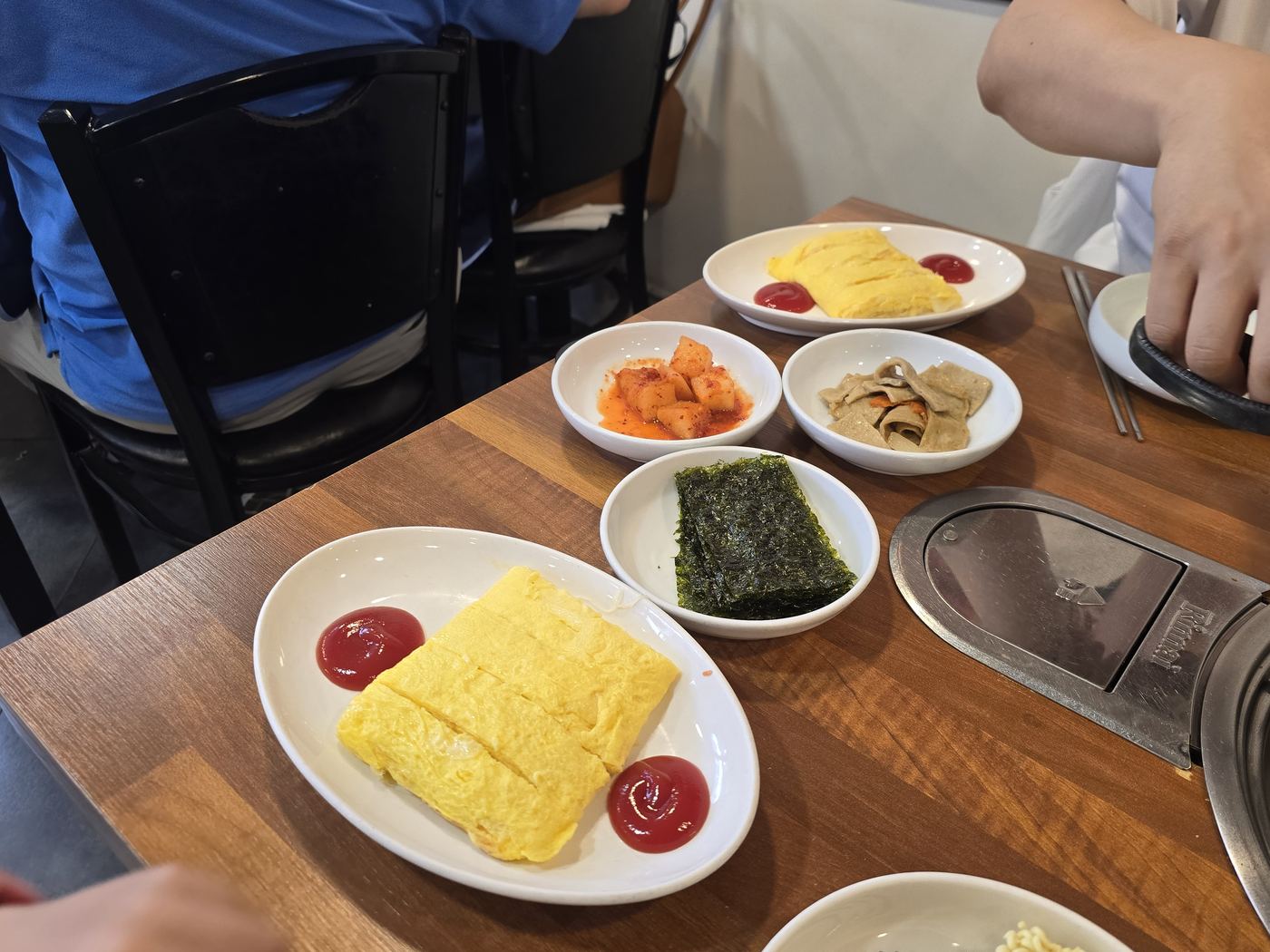
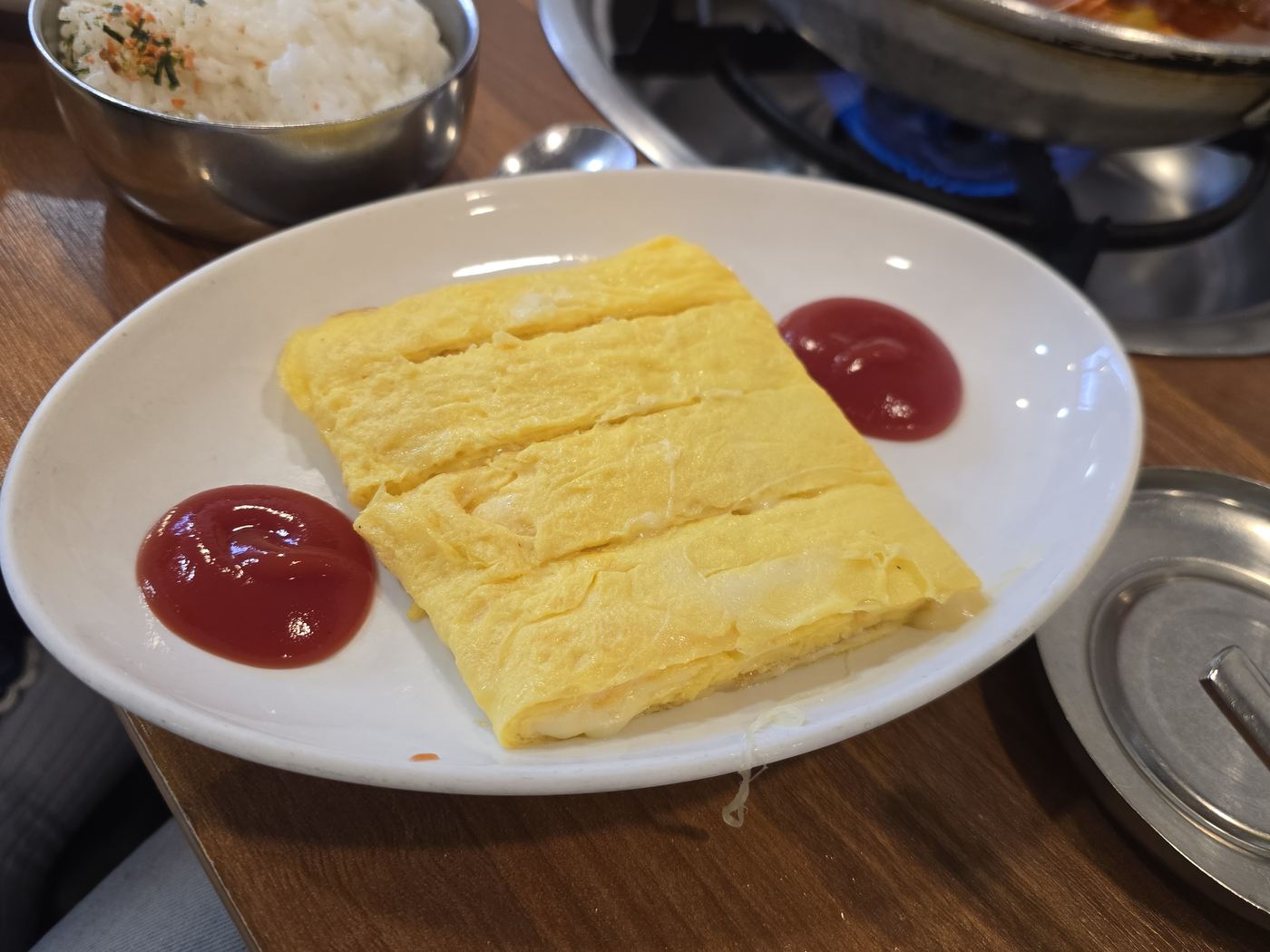
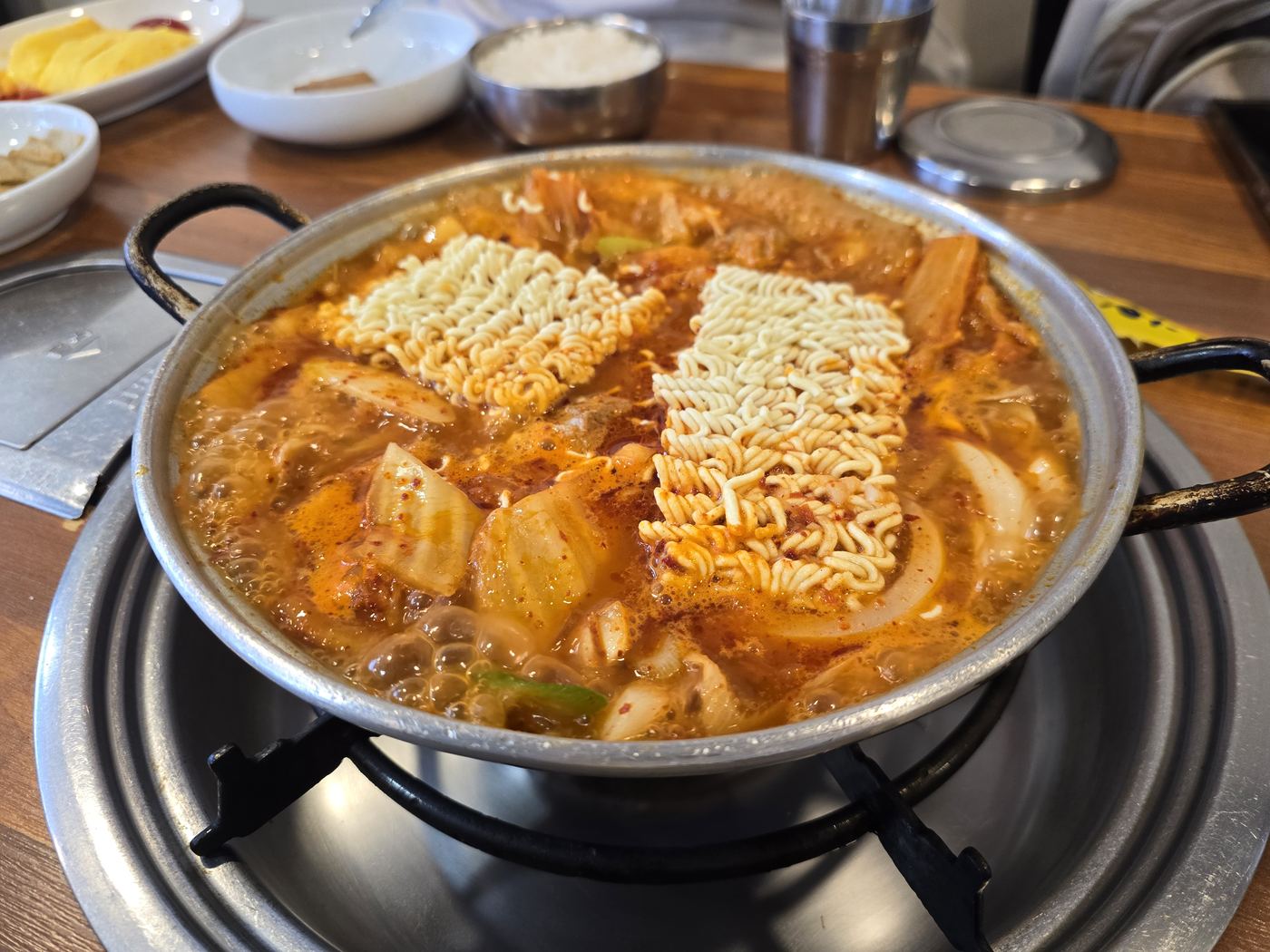
They do kimchi jjigae and doenjang jjigae — the kimchi version is the one to order. It arrives bubbling in a stone pot, served with an array of banchan and rice. The portions are generous and the flavours are the real thing, not softened for tourist palates.
📍 Gahoe-dong, Jongno-gu, Seoul (look for it on Naver Maps as 북촌김치재)
🕐 Lunch hours roughly 11:30–14:30 · Hours can vary, check before you go
🍜 Kimchi jjigae and doenjang jjigae · Around ₩9,000–12,000 per bowl
🍼 Family-friendly — they’ll usually bring plain rice for toddlers on request
💳 Cash and card accepted
Afternoon — Walking Bukchon Hanok Village
After lunch, walk uphill into the heart of Bukchon. The famous views — the ones with rows of curving tile rooftops stretching toward Namsan — are about a 10-minute walk from the restaurant. The best known viewpoint is Bukchon Hanok Village Gahoe-dong Alley 11, marked on every map. It gets crowded on weekends, but on a quiet weekday you can linger without feeling hurried.
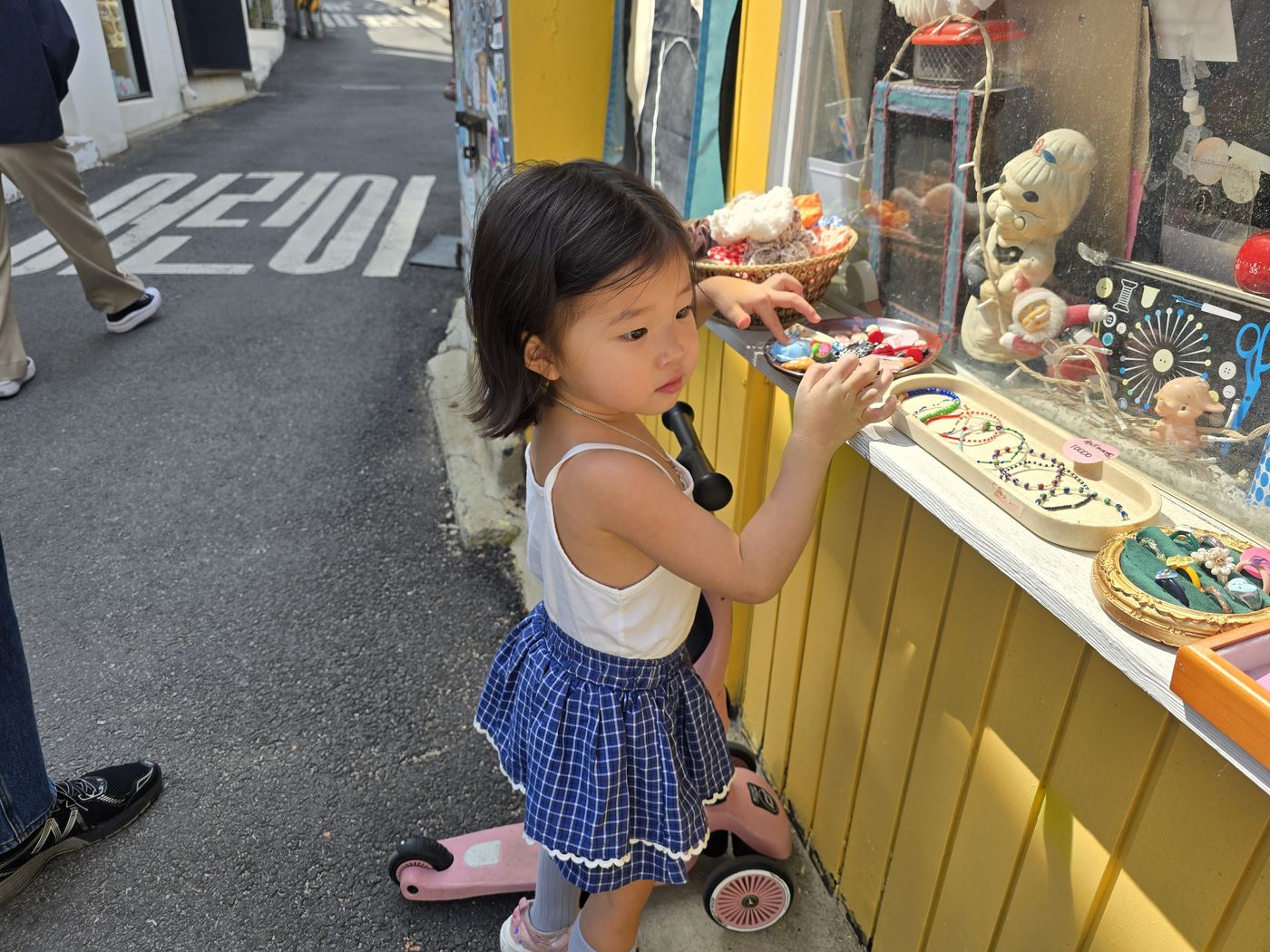
Kids don’t always care about the architecture, but they do respond to the atmosphere — the narrow scale of the lanes, the cats that appear from behind walls, the occasional courtyard gate left open. There are also street food stalls along the main path selling hotteok and tteokbokki, which makes cooperation from small people much easier.
End of Day — Osulloc Tea House, Bukchon
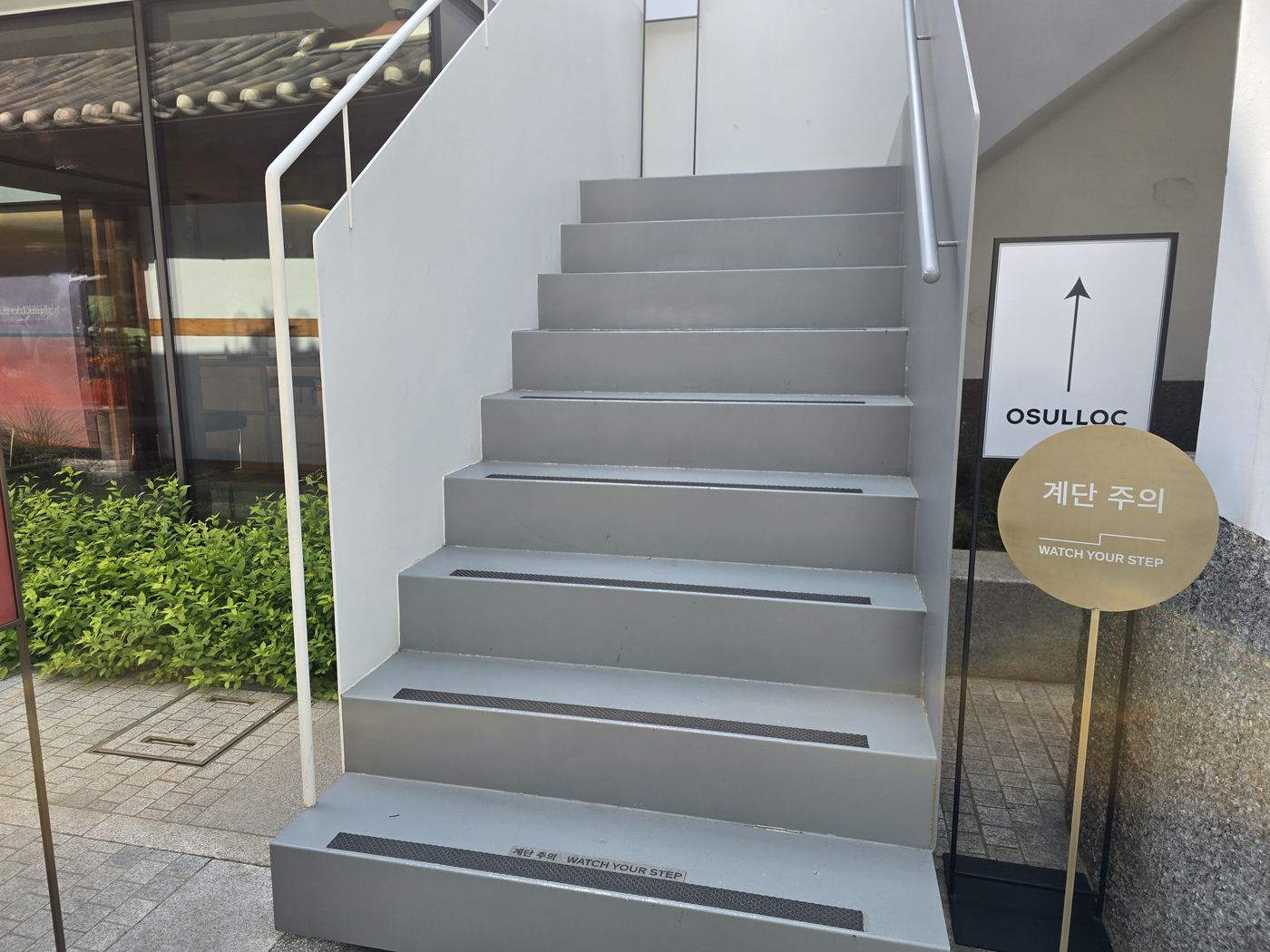
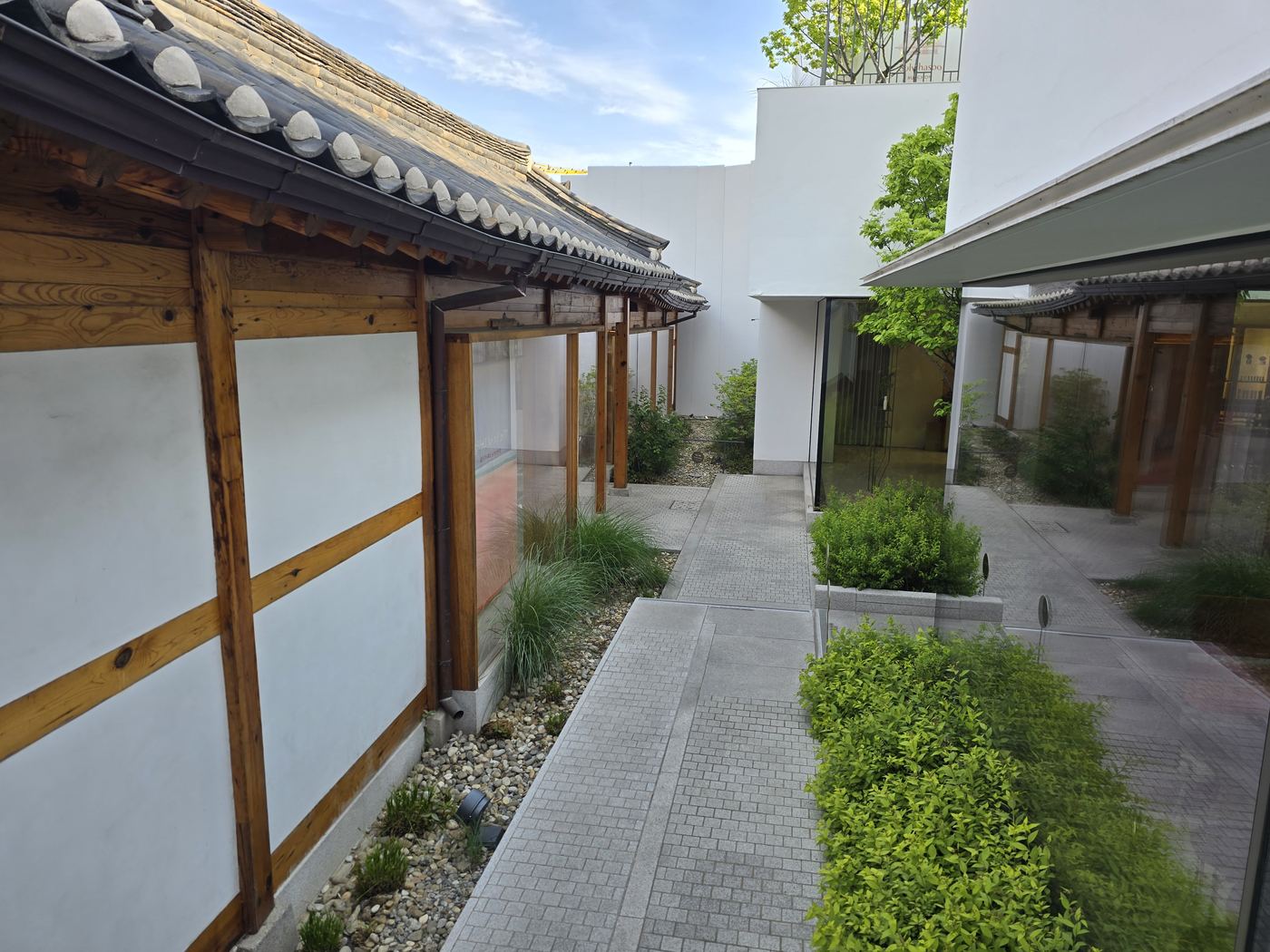
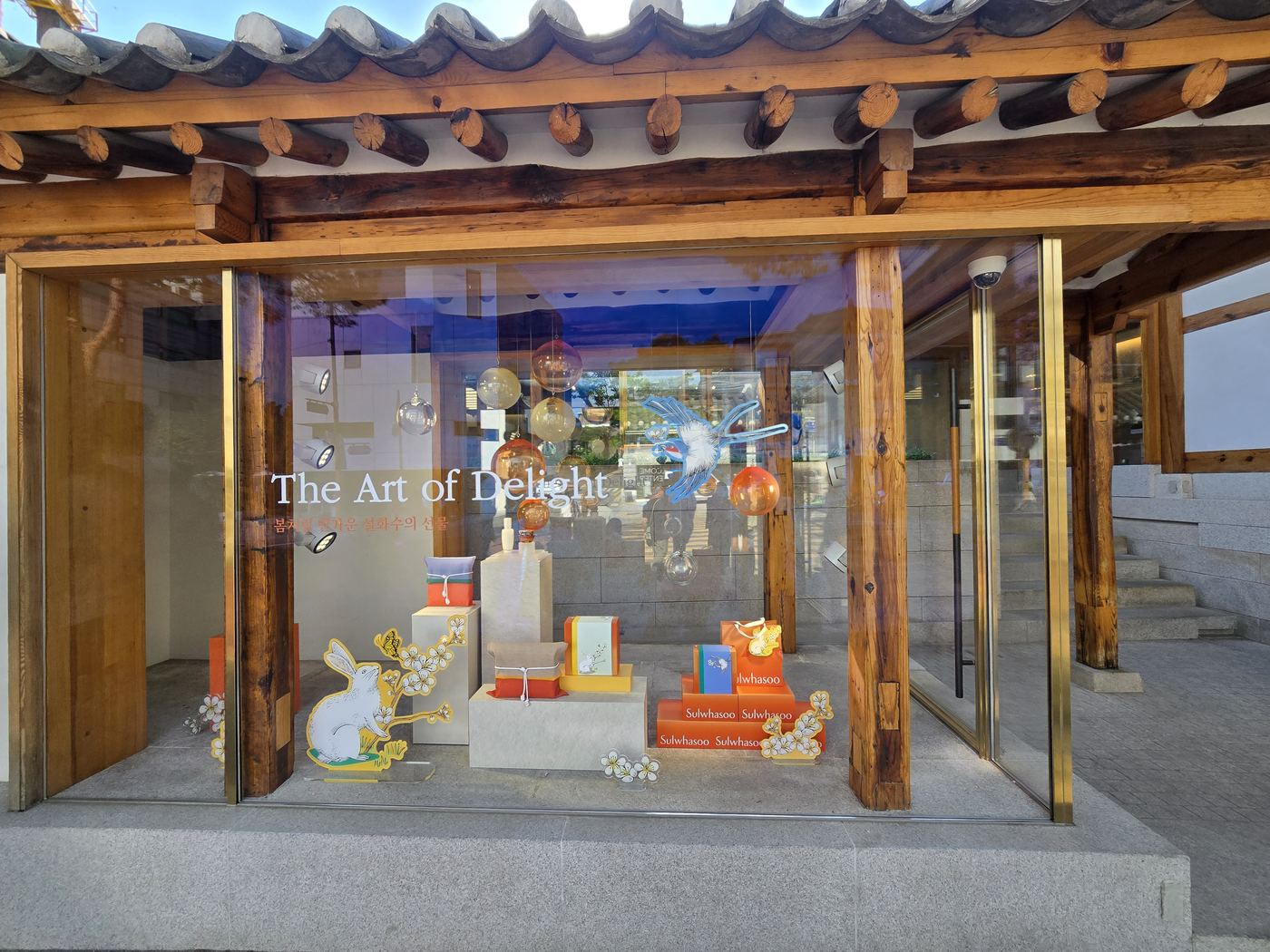
By mid-afternoon, the legs start going. Osulloc has a branch in the Bukchon / Samcheongdong area that’s genuinely one of the nicer spots to wind down — a proper sit-down tea house rather than a takeaway counter, with matcha soft serve, tea lattes, and a full range of green tea-based desserts.
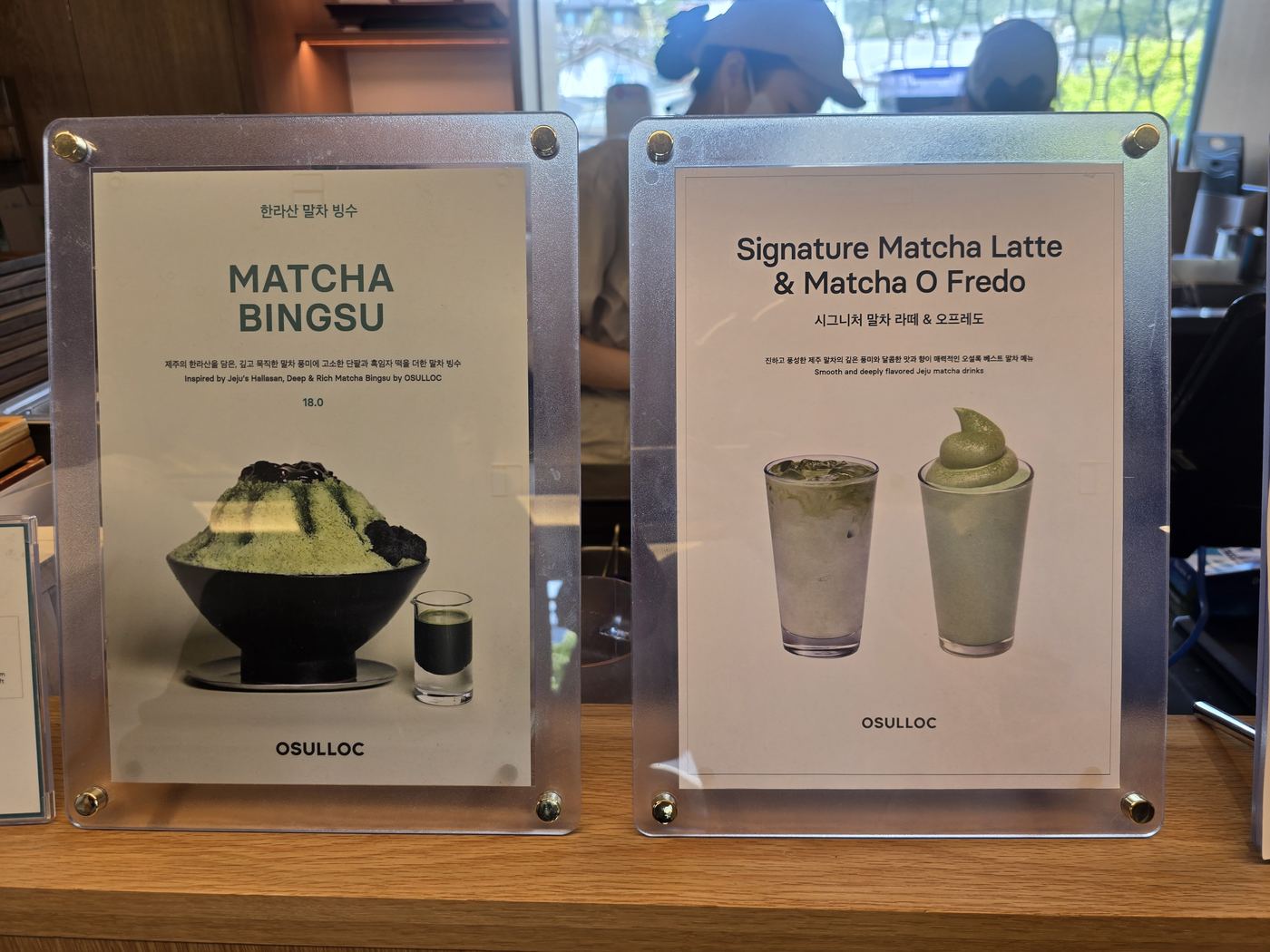
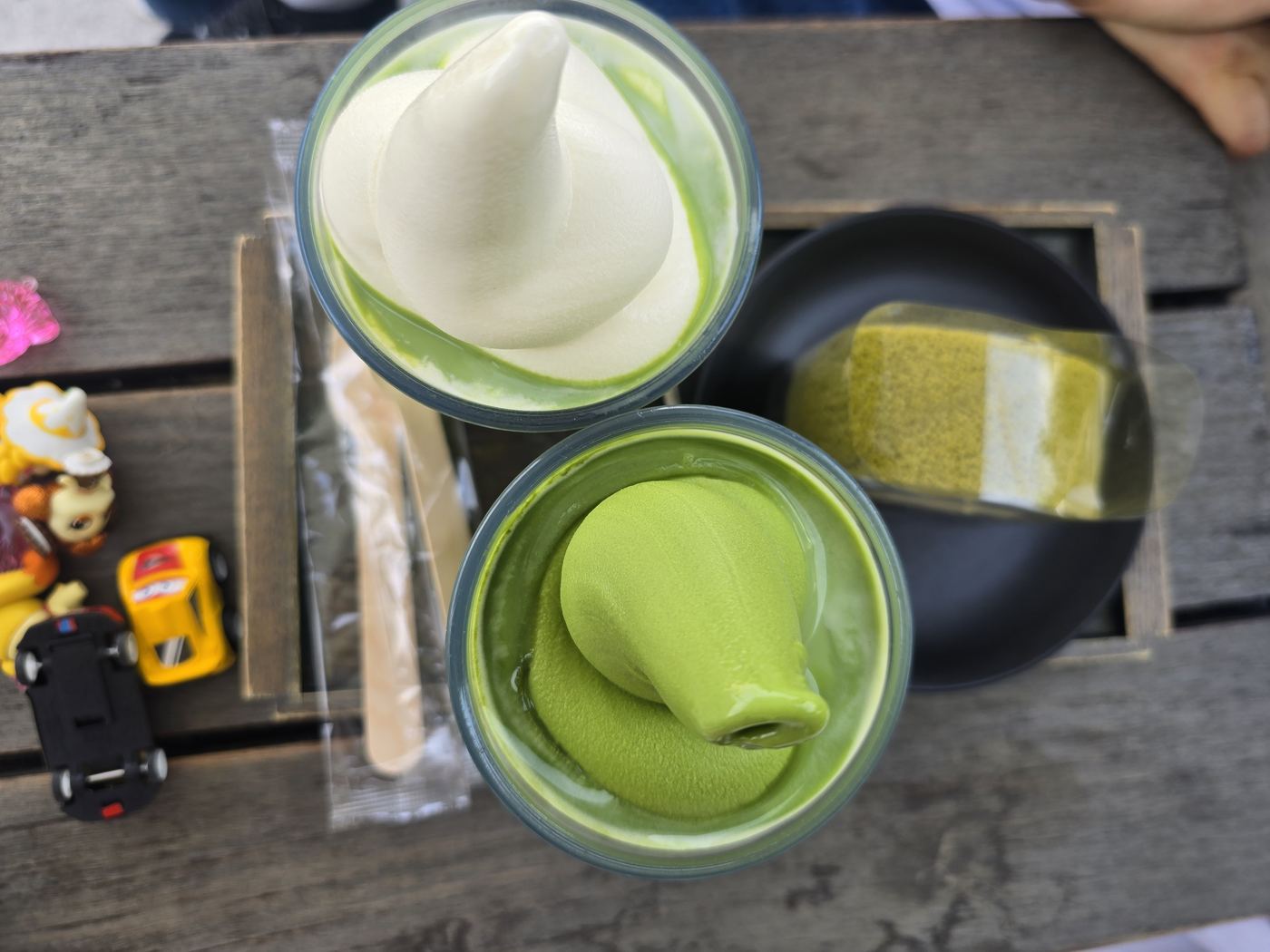
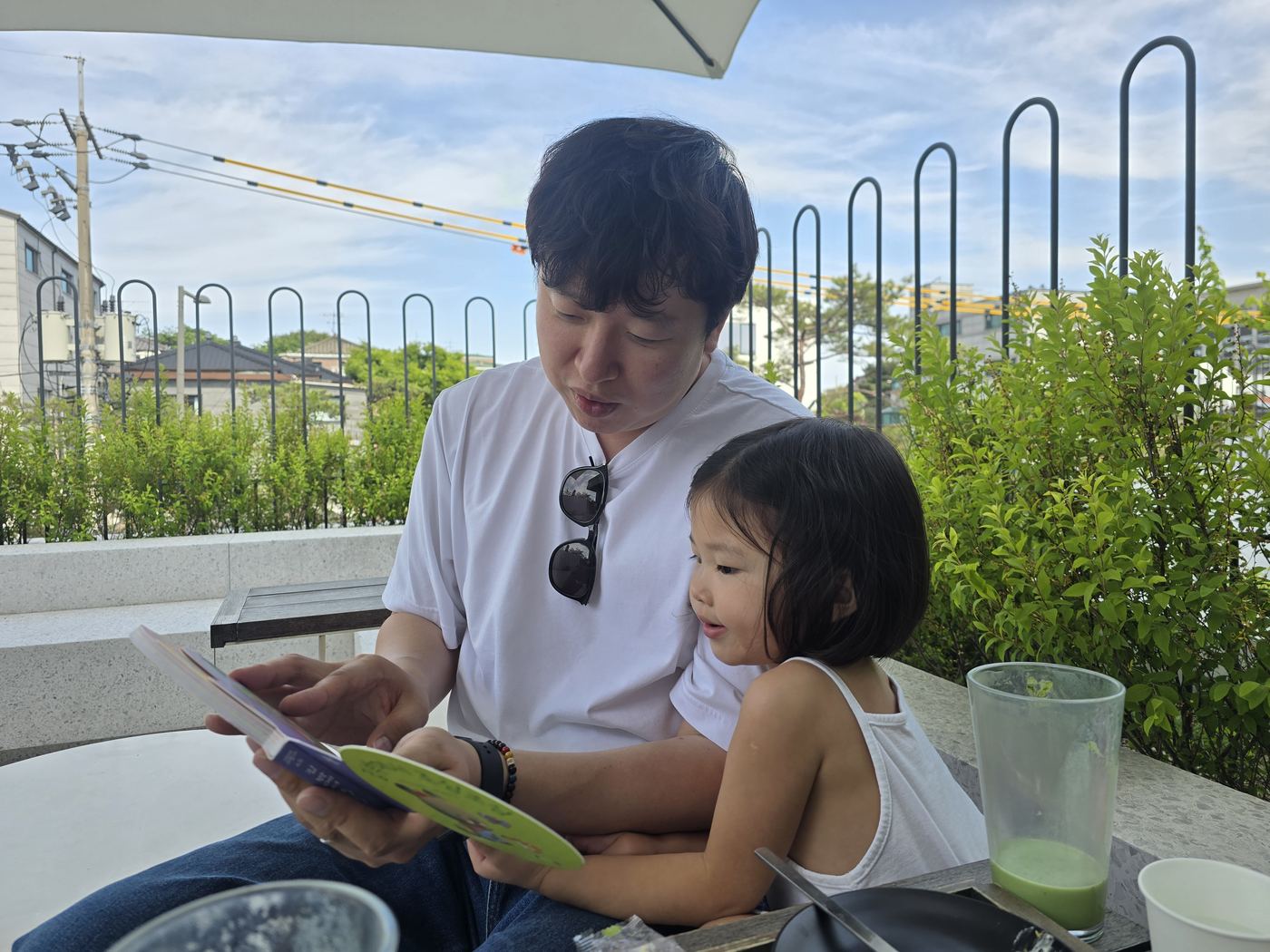
The matcha soft serve is the thing to order if you’re only getting one item. It’s richer and less sweet than most — proper matcha flavour rather than green-coloured vanilla. Kids tend to be enthusiastic about it. The roasted rice tea (hyeonmi cha) is good for warming up on cooler days.
📍 Samcheongdong / Bukchon area · look for 오설록 북촌점 on Naver Maps
🕐 Daily 10:00–21:00 (approximate — check current hours)
☕ Matcha soft serve around ₩5,500 · Tea lattes ₩7,000–9,000
🍼 High chairs available · Pushchair-friendly layout
How to Build the Day
This itinerary runs best in a single flowing direction — Folk Museum in the morning, lunch in the Bukchon lanes, an afternoon walk through the hanok streets, then Osulloc before heading home. The whole route starts and ends near Anguk Station, so you’re not backtracking.
Rough timing for a family with a toddler:
⏰ 11:30 — Move to outdoor village + play area
⏰ 12:30–13:30 — Lunch at Bukchon Kimchijae
⏰ 14:00 — Walk Bukchon lanes, viewpoint, street food
⏰ 15:30 — Osulloc for matcha and a sit-down rest
⏰ 16:30–17:00 — Head back to Anguk Station
If the toddler naps in the stroller after lunch, that’s prime time to walk the quieter upper Bukchon lanes where pushing is easier. The lower streets near Anguk are flatter but busier.
Getting There
Exit 1 → National Folk Museum (10-minute walk)
Exit 2 → Bukchon Hanok Village entrance
🚌 Bus routes also stop nearby — check Naver Maps for real-time options
🗺️ Not doing this on your own? The Palaces & Bukchon guided walking tour on Klook covers Gyeongbokgung and Bukchon with a local guide — a good option if you want context alongside the walk.