

Seoul is one of the most rewarding cities in the world to explore on a tight budget. Some of its best experiences cost absolutely nothing — ancient palaces, living history villages, an illuminated underground stream, and world-class museums that are genuinely free for everyone. Here’s our family-tested guide to the best free things to do in Seoul, with a map, tips for each spot, and a few paid add-ons worth splashing out on.
| 💰 Cost | Free (all 4 spots) — some nearby paid add-ons listed below |
| 👨👩👧 Best for | Families, first-time visitors, budget travelers |
| 📍 Area | Central Seoul — most spots within 2 km of each other |
| 🕐 Best time | Weekday mornings for smaller crowds |
| 🚇 Getting there | City Hall Station (Line 1/2) or Gwanghwamun Station (Line 5) |
Free Things to Do in Seoul — Map
All four spots below are marked on this map. Click any pin for details, directions, and notes. Orange pins are hotel recommendations near the main cluster.
📍 Green pins = free spots · 🟧 Orange H = hotels · Tap any pin for info & links
1. 🏛️ Seoul City Hall — My Friend Seoul Gallery & Kids Lounge
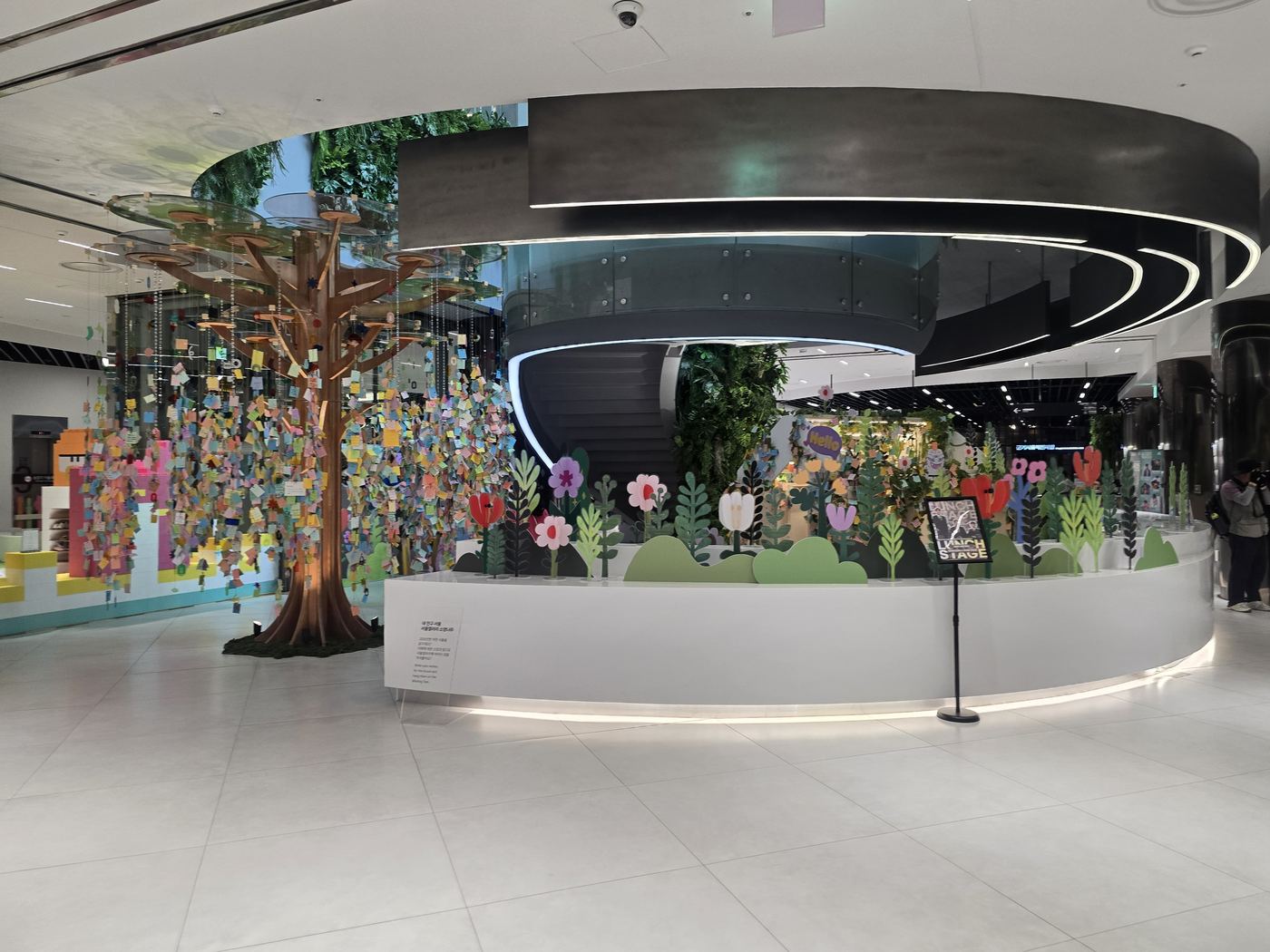
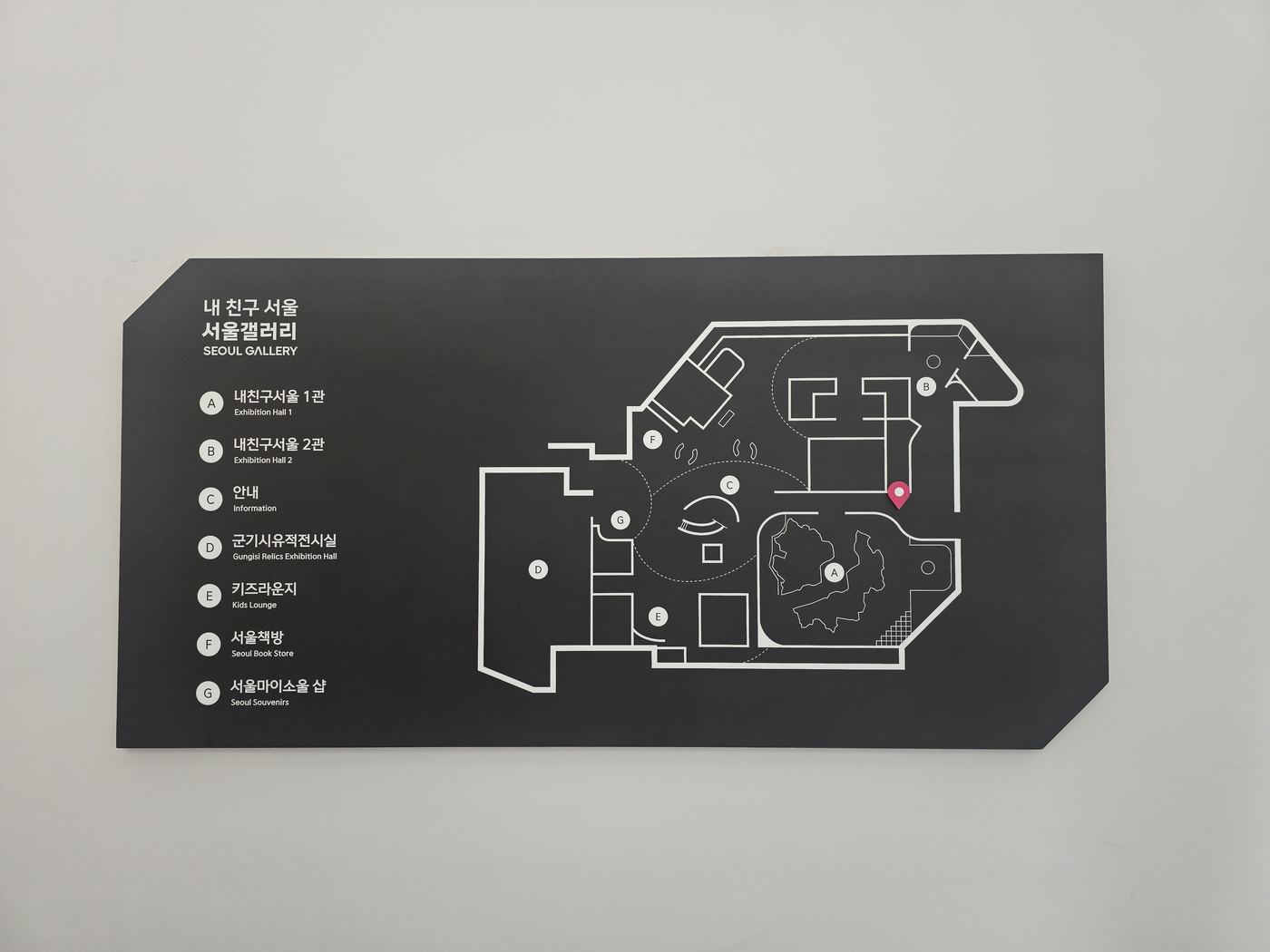
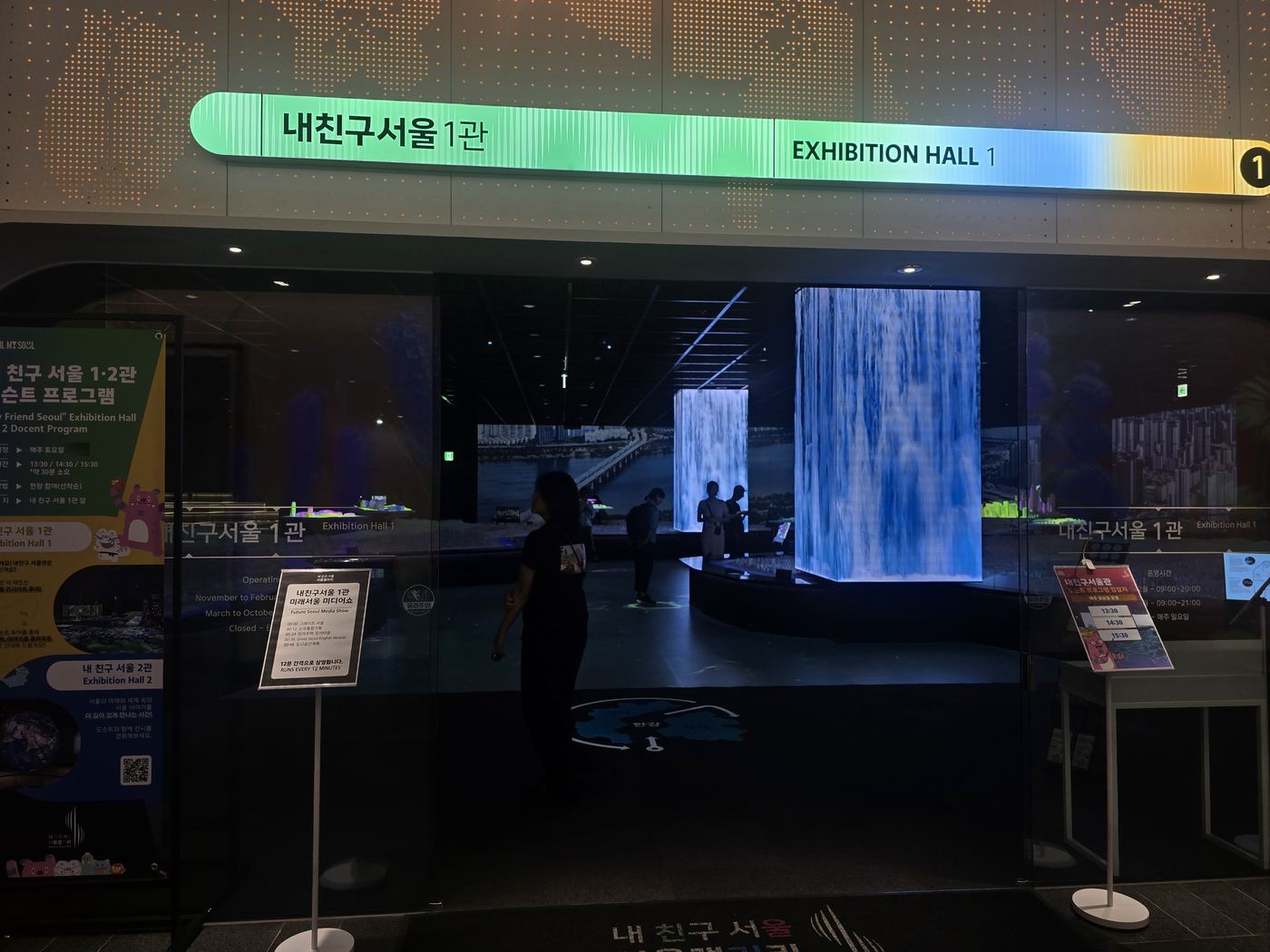
Most visitors walk straight past Seoul City Hall without realizing what’s inside. The ground floor houses My Friend Seoul — a free rotating gallery focused on Seoul’s culture, history, and city stories — plus a dedicated Kids Lounge with cushioned climbing areas, a mini library corner, and hands-on interactive displays. It’s air-conditioned, thoughtfully designed, and costs absolutely nothing to enter.
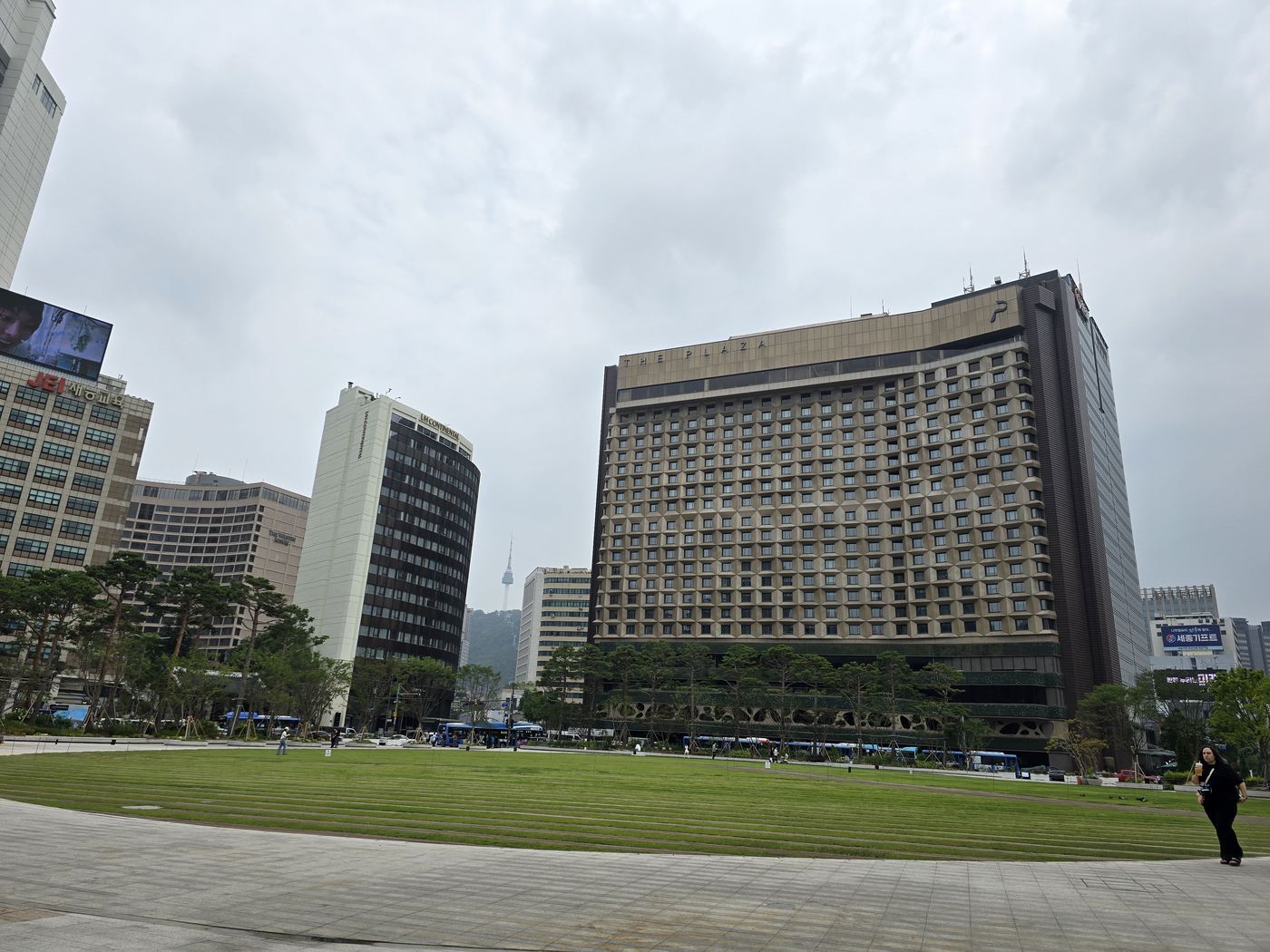
Outside, Seoul Plaza (서울광장) stretches in front of the building — a large oval lawn that hosts free outdoor festivals, concerts, and seasonal markets throughout the year. The dancing fountain plaza beside it is one of the best photo spots in central Seoul, framing both the old Joseon-era City Hall dome and the modern glass wave building behind it.
We wandered in expecting to stay 20 minutes and ended up spending 90. If you’re coming with kids, budget at least an hour for the gallery alone. → Read our full My Friend Seoul Gallery review · → Full City Hall to Gwanghwamun half-day guide
2. ⚔️ Gwanghwamun Square
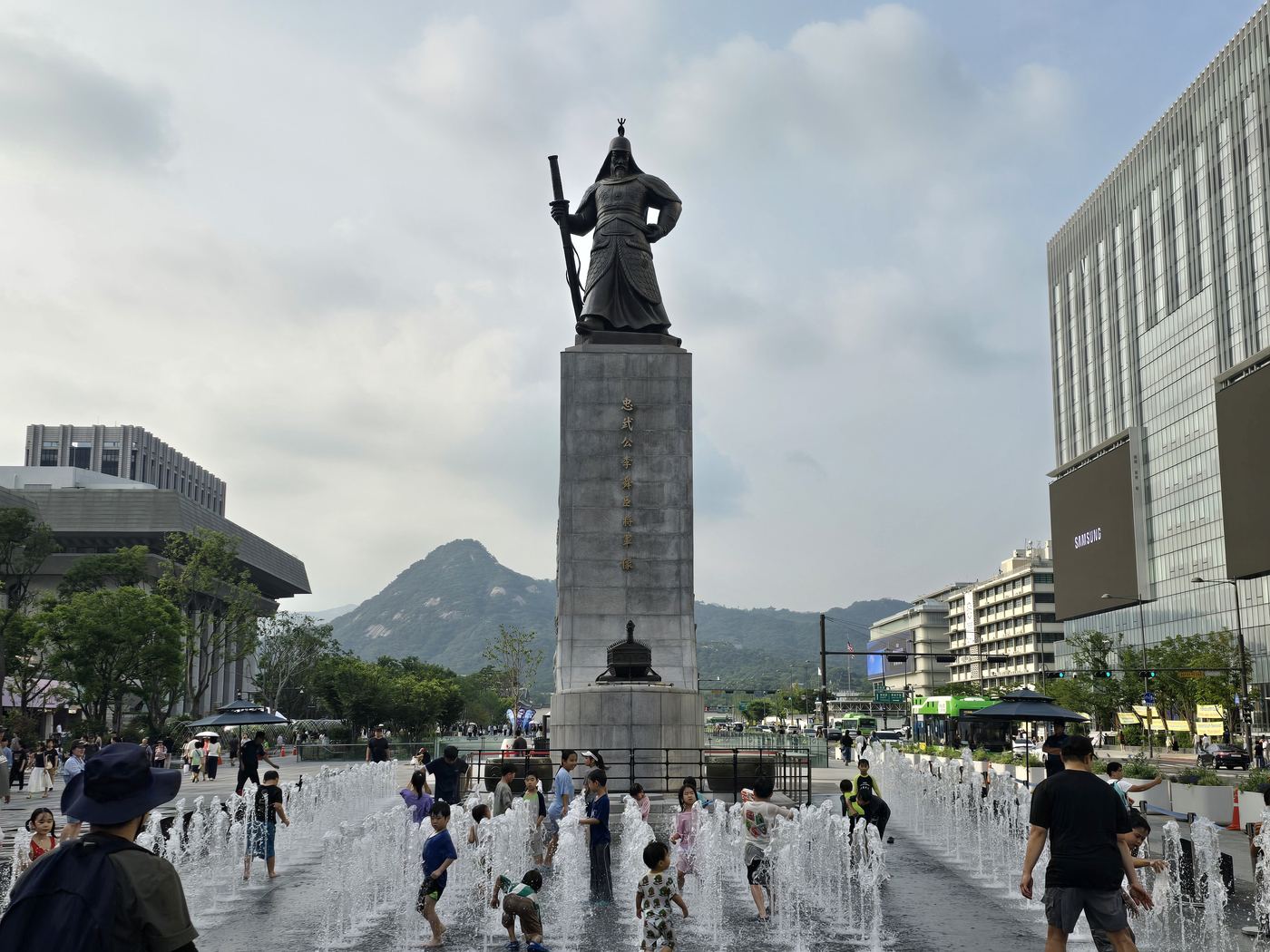
Gwanghwamun Square is the grand ceremonial boulevard of Seoul, running from the southern Gyeongbokgung Palace gate all the way down to Cheonggyecheon. Two massive bronze statues anchor the square — Admiral Yi Sun-sin (Korea’s greatest naval hero) and King Sejong the Great (inventor of Hangul) — with the palace walls and Bugaksan mountain forming the backdrop.
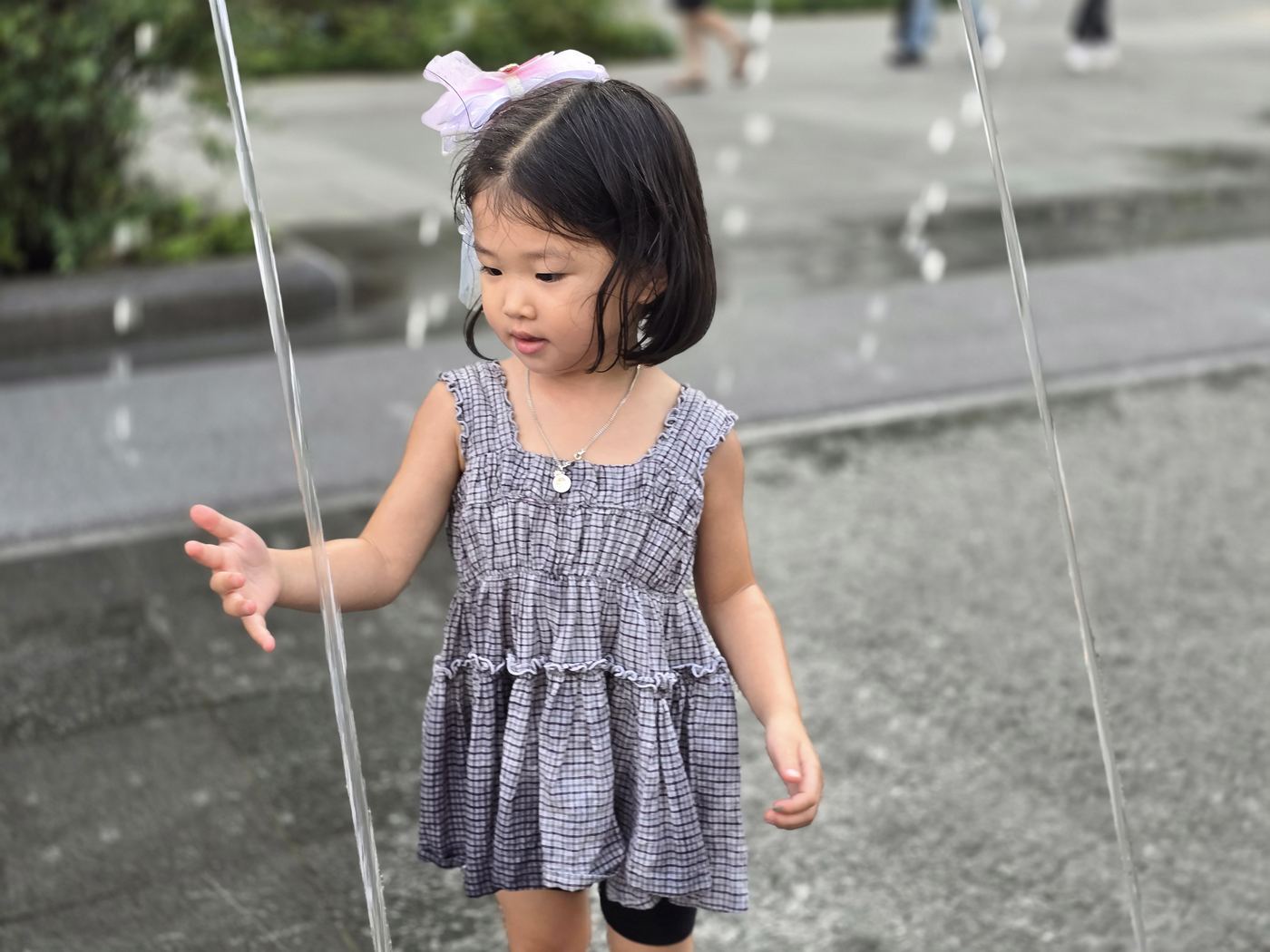
The square’s star feature is the Hangeul Fountain directly in front of the Yi Sun-sin statue. Water jets shoot in choreographed patterns — in summer the water sprays low enough for kids to run through. In the evenings the fountain is lit up and the whole area has a festival feel, especially at weekends when there are often street performers and pop-up exhibitions.
From here you’re a short walk to Cheonggyecheon Stream, Gyeongbokgung Palace, and Kyobo Books — making Gwanghwamun the natural hub for a full day of free sightseeing. → See the full half-day route from City Hall to Gwanghwamun
3. 🏺 National Folk Museum of Korea
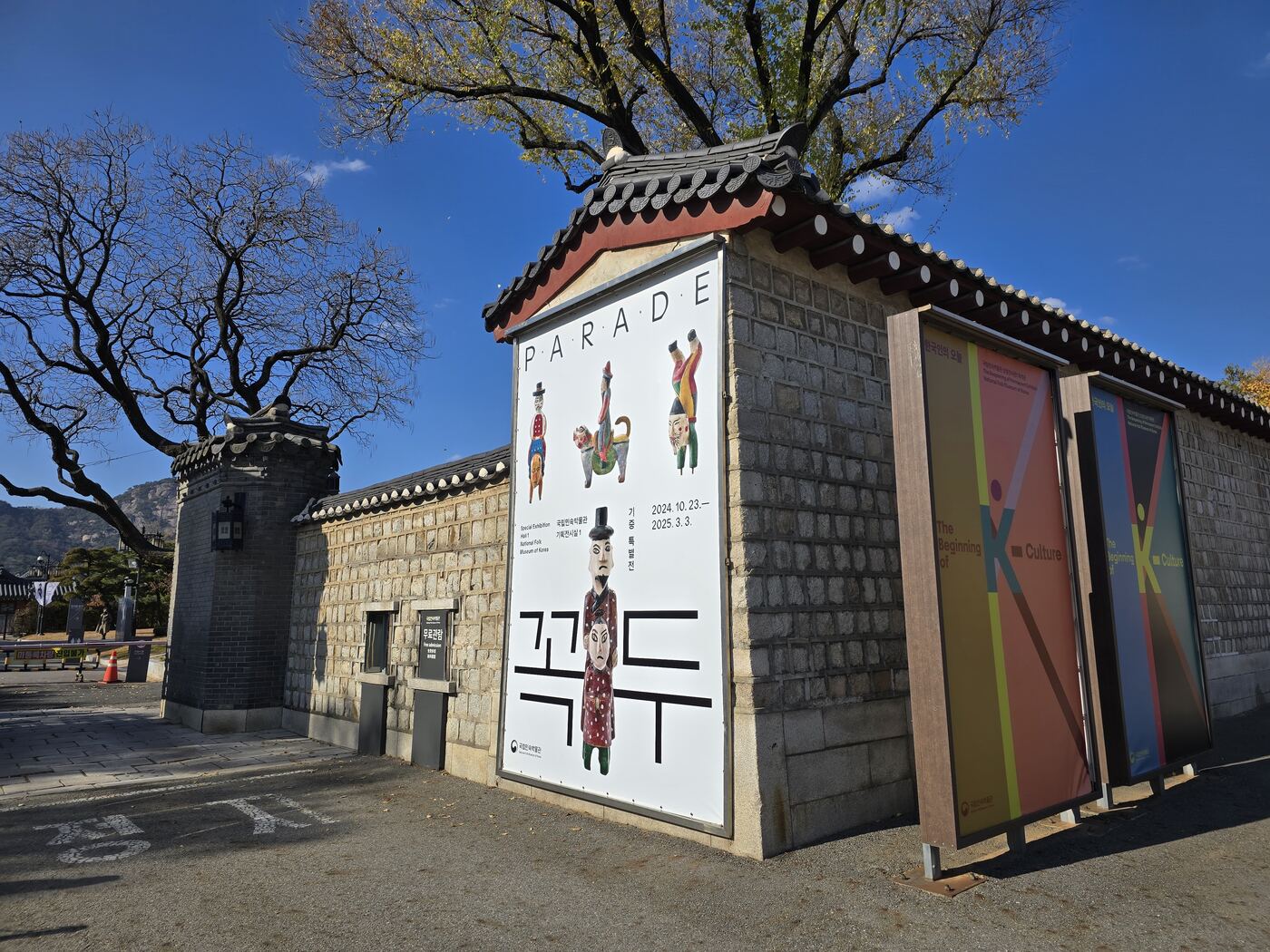
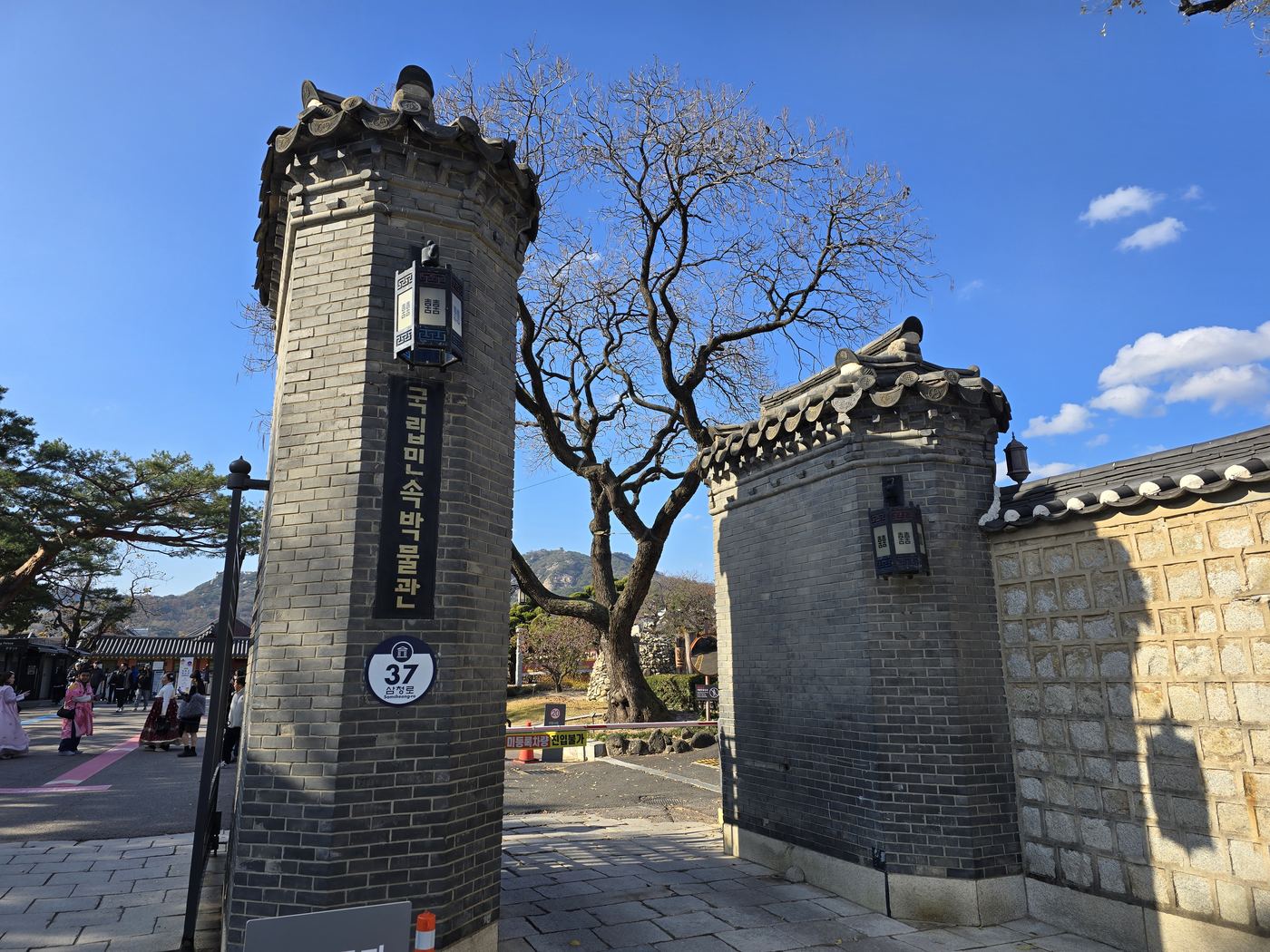
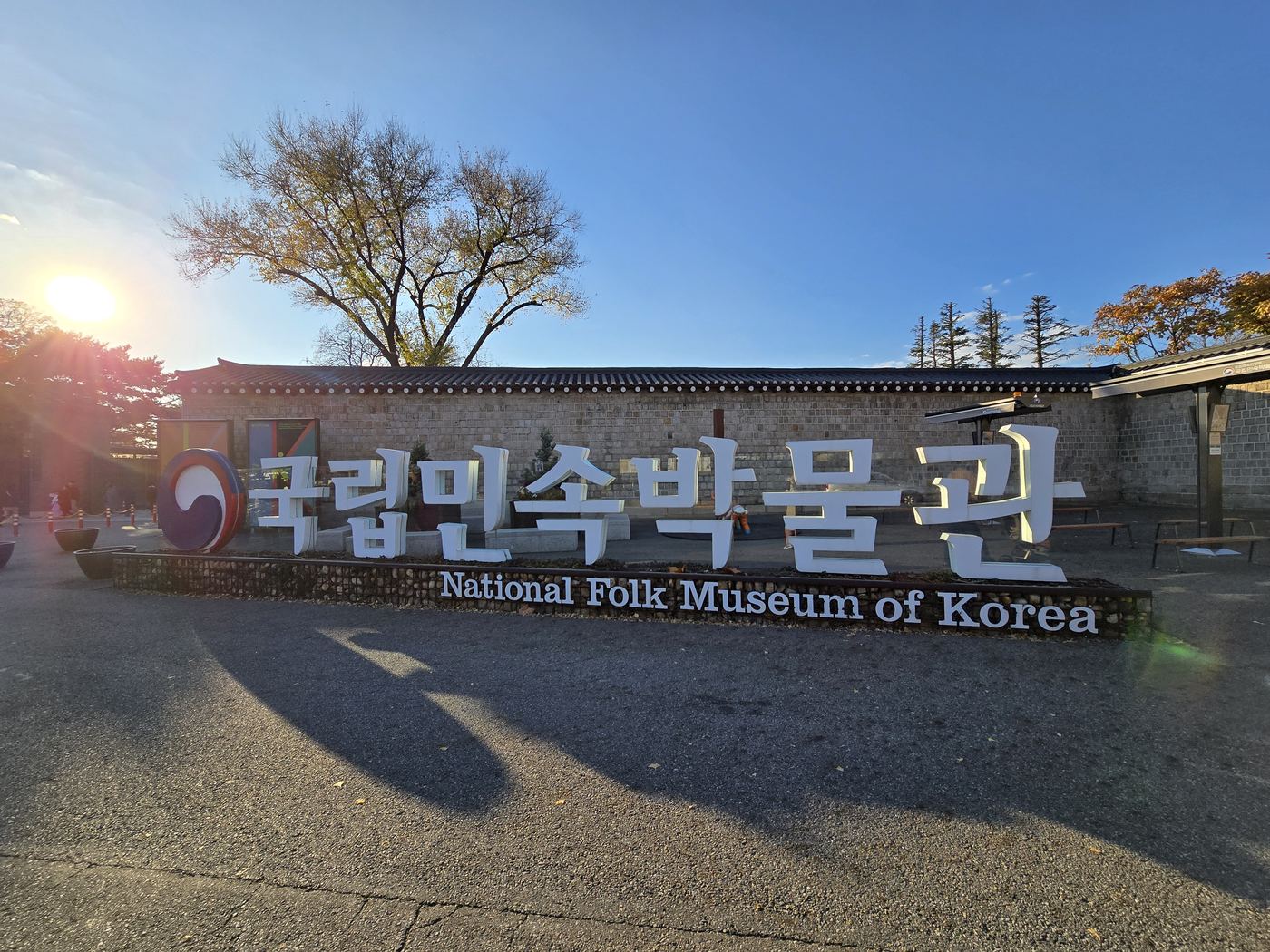
The National Folk Museum sits inside the grounds of Gyeongbokgung Palace, which means arriving here gives you two major sights in one visit. The museum itself is free — three large indoor exhibition halls trace traditional Korean life from prehistoric times through the Joseon era, with life-size reconstructions of village markets, workshop scenes, and ceremonial objects.
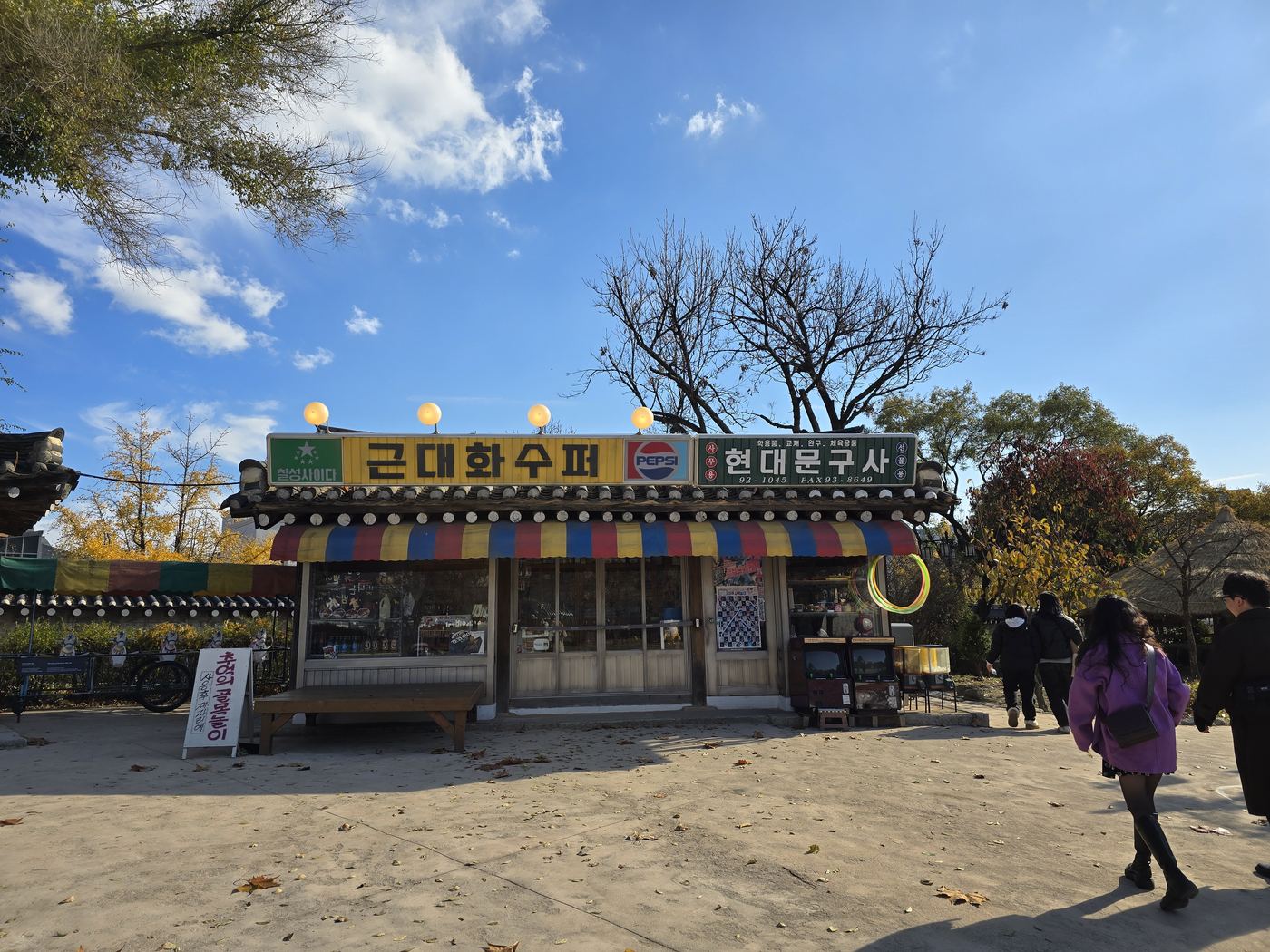
The outdoor section is particularly good with kids: a recreated Joseon-era alleyway with a rice shop, apothecary, paper goods store, and a village school — all built at walking scale. Young children can try on hanbok (traditional dress) and examine traditional games and tools. The attached Children’s Museum (separate building, free entry) has hands-on activities targeted at under-10s.
We visited on a November afternoon and had the place nearly to ourselves for the first hour. Budget two hours for the full museum plus outdoor section. Combine with Bukchon Hanok Village (a 15-minute walk away) for a full half-day out. → See our Bukchon + Folk Museum + Osulloc family day guide
4. 🏘️ Bukchon Hanok Village
Bukchon Hanok Village is a hillside neighborhood of 900+ traditional Korean hanok houses that has remained largely intact while modern Seoul grew up around it. Walking the upper lanes near Gahoe-dong gives you one of the most photographed views in Korea — curved grey tile rooflines cascading downhill with Namsan Tower and Gyeongbokgung’s pavilion visible in the background.
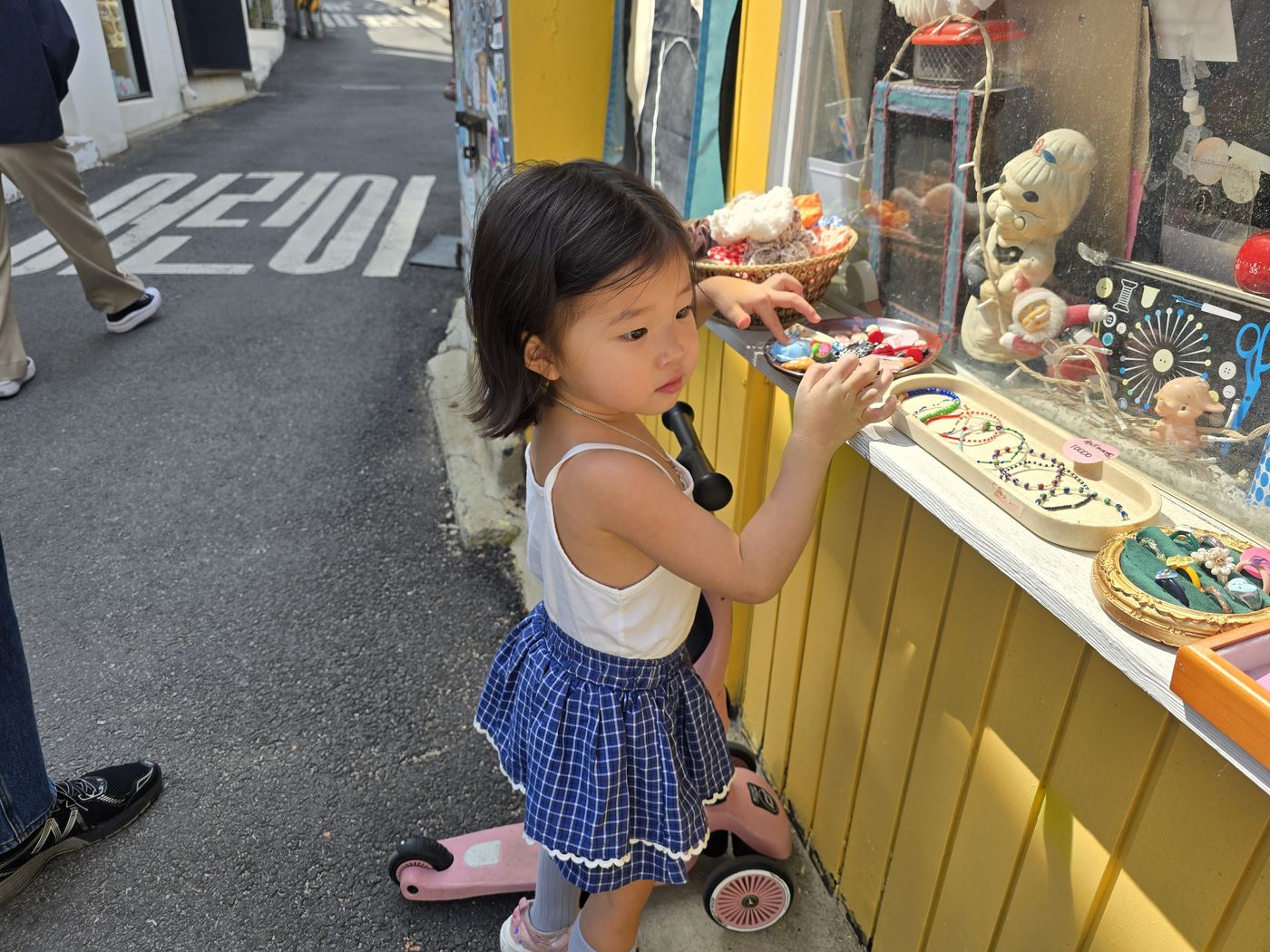
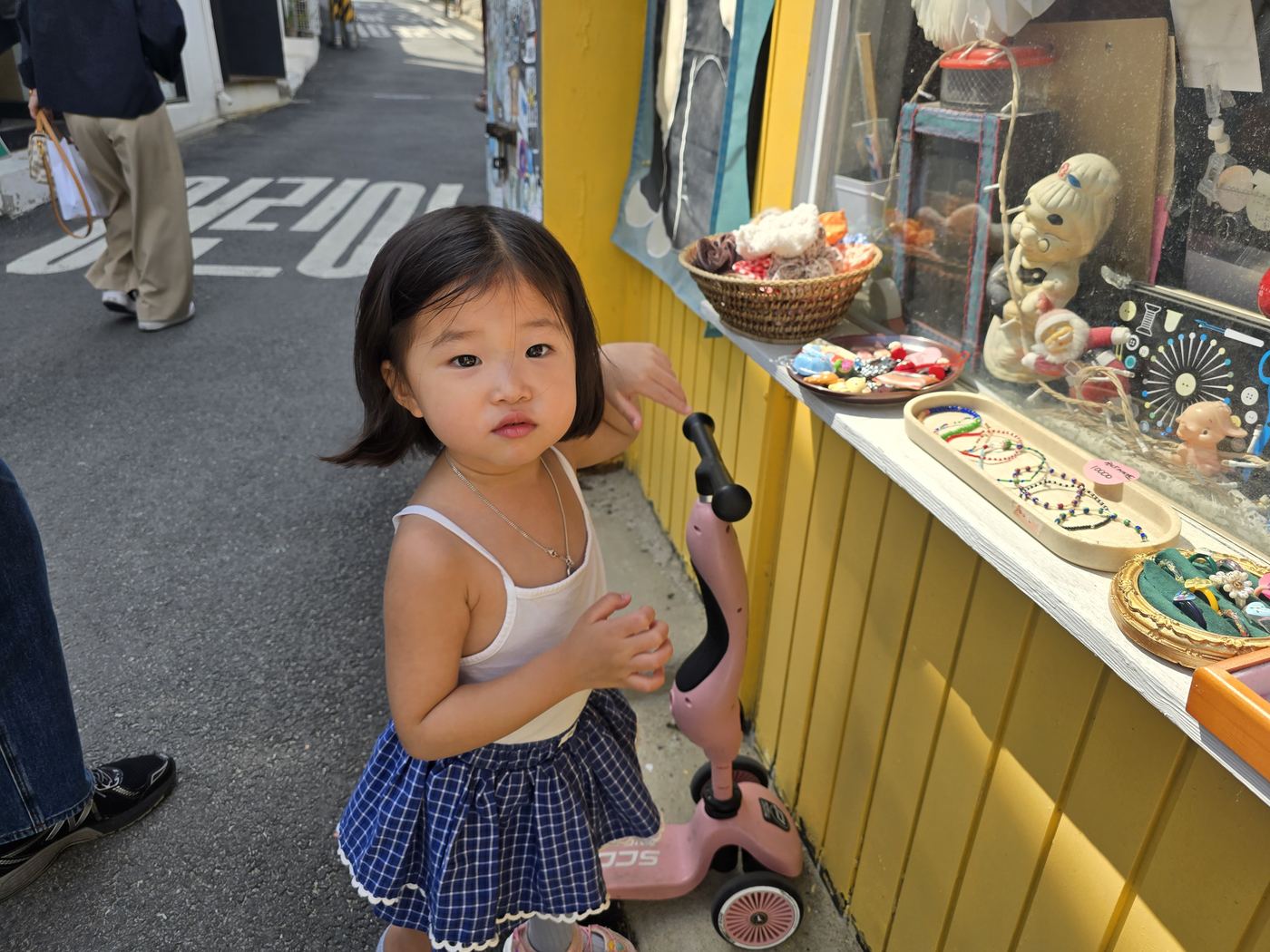
The village is free to walk through (it’s a real residential neighborhood, so signs ask visitors to stay quiet and keep to the lanes). The best approach is to walk up from Anguk subway station, following the hill path to the famous upper viewpoint, then loop back down through narrower alleys to find small galleries, traditional teahouses, and hanbok rental shops along the way.
Morning visits are quieter; late afternoon light is better for photos. Combine with the National Folk Museum (5-minute walk) and Osulloc Tea House nearby for a full half-day itinerary that’s almost entirely free. → Full Bukchon family day guide with Folk Museum & Osulloc
🎟️ Klook Add-Ons: Upgrade Your Free Day
These four spots are all genuinely free — but the right add-on can turn a good day into an unforgettable one. Here’s what we’d book:
🚌 Seoul City Tour Bus (Hop-On Hop-Off)
The easiest way to connect City Hall, Gwanghwamun, Insadong, Namsan, and more without wrestling with the subway system while carrying kids and bags. Buses run every 30 minutes with a recorded English commentary.
🌙 Seoul Night City Tour
Seoul transforms completely at night. This evening tour covers Gyeongbokgung, Cheonggyecheon, and the lit-up city skyline — a great way to see the same spots you visited during the day in a totally different light (literally).
🏯 Gyeongbokgung, Bukchon & Gwanghwamun Guided Tour
Get the history and stories behind these iconic landmarks from a guide who brings them to life. Covers three of the best spots on this list — Gyeongbokgung Palace, Bukchon Hanok Village, and Gwanghwamun Square — in a structured half-day with expert commentary.
🏨 Where to Stay Near Central Seoul
All four spots on this list are within easy reach of the Gwanghwamun and City Hall area. These hotels put you within walking distance of most of them:
The Plaza Seoul
Luxury · Faces City Hall Plaza directly
₩₩₩₩ · Walking distance to stops 1, 2, 3
Westin Joseon Seoul
Luxury · Century-old heritage hotel near Gwanghwamun
₩₩₩₩ · Steps from stops 1 & 2
Four Seasons Hotel Seoul
Ultra-luxury · Perfect Gwanghwamun location
₩₩₩₩₩ · Near stops 2, 5 & 6
Shilla Stay Gwanghwamun
Midrange · Excellent value, 1 min from subway
₩₩ · Central location for all stops
Practical Tips for a Free Day in Seoul
- T-money card: Get one at any convenience store (CU, GS25, 7-Eleven) for ₩3,000 and charge it as you go. Works on every subway and bus in the city — the single most useful ₩3,000 you’ll spend in Seoul.
- Best day: Weekday mornings. Bukchon and Gwanghwamun are noticeably calmer before 10am, and the City Hall Gallery is uncrowded on weekday afternoons.
- Best season: Spring (April–May, cherry blossoms) and autumn (October–November, foliage) for outdoor spots. Summer works well for Cheonggyecheon and the City Hall Gallery (indoor/water). Winter is fine for Insadong and all the indoor venues.
- Food: Budget ₩5,000–₩10,000 per person for street food around Insadong and Gwanghwamun. For a sit-down meal, Myeongdong (10 minutes from City Hall) has dense food lanes with great options at every price point.
- Language: Most major sights have excellent English signage. Naver Maps is more accurate than Google Maps for Korean addresses and directions.
Frequently Asked Questions
What are the best free things to do in Seoul?
The top free spots in Seoul include Gwanghwamun Square, Bukchon Hanok Village, the National Folk Museum, Cheonggyecheon Stream, the My Friend Seoul Gallery at City Hall, Insadong, and Namsan Park. All are free to enter and reachable by subway.
Is Seoul expensive to visit?
Seoul is surprisingly affordable for a major world city. Most of its best cultural attractions are free, the subway costs around ₩1,500 per ride, and street food is plentiful from ₩2,000–5,000. A family can have a full and genuinely memorable day in central Seoul spending very little.
Can you visit Gyeongbokgung Palace for free?
The palace grounds require a ticket (₩3,000 for adults, free for under-25s). However, the adjacent National Folk Museum has its own separate free entrance. The Gwanghwamun Gate exterior and Gwanghwamun Square in front are always free to visit.
What are the best free activities in Seoul for kids?
The best free spots for kids in Seoul are the My Friend Seoul Gallery (free indoor kids’ lounge at City Hall), Gwanghwamun’s Hangeul Fountain in summer, the National Folk Museum outdoor village area, and Cheonggyecheon Stream’s stepping stones. All are stroller-friendly.
How do I get between these free spots?
Most central spots (City Hall, Gwanghwamun, Cheonggyecheon, Insadong, National Folk Museum, Bukchon) are within 2 km of each other and perfectly walkable. Namsan is a short subway ride from City Hall. If you’re covering them all in one day with kids, the Seoul City Tour Bus is worth the ticket price.
Some links in this post are affiliate links — we earn a small commission at no extra cost to you if you book through them. We only recommend places and experiences we’ve personally visited or carefully researched. Thank you for supporting Weekend in Korea!